
Soups & Stews
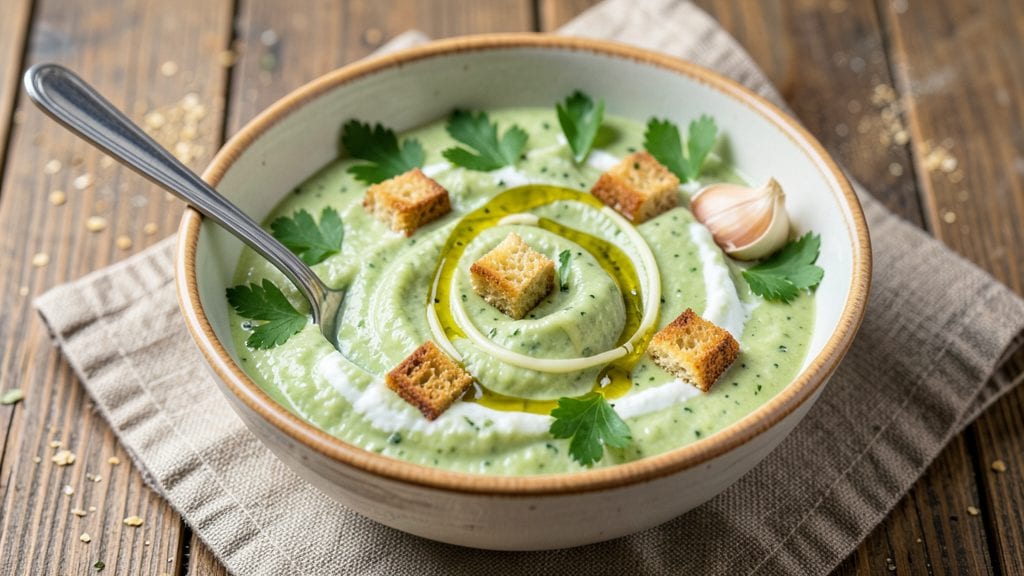
This white gazpacho recipe brings the refreshing essence of Spain to your table with a velvety blend of blanched vegetables, garlic, and bright herbs—perfect for hot days or as a light starter.
The traditional method relies on stale bread for texture, but modern twists like avocado or cucumber add creaminess without compromising authenticity. I’ve perfected this version to balance tangy, herby notes with a silky-smooth consistency that’s impossible to resist.
The beauty of white gazpacho lies in its simplicity: just blend roasted vegetables, garlic, olive oil, and vinegar, then chill until perfectly chilled. Unlike its red counterpart, this version skips tomatoes for a milder, almost cucumber-like profile that pairs beautifully with grilled meats or crusty bread.
The key is soaking the bread properly to avoid a watery soup—trust me, this step makes all the difference.
What you’ll end up with is a crisp, refreshing soup that’s vibrant green and packed with garden-fresh flavors. The chilling process intensifies the garlic and herb notes, creating a depth that’s both elegant and satisfying.
Serve it with a drizzle of olive oil, a sprinkle of smoked paprika, and toasted croutons for texture. It’s the kind of dish that feels luxurious yet effortless.
This recipe works as a standalone meal or a palate cleanser before richer dishes. For a modern twist, blend in avocado or cucumber for extra creaminess, or add a splash of lemon juice for brightness.
Whether you stick to tradition or experiment, the result is always a crowd-pleaser. Let’s make it!
Ingredients for white gazpacho
Six core ingredients plus optional avocado for that ultra-smooth Spanish touch.
| Ingredient | Amount | Notes |
|---|---|---|
| Stale Bread 🍞 | ½ lb | Day-old crusty bread preferred |
| Extra-Virgin Olive Oil 🫒 | 1 cup | High quality, fruity variety |
| Fresh Cucumber 🥒 | 1 whole | Peeled, seeded, chopped |
| Green Bell Pepper 🌶️ | 1 whole | Seeded, chopped |
| Garlic Cloves 🧄 | 6 cloves | Peeled, lightly roasted |
| Fresh Parsley 🌿 | ¼ cup | Stems removed, loosely packed |
| Fresh Dill 🌿 | ¼ cup | Stems removed, loosely packed |
| Apple Cider Vinegar 🍎 | ¼ cup | Raw, unfiltered preferred |
| Cold Water 💧 | 1 ½ cups | For adjusting consistency |
| Smoked Paprika 🌶️ | 1 tsp | For garnish and depth |
| Sea Salt 🧂 | 1 ½ tsp | Adjust to taste |
| Avocado (optional) 🥑 | ½ whole | Pitted, peeled for creaminess |
| Lemon Juice 🍋 | 1 tbsp | Freshly squeezed |
The bread is non-negotiable—it’s what gives gazpacho its signature texture. Stale crusty bread (like a baguette or sourdough) works best, but any day-old bread will do. Soak it in water for 10 minutes, then squeeze out the excess—this avoids a watery soup. For the herbs, fresh is a must—dried just won’t cut it. I grab mine from the farmers market when they’re in season, but the grocery store usually has decent parsley and dill. The olive oil? Use the good stuff—none of that cheap cooking oil. A fruity, peppery variety elevates everything.
No fresh herbs? Dried parsley or dill at one-third the amount works in a pinch, but it’s not the same. Short on cucumber? Zucchini or celery adds a different but still refreshing vibe. Want extra creaminess? The avocado is your secret weapon—it blends right in and takes this from good to next-level. The vinegar can be swapped for white wine vinegar, but apple cider adds that subtle sweetness. And if you’re feeling fancy, a splash of vegetable broth instead of water adds depth. Just don’t skip the salt—taste as you go.
This soup keeps beautifully—3-4 days in the fridge if you seal it tightly. The flavors actually get better after chilling overnight, so make it ahead if you can. For serving, I like to drizzle with extra olive oil and a sprinkle of smoked paprika right before eating. Garnish with toasted bread croutons for crunch. Freezes well too, but the texture changes slightly—best enjoyed fresh. Portion into jars for easy lunches, or double the batch for parties.
Why You'll Love This Recipe
- No-Waste Magic: I’ll be real—this recipe turned my stale bread into something useful instead of trash. The moment I blend that crusty loaf with cucumber and olive oil, it disappears into a creamy, velvety soup that’s impossible to resist. No fancy prep, just repurposing what’s already in your pantry.
- Crisp Cool Refresh: That garlic and bell pepper combo? It’s the secret weapon. The pepper adds a bright, almost tangy kick, while the garlic lingers in the background like a warm hug—especially when you drizzle extra olive oil on top. Honestly, it’s the kind of flavor that makes you forget it’s a soup.
- Picnic or Potluck Star: Between us, this is my go-to for outdoor gatherings. It stays perfectly chilled in a pitcher, serves a crowd without fuss, and even my picky-eating cousin asks for seconds. Bring it to a BBQ, a beach day, or just a lazy Sunday—it’s always a hit.
- Budget Cool Down: Summer heat + grocery budget = this recipe wins every time. Fresh veggies stretch further with the bread, and olive oil adds richness without breaking the bank. Plus, it keeps for days in the fridge, so you’re not scrambling to eat leftovers before they spoil.
Step-by-step instructions for white gazpacho recipe
Here's how to make this refreshing Spanish classic with just a few simple steps.
Prepare the Base Ingredients
Start by toasting the 0.5 lb stale bread in a dry skillet over medium heat for about 5 minutes, stirring occasionally, until it's golden and crisp. This step deepens the flavor and removes any moisture. Let it cool completely before proceeding.
While the bread toasts, peel and chop the 1 whole fresh cucumber and 1 whole green bell pepper into small, even pieces. Remove the stems from the 0.25 cup fresh parsley and 0.25 cup fresh dill, then roughly chop them together. Peel and lightly roast the 6 cloves garlic by wrapping them in foil and baking at 375°F for 8-10 minutes until fragrant.
Blend the Gazpacho Mixture
In a food processor or blender, combine the toasted bread, cucumber, green bell pepper, roasted garlic, parsley, dill, 1 cup extra-virgin olive oil, 0.25 cup apple cider vinegar, and 1.5 tsp sea salt. Pulse until everything is finely chopped but not completely smooth—you want a slightly textured consistency. This ensures the gazpacho has body and flavor.
With the blender running, slowly drizzle in the 1.5 cups cold water until the mixture is smooth and creamy. Taste and adjust the seasoning with more salt or vinegar if needed. The gazpacho should be tangy, bright, and well-balanced.
Chill and Adjust Consistency
Transfer the gazpacho to a bowl and stir in the 1 tbsp lemon juice. Cover and refrigerate for at least 2 hours, or until completely chilled. This step is crucial—it allows the flavors to meld and the gazpacho to reach its perfect, refreshing temperature.
Before serving, check the consistency. If it's too thick, thin it with a splash of cold water, 1 tablespoon at a time. If it's too thin, blend in a few extra spoonfuls of the toasted bread until it reaches a smooth, drinkable texture. The gazpacho should coat the back of a spoon but still pour easily.
Serve with Optional Garnishes
Ladle the chilled gazpacho into bowls or glasses. For an extra touch of creaminess, blend the 0.5 whole avocado (optional) with a splash of cold water until smooth, then drizzle it on top. Sprinkle with a pinch of 1 tsp smoked paprika for a smoky finish.
Garnish with additional chopped herbs, thin cucumber slices, or a drizzle of olive oil. Serve immediately with crusty bread or as a light appetizer. This gazpacho is best enjoyed cold, so don’t skip the chilling step—it’s what makes it truly refreshing and classic.
Pro Tips For Making White Gazpacho
- SOAK THE BREAD LONG: Toss your stale bread cubes in cold water for at least 30 minutes—this softens the crust and prevents a gritty texture. I used to rush this step, and the soup always ended up with tiny bread bits that made me wince.
- PEEL THE CUCUMBER RIGHT: Use a vegetable peeler to strip off just the waxy outer layer, not the whole skin—this keeps the soup bright and avoids that bland, watery taste. My first batch tasted like sad salad because I went too deep.
- BLITZ THE GARLIC: Smash the garlic cloves with the flat side of your knife before adding them—this releases more flavor without burning. I learned this the hard way after my gazpacho smelled like overcooked almonds instead of fresh garlic.
- STRAIN TWICE FOR SILK: After blending, press the mixture through a fine-mesh sieve, then strain it again through a clean kitchen towel. This removes every last bit of pulp, giving you that restaurant-quality smoothness. Yes, it’s extra work, but the result is worth it.
Pro cooking tips for this dish
Toast the Bread
Toast your 0.5 lb stale bread in a dry skillet over medium heat for 5-7 minutes, stirring often, until it’s golden and crisp. This step removes excess moisture and adds a nutty depth to the gazpacho.
Let it cool completely before blending—I’ve learned the hard way that warm bread makes the soup watery. For extra flavor, toast the bread with a pinch of smoked paprika for a subtle smoky note. 🔥
Roast the Garlic
Lightly roasting the 6 garlic cloves in foil at 375°F for 8-10 minutes transforms their flavor from sharp to mellow and sweet. This is a game-changer—raw garlic can dominate the soup, while roasted garlic blends seamlessly.
Wrap them tightly in foil to prevent burning, and let them cool before adding to the blender.
Blend in Stages
Blend the bread, vegetables, and herbs in short pulses first to break them down, then stream in the 1 cup olive oil and 1.5 cups cold water slowly while blending. This gradual approach prevents splattering and ensures a silky texture.
If your blender struggles, add 1-2 tablespoons of water at a time until smooth. I use a Ninja BN601 for this recipe—it handles thick soups like a dream.
Chill Properly
Chilling is non-negotiable—cover the gazpacho and refrigerate for at least 2 hours, but I recommend overnight for maximum flavor development. The longer it chills, the more the garlic and herbs mellow out, creating a smoother, more refined taste.
For a shortcut, place the bowl in an ice bath for 30 minutes before serving, but the fridge method is best for depth.
Adjust Consistency
If your gazpacho is too thick, thin it with 1 tablespoon cold water at a time until it reaches a drinkable consistency. Too thin? Blend in extra toasted bread or a spoonful of avocado purée for creaminess.
The ideal texture should coat the back of a spoon but still pour easily—like a cross between a smoothie and a light soup. Taste as you go; seasoning often needs a final adjustment after chilling.
Garnish Like a Pro
Drizzle with extra-virgin olive oil and a pinch of smoked paprika right before serving to add visual appeal and extra flavor. Toasted croutons or thin cucumber ribbons on top provide texture contrast.
For a modern twist, top with a swirl of avocado cream or a sprinkle of fresh dill. Presentation matters—this is a dish meant to be enjoyed with all the senses. ✨
Nutrition facts
Frequently asked questions
Why does white gazpacho need stale bread?
Stale bread is key because it absorbs excess moisture without adding wetness to the soup. The dry texture helps create the perfect velvety consistency while adding a subtle nutty depth. Fresh bread would make the gazpacho watery and dilute the flavors.
Can I make white gazpacho without a blender?
Yes, but the texture will be chunkier. Use a food mill or mortar and pestle to crush the ingredients finely. For a smoother result, strain through a fine-mesh sieve after blending by hand. The traditional method involves a wooden spoon and elbow grease—just expect more texture variation!
How long can I store white gazpacho in the fridge?
This chilled soup keeps well for 3-4 days when stored in an airtight container. The flavors actually improve after 24 hours as the garlic and herbs mellow. For longer storage, freeze for up to 1 month, but the texture may separate slightly upon thawing.
What's the best way to serve white gazpacho?
Serve it ice-cold in bowls or glasses with a drizzle of extra-virgin olive oil and a sprinkle of smoked paprika. Garnish with toasted croutons, fresh herbs, or cucumber ribbons for texture. It pairs perfectly with grilled meats, crusty bread, or as a light summer appetizer.
Can I make this recipe vegan?
This gazpacho is already vegan—it contains no animal products. The traditional version relies on olive oil, vegetables, herbs, and bread. For extra richness, add avocado or blend in silken tofu. Just omit any dairy-based garnishes like sour cream if you're strict about plant-based ingredients.