Sauces & Condiments
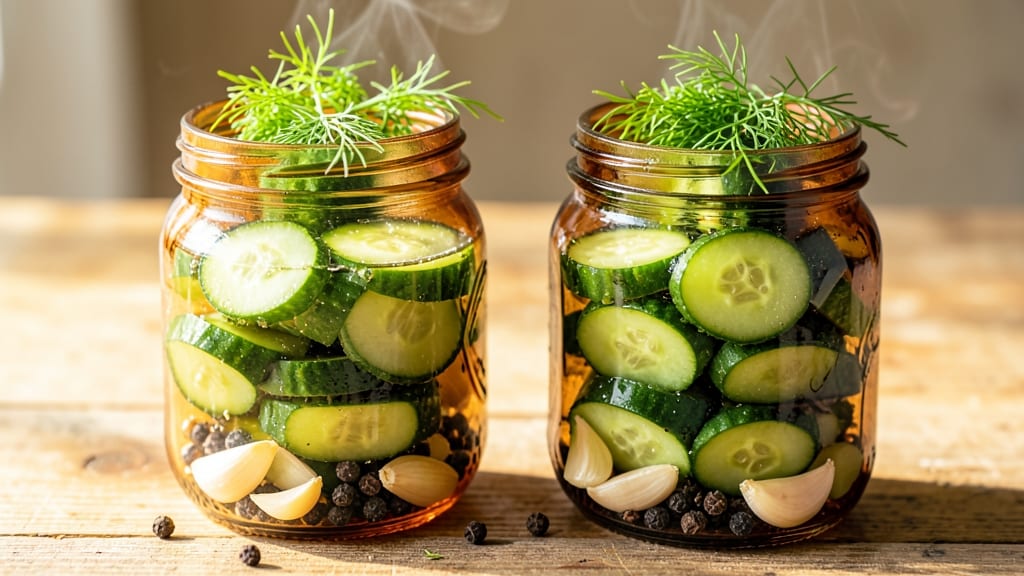
This cucumber pickle recipe without vinegar transforms simple garden cucumbers into crunchy, tangy bites that stay fresh for weeks—no sour tang, just bright, refreshing flavor. My grandmother used to make these in glass jars during summer harvests, relying on salt and time rather than vinegar.
The process is simpler than you think, and the results are far superior to store-bought pickles.
What makes this recipe special is its vegan-friendly, fermented approach—just water, salt, and optional spices like dill or garlic create a naturally preserved condiment. The key lies in proper fermentation: cucumbers develop their signature crunch and zesty bite through lactic acid bacteria, not vinegar.
You’ll need about 10 minutes of prep and 3-5 days of fermentation, depending on your taste preference.
By the time you’re done, you’ll have jars of glossy, crisp cucumbers with a satisfying snap and a clean, bright flavor—no harsh vinegar aftertaste. These pickles elevate sandwiches, salads, and charcuterie boards, or simply make a refreshing snack on their own.
The best part? They keep improving over time, getting tangier and more complex with each week.
Ready to try a different kind of pickle? Let’s get started with this foolproof, no-vinegar method that delivers restaurant-quality crunch at home.
Ingredients for cucumber pickle recipe without vinegar
Simple ingredients for crunchy, tangy cucumbers—no vinegar, just bright fermentation flavor.
| Ingredient | Amount | Notes |
|---|---|---|
| Persian Cucumbers 🥒 | 2 lb | Small, firm, unpeeled |
| Non-Iodized Sea Salt 🧂 | 1 ½ tbsp | Fine grain preferred |
| Filtered Water 💧 | 2 cups | Chlorine-free for fermentation |
| Fresh Dill Weeds 🌿 | ½ cup | Chopped, stems included |
| Garlic Cloves 🧄 | 4 cloves | Thinly sliced, peeled |
| Black Peppercorns 🌶️ | 1 tsp | Crushed slightly |
| Glass Mason Jars 🍶 | 2 whole | Quart-sized, sterilized |
| Rice Paper Towels 🧻 | 1 sheet | For weight and sealing |
| Small Fermentation Weights 🪨 | 2 whole | Or clean stones |
The cucumbers are the star here—Persian or Kirby varieties work best with their thick skins and crisp texture. Local farmers markets often have the freshest, firmest cucumbers in summer, but the grocery store will do in a pinch. Look for ones that are firm to the touch with no soft spots. The salt is critical—non-iodized sea salt ensures pure flavor without iodine interfering with fermentation. I always grab mine from the bulk section at Whole Foods or Trader Joe's where it stays fresh. For the jars, quart-sized glass mason jars are non-negotiable—they create the perfect anaerobic environment for fermentation.
No fresh dill? Dried dill at half the amount works, but it won't have that same bright aroma. Short on garlic? Asafoetida powder at one-quarter teaspoon mimics the savory depth. The black peppercorns can be omitted if you prefer milder flavor, but I find they add a nice complexity. For the weights, fermentation-specific weights are ideal, but clean stones or even a small bag of rice work perfectly. If you're making this in summer, you might find fresh garlic scapes at farmers markets—use those instead of regular garlic cloves for a milder, slightly sweeter flavor. The rice paper towels are just for pressing down the cucumbers—any clean cloth will do in a pinch.
These pickles keep getting better with time—3-5 days for mild, 1-2 weeks for tangy. Store them in the darkest, coolest part of your fridge (not the door) where the temperature stays consistent. They'll stay crisp for up to 6 months if properly fermented. I always make a double batch—one jar gets eaten within a week, and the second develops that perfect tangy complexity over time. The liquid is edible too—great for dressings or broths!
Why You'll Love This Recipe
- No-Fuss Prep: I swear by this method—just slice those Persian cucumbers thin, toss them in a jar with salt and water, and let them sit. No peeling, no chopping, no fuss. The garlic and dill get crushed right in the jar, so you’re not standing over a cutting board for hours.
- Herb-Forward Crunch: Between us, this isn’t your bland store-bought pickle. The fresh dill and whole garlic cloves infuse the cucumbers with bright, herby flavor—like a lighter, fresher take on tangy pickles. That first bite? Crisp, garlicky, and ridiculously satisfying.
- Meal Prep MVP: I keep a jar of these in the fridge at all times. They’re perfect for sandwiches, salads, or just snacking straight from the jar—no extra prep needed. Honestly, they last weeks, so you’re always covered for last-minute lunches or unexpected guests.
- Budget-Friendly Staple: Sea salt, cucumbers, and dill? That’s it. No fancy ingredients, no vinegar to splurge on, and you’ll use the whole jar before it goes bad. I’ll be real: this is the kind of recipe that saves me money and time without sacrificing flavor.
Step-by-step instructions for fermented Persian cucumber pickles
Here's how to create vibrant, tangy cucumber pickles using just salt and natural fermentation—no vinegar needed.
Prepare and Pack the Cucumbers
Wash the 2 lb Persian cucumbers thoroughly and slice them into ¼-inch thick rounds, leaving the skin on for texture. In each of the 2 whole glass mason jars, create a layer of thinly sliced garlic cloves at the bottom, followed by a sprinkle of crushed black peppercorns. This ensures every bite carries flavor.
Pack the cucumber slices tightly into the jars, leaving about 1 inch of headspace at the top. As you work, gently press down on the cucumbers to remove air pockets—this prevents mold and ensures even fermentation. The goal is to create a compact, flavorful layer that will develop its signature tang over time.
Dissolve the Salt and Add Aromatics
In a separate bowl, combine the 2 cups filtered water with the 1.5 tbsp non-iodized sea salt and stir until fully dissolved. This brine should be completely clear—any undissolved salt crystals can create uneven fermentation. Pour the brine over the cucumbers in each jar until they are fully submerged, covering all slices completely.
Next, add the 0.5 cup chopped fresh dill weeds and any remaining garlic cloves to each jar, pressing them gently into the cucumbers. The dill will infuse the brine with its bright, herbal notes, while the garlic adds depth. Make sure the cucumbers stay submerged—this is critical for safe fermentation and crisp texture.
Seal and Weight the Jars
Place the small fermentation weights on top of the cucumbers in each jar, ensuring they stay fully submerged under the brine. This prevents mold from forming on the surface. Cover the jars loosely with the sheet of rice paper towels, securing them with a rubber band or jar ring to allow gases to escape while keeping contaminants out.
Store the jars at room temperature, away from direct sunlight, for 3-5 days. You’ll know the pickles are ready when they develop a pleasant tang and slight effervescence. Taste one to check—it should be crisp with a bright, zesty flavor, not yet overly sour. The longer they ferment, the more complex the flavor becomes, but 5 days is ideal for a refreshing, crunchy bite.
Refrigerate and Enjoy
Once the pickles reach your desired level of tang, transfer them to the refrigerator to slow fermentation and preserve freshness. They’ll keep for up to 3 months, developing deeper flavor over time. The brine will thicken slightly as it cools—this is normal and adds to the richness.
Serve the pickles chilled as a refreshing snack, on sandwiches, or alongside grilled meats. The natural fermentation process enhances their crunch while creating a bright, complex flavor that’s far more nuanced than vinegar-based pickles. For extra depth, let them sit in the fridge for a week before eating—the flavors will meld beautifully.
Pro Tips For Making Cucumber Pickle Recipe Without Vinegar
- CHOP CUCUMBERS UNEVENLY: Persian cucumbers slice cleanly, but if you want texture that actually holds up, leave some pieces slightly thicker at the core—about ¼-inch where they’re toughest. I learned this after mushing through batches where every slice turned to soup after a week.
- WEIGH YOUR SALT: Non-iodized sea salt varies wildly in density. For a 1-liter jar, use 1.5 tablespoons—but if your salt is coarse, pack it down lightly. Too little and your pickles stay bland; too much and they’ll taste like a salt mine. (Yes, I’ve done both.)
- PACK GARLIC AND DILL FIRST: Stuff the garlic cloves and dill stems into the jar before adding cucumbers. This ensures they’re submerged in the brine right away, not floating on top like sad, forgotten garnishes. The dill’s flavor will infuse faster, and the garlic won’t turn to mush.
- WAIT 24 HOURS BEFORE EATING: I know, you’re impatient—so was I. But letting the brine work its magic for a full day makes the cucumbers crispier and the flavors deeper. If you’re in a rush, at least wait 12 hours, but your future self will regret the shortcut. (Trust me.)
Regional styles of this cucumber pickle recipe without vinegar
Southern Fermented Style
In the American South, cucumber pickles without vinegar often take on a garlicky, peppery kick—think of the kind you’d find at a backyard barbecue.
My grandmother’s recipe called for extra black peppercorns and a whole crushed red pepper in each jar, giving them a subtle heat that pairs perfectly with smoked meats. She’d ferment them for 5-7 days at room temperature, then refrigerate for another week to let the flavors deepen. The result?
A bold, tangy crunch that stands up to pulled pork or fried chicken. 🌶️
Midwest Dill-Forward Approach
The Midwest leans into bright, herbaceous flavors, often using more fresh dill and sometimes adding fennel seeds for a licorice-like depth. I’ve seen variations where cooks include a bay leaf in each jar, which adds an earthy note that balances the crisp cucumbers beautifully.
These pickles are typically fermented for 3-4 days—just enough time for the dill to infuse the brine without overpowering the cucumbers. They’re a staple at summer potlucks and picnic spreads, where their clean, refreshing taste cuts through richer dishes.
Pacific Northwest Garlic-Infused
Up in the Pacific Northwest, where fresh garlic grows abundantly, fermented cucumbers often feature whole garlic cloves layered between slices. Some recipes even include garlic scapes for a milder, slightly sweeter flavor.
The region’s cool climate means these pickles ferment slower, so they’re usually left at room temperature for 4-5 days before refrigeration. The result is a rich, garlicky depth that’s perfect for grilled salmon or charcuterie boards.
I’ve made these with local farm garlic from the farmers market, and the difference is night and day.
Appalachian Spice Blend
In the Appalachian region, fermented cucumbers often get a wild mix of spices, including mustard seeds, coriander, and sometimes a pinch of cayenne. This approach creates a complex, slightly spicy profile that’s both tangy and aromatic.
The pickles are fermented for 5-6 days to let the spices meld with the cucumbers. They’re a favorite with cornbread and fried catfish, offering a bold contrast to the rich, buttery flavors of Southern cooking.
My grandmother’s handwritten notes even mentioned adding a few juniper berries for a piney twist—something I’ve since tried and loved.
Modern Urban Twist
City dwellers often experiment with unexpected flavors, like lime zest, cilantro, or even a splash of apple cider vinegar (just a teaspoon!) to add brightness without overpowering the natural fermentation.
These pickles ferment for 3 days—just enough for a bright, zesty crunch—and are perfect for gourmet sandwiches or as a refreshing garnish for tacos.
I’ve seen versions with chili flakes and lime that taste like a fiery, tangy salsa—great for anyone who loves heat with their crunch. 💫
Nutrition facts
Frequently asked questions
Why do these cucumber pickles need to stay submerged in brine?
Submerging the cucumbers prevents mold growth and ensures even fermentation. The brine creates an anaerobic environment where beneficial lactic acid bacteria thrive, developing that signature tang. If slices poke above the liquid, they'll soften unevenly and may spoil. Always use weights to keep them fully covered!
Can I use regular table salt instead of sea salt?
No, table salt contains anti-caking agents like iodine that can inhibit fermentation. Non-iodized sea salt is essential for proper fermentation and flavor development. The fine grain also dissolves more evenly in the brine. Always check the label for "non-iodized" or "pickling salt."
How do I know when the pickles are ready to eat?
Taste one after 3-5 days—they should be crisp with a bright, tangy flavor (not sour). The liquid may bubble slightly. For milder flavor, eat at 3 days; for deeper tang, wait 5-7 days. The longer they ferment, the more complex they become!
What if I don't have fermentation weights?
Use clean stones, a small bag of rice, or even a folded paper towel soaked in brine. The key is keeping cucumbers submerged. If nothing works, add extra brine until slices are fully covered. This prevents mold while still allowing fermentation.
Can I make these pickles with other vegetables?
Try thinly sliced carrots, radishes, or jalapeños for extra crunch and flavor. Just ensure all veggies are cut small enough to ferment evenly. The same method works—pack tightly, submerge completely, and ferment for 3-5 days.