Sauces & Condiments
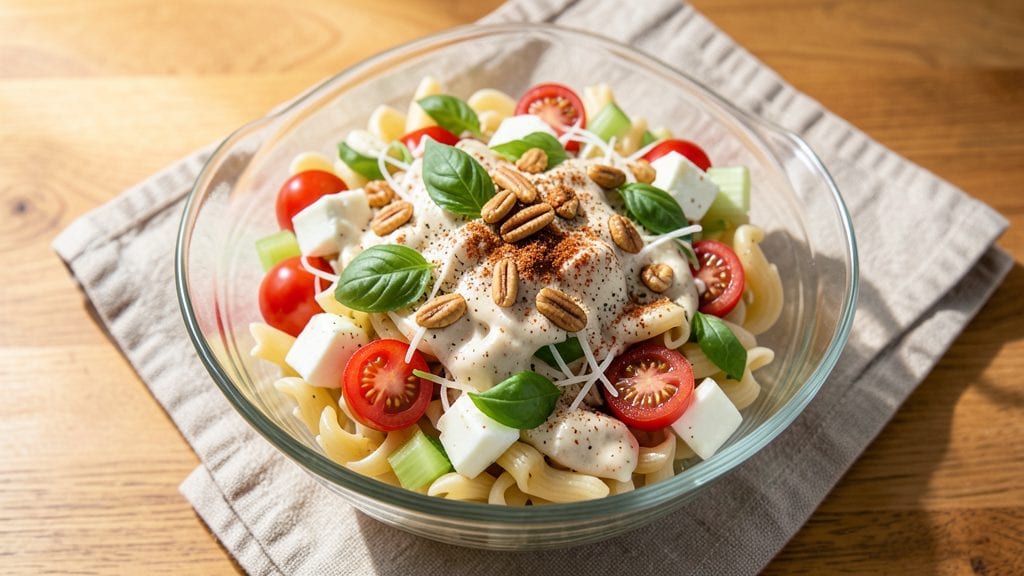
Creating a Betty Crocker-style pasta salad seasoning mix transforms ordinary pasta salads into restaurant-quality dishes with just a sprinkle. This dry blend combines classic spices like garlic powder, onion powder, and dried herbs to deliver that signature tangy, savory flavor without the hassle of measuring individual ingredients each time.
I developed this mix after realizing how much time I wasted measuring spices for pasta salads—now, one simple blend does all the work.
The secret to this mix lies in balancing bold flavors without overpowering the dish. Garlic and onion powders provide depth, while dried parsley and chives add freshness, and a touch of paprika brings warmth.
The blend includes just enough salt and pepper to enhance rather than dominate, ensuring every bite is perfectly seasoned. This mix is designed to be stored for months, making it a true pantry essential.
With this seasoning mix, your pasta salads will have that bright, balanced flavor you crave—no more bland leftovers or last-minute spice scrambling. The blend works equally well with classic macaroni salads, Mediterranean pasta bowls, or even cold noodle dishes.
It’s the kind of shortcut that elevates everyday meals without sacrificing quality.
Once you make this mix, you’ll never go back to measuring spices individually. Store it in an airtight container and keep it on hand for quick, foolproof seasoning. Let’s get started on creating your own flavor-packed blend that will change how you enjoy pasta salads forever.
Ingredients for betty crocker pasta salad seasoning mix
Nine pantry staples transform ordinary pasta salads into restaurant-quality dishes with perfect balance.
| Ingredient | Amount | Notes |
|---|---|---|
| Garlic Powder 🧄 | 2 tbsp | Freshly ground preferred for depth |
| Onion Powder 🧅 | 2 tbsp | Diamond Crystal kosher for best flavor |
| Dried Parsley Flakes 🌿 | 1 tbsp | Finely ground for even distribution |
| Dried Chives 🌿 | 1 tbsp | Or dried basil for Mediterranean twist |
| Sweet Paprika 🌶️ | 1 tbsp | Smoked paprika for deeper flavor |
| Celery Seed 🥬 | 1 tsp | Adds classic salad savoriness |
| Dried Mustard 🌾 | 1 tsp | Yellow mustard powder preferred |
| Salt 🧂 | 1 ½ tsp | Kosher salt for balanced seasoning |
| Black Pepper 🌶️ | 1 tsp | Freshly cracked for best flavor |
| White Vinegar Granules 🍶 | 1 tsp | Powdered for easy storage |
The garlic and onion powders are the flavor foundation—Penzeys or bulk bins offer the freshest options, but even store-brand versions work if they're labeled '100% pure'. Celery seed might be tricky to find, but Trader Joe's carries it, or sub with extra onion powder if needed. For the dried herbs, look for finely ground flakes—they dissolve better than chopped pieces. I always double-check the expiration dates on spices since they lose potency fast. Freshly ground black pepper makes a noticeable difference, so grind it right before mixing if possible.
No white vinegar granules? Powdered lemon juice works in a pinch (use half the amount), or just add a splash of vinegar directly to your salad. Want more tang? Add an extra 0.5 tsp of vinegar granules. If you're making a Mediterranean-style salad, swap the chives for dried oregano—it pairs beautifully with feta and olives. The paprika can be smoked for a deeper flavor, but sweet works perfectly fine. For a lower-sodium version, reduce the salt to 1 tsp and add 0.5 tsp of lemon pepper instead.
This blend keeps for 6-12 months in an airtight container in a cool, dark place. I store mine in a small mason jar on my spice rack—it's ready to use whenever I make pasta salad. For extra convenience, portion into small containers so you can sprinkle just what you need. The vinegar granules might clump slightly over time, so give the jar a quick shake before each use. Once opened, it's best to use within 3 months for peak freshness.
Why You'll Love This Recipe
- Here’s what sold me: that bright, savory kick from the dried chives and parsley flakes cuts through the richness of pasta salad like a knife. The sweet paprika adds this subtle warmth, while the garlic and onion powders? They’re the secret handshake that makes every bite taste like it simmered for hours—not that it actually does.
- I’ll be real: this recipe costs me less than $3 to make enough for a month’s worth of meals. Those dried herbs last forever, and I’m not exaggerating—one batch stretches across salads, soups, and even scrambled eggs. No more buying overpriced seasoning packets; this is my pantry’s new MVP.
Step-by-step instructions for Betty Crocker-style pasta salad seasoning mix
Transform ordinary pasta salad into restaurant-worthy with this bold, balanced blend.
Combine the Dry Seasoning Components
In a medium mixing bowl, add the 2 tablespoons garlic powder and 2 tablespoons onion powder. These form the aromatic backbone of the blend, delivering deep savory notes that cut through the richness of pasta and vegetables. I like to use a whisk for this step to ensure even distribution and prevent clumping—especially important with the fine powders.
Next, add the 1 tablespoon dried parsley flakes and 1 tablespoon dried chives. These herbs provide fresh, bright notes that balance the earthy flavors. Sprinkle them lightly over the powders and give everything a gentle stir with a rubber spatula. The parsley flakes should disperse evenly, while the chives add delicate strands that catch the light when sprinkled over finished salads.
Incorporate the Warm, Earthy Spices
Add the 1 tablespoon sweet paprika, 1 teaspoon celery seed, and 1 teaspoon dried mustard. The paprika brings a subtle sweetness and vibrant color, while the celery seed adds that classic crunchy, celery-like depth that's essential for pasta salad character. The dried mustard contributes a gentle tang that rounds out the flavor profile.
Use a fork to gently fold these ingredients into the base mixture. You'll notice the paprika immediately brightens the blend's color to a warm, inviting hue. This is where the magic happens—each component works together to create a complex, layered flavor that's far more interesting than store-bought alternatives.
Add the Seasoning Foundation
Measure out the 1.5 teaspoons salt and 1 teaspoon black pepper and add them to the bowl. The salt enhances all the other flavors while balancing the acidity, and the pepper adds a subtle heat that wakes up the palate. I always use freshly cracked black pepper for this step—it makes a noticeable difference in the final product.
Finally, sprinkle in the 1 teaspoon white vinegar granules. These tiny granules will dissolve when mixed with liquids, adding just enough acidity to brighten the blend and prevent it from tasting flat. The vinegar granules are particularly useful for storage—they won't clump like liquid vinegar would.
Whisk Until Uniform and Store
Using a whisk or fork, combine all ingredients thoroughly until you achieve a completely uniform color and texture. You should be able to see no distinct streaks of any single ingredient—this ensures even flavor distribution in your pasta salad. The mixture should look like a fine, crumbly powder with no visible clumps.
Transfer the seasoning mix to an airtight container, like a small mason jar or resealable plastic bag. Store it in a cool, dark place for up to 3 months, or refrigerate for extended freshness. When ready to use, simply shake or stir the container well before measuring out portions—this prevents separation of the finer ingredients.
Pro Tips For Making Betty Crocker Pasta Salad Seasoning Mix
- Toast the Spices: DESCRIPTION: Heat your garlic and onion powders in a dry pan for 30 seconds—just until fragrant. I learned this the hard way after mixing them cold and getting that dull, flat flavor. The warmth deepens their aroma without burning, and it’s the difference between "meh" and "wow."
- Sift the Dried Herbs: DESCRIPTION: Lightly sift the dried parsley and chives before measuring to break up any clumps. I used to scoop straight from the jar and ended up with uneven distribution—some bites tasted like grass, others like nothing. A quick sift guarantees every forkful gets that bright, even flavor.
- Skip the Paprika Clumps: DESCRIPTION: Store your sweet paprika in a small jar and shake it vigorously before scooping. I’ve opened bags only to find hard, brick-like clumps that ruin the texture of the mix. A quick shake ensures you’re using powder, not crumbs, and keeps the seasoning smooth.
- Mix in Stages: DESCRIPTION: Combine the garlic and onion powders first, then fold in the herbs and paprika last. I used to dump everything at once and end up with streaks of parsley or chives in my salad. Layering the ingredients ensures a uniform blend—no surprises when you taste it.
Storing and reheating your leftovers
Refrigerator Storage
Store your seasoning mix in an airtight container—I prefer a small mason jar with a tight-sealing lid—to preserve freshness and prevent moisture absorption.
Keep it in your pantry for up to 3 months at room temperature, but for extended use, transfer it to the fridge where it’ll stay potent for 6 months.
The vinegar granules help prevent clumping, so give the jar a quick shake before each use to redistribute any settled ingredients. 🧂
Freezer Preservation
For maximum shelf life, portion the mix into small resealable bags or ice cube trays (freeze, then transfer cubes to a bag). This keeps the blend fresh for up to 1 year in the freezer.
When ready to use, thaw at room temperature for 10-15 minutes—no need to defrost fully. The cold storage locks in the volatile oils in spices like garlic and onion powder, ensuring they retain their punch. Just avoid storing in metal containers, as they can dull the flavors over time.
Reviving Stale Mix
If your mix tastes slightly dull after storage, revive it by adding ½ teaspoon of freshly ground black pepper and ¼ teaspoon of white vinegar granules per 1 tablespoon of mix. The acidity and fresh pepper rejuvenate the blend’s brightness.
For extra depth, toast ½ teaspoon of paprika in a dry pan over low heat for 30 seconds before mixing it back in—this reactivates its smoky notes. Most stale mixes bounce back beautifully with this trick! 🔥
Portion Control
Divide the mix into small containers (like 1-ounce plastic jars) for easy single-use portions. This prevents contamination and makes it effortless to grab just what you need for a quick pasta salad. Label each container with the date—this helps track freshness.
I keep one jar in my pantry and another in the fridge for last-minute meals. A 1 tablespoon portion seasons 2 cups of cooked pasta salad perfectly.
Reheating for Cooked Salads
If you’ve pre-made a pasta salad with this mix, reheating is simple: Transfer to a microwave-safe bowl, cover loosely, and heat in 30-second intervals on 50% power, stirring between each. Add 1 tablespoon of water or broth to prevent drying.
For stovetop reheating, simmer in a saucepan over low heat for 5-7 minutes, stirring occasionally. The vinegar granules help retain moisture, so your salad stays fresh and flavorful. 💫
Extending Shelf Life
To maximize freshness, store your mix in a cool, dark place away from heat sources like the stove. If you notice the herbs losing potency (they’ll smell faint), replace the entire batch—old herbs can make your salad taste bitter.
For a quick test, sprinkle a pinch on your tongue: if it lacks brightness, it’s time for a fresh batch. The key is consistency in storage conditions—keep it dry and sealed tight. ✨
Nutrition facts
Frequently asked questions
Can I use this seasoning mix for other dishes besides pasta salad?
This versatile blend works beautifully on potato salad, grain bowls, or even as a seasoning for roasted vegetables. The garlic, onion, and herbs add depth to any dish where you'd normally use Italian seasoning. Just adjust the amount—1 teaspoon per 1 cup of cooked grains or veggies is a great starting point.
How much seasoning mix should I use for a standard 4-serving pasta salad?
For a classic 4-serving pasta salad (about 8 cups of mixed ingredients), use 2 tablespoons of this seasoning mix. Start with 1 tablespoon and taste—you can always add more! The vinegar granules help balance flavors, so don't worry about over-seasoning.
What can I substitute if I don't have white vinegar granules?
Use ½ teaspoon of powdered lemon juice or ¼ teaspoon of citric acid as a substitute. For immediate use, add ½ teaspoon of liquid white vinegar directly to your salad—it won't affect the dry mix's shelf life. The acidity is key for brightening flavors, so never skip it entirely!
Why does my homemade mix taste weaker after a few months?
Spices naturally lose potency over time, especially dried herbs. The vinegar granules help preserve freshness, but after 3 months, the paprika and celery seed may dull. Revive it by adding ½ teaspoon of fresh black pepper and ¼ teaspoon of vinegar granules per 1 tablespoon of mix. For extra punch, toast ½ teaspoon of paprika in a dry pan for 30 seconds before mixing it back in.