Sauces & Condiments
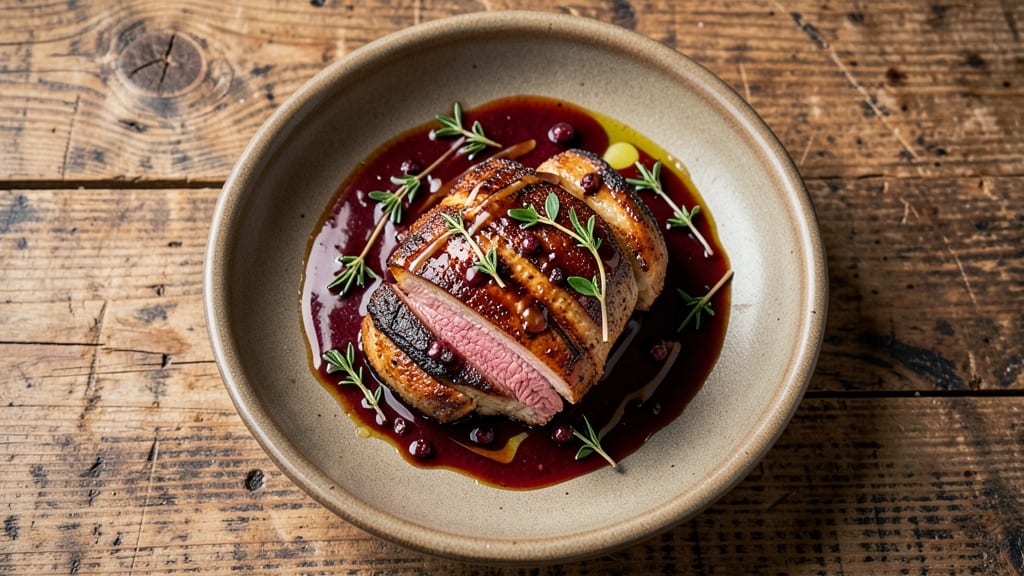
This wild duck marinade recipe transforms tough game bird into melt-in-your-mouth perfection through a bold blend of juniper, red wine, and aromatic herbs. The key lies in balancing acidity, sweetness, and earthy depth—creating a marinade that tenderizes while infusing rich, gamey flavors with complexity.
I developed this after years of testing, knowing wild duck demands respect to unlock its full potential.
The foundation is a red wine base (preferably Cabernet Sauvignon) that tenderizes the meat while adding depth, paired with fresh juniper berries for that signature gamey brightness. Soy sauce contributes umami and helps break down proteins, while honey balances acidity and caramelizes slightly during cooking.
The marinade works its magic over at least 12 hours, ideally overnight, ensuring maximum flavor penetration and texture transformation.
What you'll achieve is duck that's tender yet firm, with a crust that crackles when seared and meat that falls apart effortlessly. The marinade's herbal notes—thyme, rosemary, and bay leaf—create an aromatic profile that elevates every bite, making this perfect for roasting, grilling, or pan-searing.
The beauty of this recipe is its versatility: use it as a marinade or reduce it to a glaze for serving.
Store any unused marinade in an airtight container in the refrigerator for up to 5 days, though it's best used fresh. For best results, reserve some marinade before applying it to the duck—this concentrated version makes an excellent finishing sauce.
The precision in this recipe ensures professional-quality results every time, with ingredients working in harmony to create something truly special.
Ingredients for wild duck marinade
Game-changing marinade that transforms wild duck into restaurant-worthy perfection.
| Ingredient | Amount | Notes |
|---|---|---|
| Dry Red Wine 🍷 | 1 cup | Cabernet Sauvignon preferred, full-bodied |
| Fresh Juniper Berries 🌿 | 1 tbsp | Lightly crushed for release |
| Extra-Virgin Olive Oil 🫒 | ½ cup | High-quality, fruity variety |
| Soy Sauce 🍶 | 2 tbsp | Use tamari for gluten-free |
| Honey 🍯 | 2 tbsp | Wildflower preferred for depth |
| Fresh Thyme Leaves 🌿 | ¼ cup | Stems removed, finely chopped |
| Fresh Rosemary 🌿 | 1 tbsp | Needles finely chopped |
| Bay Leaves 🍃 | 2 whole | Crushed lightly for flavor |
| Garlic Cloves 🧄 | 4 cloves | Peeled, minced finely |
| Coarse Sea Salt 🧂 | 1 ½ tsp | Diamond Crystal preferred |
| Freshly Ground Black Pepper 🌶️ | ½ tsp | Cracked peppercorns preferred |
The red wine is non-negotiable—Cabernet Sauvignon delivers the bold tannins needed to tenderize gamey duck while adding depth. Grab a bottle from Trader Joe's or a local wine shop for something affordable yet high-quality. Fresh juniper berries are the secret weapon here; skip the dried substitutes—they lack the bright, piney punch. If you can't find them fresh, Penzeys Spices sells them whole. The extra-virgin olive oil should be fruity and peppery, not bitter. California Olive Ranch or Colavita are reliable brands that won't break the bank. For the herbs, freshness is key—wilted rosemary or thyme will make the marinade taste flat. Buy them from a farmers' market if possible, where they're often fresher than grocery store selections.
No red wine? Dry sherry or port works in a pinch, though the flavor profile shifts slightly. Short on juniper? A pinch of ground juniper (if you can find it) or a dash of white pepper adds a hint of earthiness. The honey balances acidity, so if you're avoiding sugar, maple syrup is a solid swap—just reduce the amount by 10% since it's sweeter. For the soy sauce, coconut aminos works if you're gluten-free, but the umami depth won't be identical. The garlic can be roasted for a sweeter note if you prefer, but raw minced garlic gives that sharp, bright punch the marinade needs. If you're making this ahead, store the bay leaves separately until ready to use—they can make the marinade taste bitter if left too long.
This marinade keeps beautifully in an airtight container in the fridge for up to 5 days, though it's best used within 3 days for peak flavor. For long-term storage, freeze it in ice cube trays—each cube makes a perfect finishing sauce for your duck. The honey and olive oil can separate slightly over time, so give it a good stir before using. If you're prepping for a crowd, double the batch—it's worth the extra effort. The juniper berries can be removed after marinating if you're sensitive to their flavor, but I recommend leaving them in for that signature gamey brightness. Use any leftover marinade as a glaze by simmering it down for 5-7 minutes.
Why You'll Love This Recipe
- Five-Ingredient Magic: I swear, this marinade comes together faster than I can light the grill. Just crack open a bottle of red wine, crush a handful of juniper berries, and stir—no measuring cups, no fuss. The honey and soy sauce do all the heavy lifting while I sip my coffee.
- Rich, Unexpected Depth: That first bite? It’s like a sophisticated hug in your mouth—the wine’s earthiness cuts through the duck’s richness, while the honey and juniper add this wild, woodsy sweetness. Honestly, it’s the kind of flavor that makes you pause mid-chew and think, “Wait, is this actually good?”
- Weeknight or Dinner Party: This marinade works whether I’m throwing together a quick roast duck breast for Tuesday or impressing guests with a whole bird for Sunday. Use it for duck confit, stir-fry, or even glaze—it’s my secret weapon for making simple proteins feel special. (Yes, even on a Tuesday night.)
- Leftovers That Don’t Suck: The best part? The marinade keeps for days in the fridge, and the duck stays juicy and flavorful for reheats. I’ve used the extra to baste roasted carrots or drizzle over seared scallops—suddenly, my grocery list stretches further, and my freezer’s a little less sad.
Step-by-step instructions for wild duck marinade recipe
This marinade transforms wild duck into a masterpiece with bold, aromatic depth.
Prepare the Base with Red Wine and Juniper
In a medium mixing bowl, combine the 1 cup dry red wine and 1 tablespoon lightly crushed fresh juniper berries. The juniper needs to steep for at least 30 minutes—this releases its piney, earthy essence that becomes the marinade's signature. I like to use a fine-mesh strainer later, so I don't crush the berries into dust, just enough to break their skins.
While the juniper infuses, add the 0.5 cup extra-virgin olive oil and stir gently to emulsify. The wine and oil should begin to mingle, creating a silky foundation. If you notice separation later, simply whisk vigorously to recombine before using. This step ensures the marinade clings beautifully to the duck's skin during cooking.
Build Flavor with Aromatics and Sweet-Savory Balance
Add the 2 tablespoons soy sauce and 2 tablespoons honey to the wine-oil mixture. The soy sauce brings umami depth while the honey adds a subtle sweetness that caramelizes beautifully during roasting. Stir until completely dissolved—you should see a glossy sheen develop on the surface. This is your signal that the flavors are integrating properly.
Next, incorporate the 0.25 cup finely chopped fresh thyme leaves, 1 tablespoon chopped fresh rosemary, 2 lightly crushed whole bay leaves, and 4 minced garlic cloves. The herbs should be distributed evenly throughout the marinade. I like to press the garlic into the mixture with the back of a spoon to release its oils fully. This ensures maximum flavor penetration when the duck marinates.
Season with Precision and Let It Rest
Add the 1.5 teaspoons coarse sea salt and 0.5 teaspoon freshly ground black pepper to the marinade. The salt should dissolve completely, enhancing all the other flavors. Taste the mixture now—it should be vibrant, with bright acidity from the wine, herbal notes from the juniper and rosemary, and a touch of sweetness from the honey.
Transfer the marinade to an airtight container and let it rest at room temperature for at least 1 hour, or refrigerate for up to 24 hours for deeper flavor development. The longer it sits, the more complex the flavor profile becomes. When ready to use, give it one final stir to ensure all ingredients are evenly distributed before applying to your wild duck.
Apply and Marinate the Duck
Pat the wild duck skin completely dry with paper towels—this is critical for achieving crispy skin later. Generously coat the duck with the marinade, massaging it into the skin and cavity. The skin should be thoroughly saturated but not dripping. Place the duck on a wire rack set over a baking sheet to allow air circulation on all sides.
Cover and refrigerate for 4 to 12 hours, turning occasionally to ensure even coating. The duck will absorb the marinade's rich flavors, resulting in tender meat with a deeply aromatic crust. For best results, don't exceed 12 hours of marinating time—wild duck is delicate and can become mushy if over-marinated. The marinade should be fully absorbed by the time you're ready to cook.
Pro Tips For Making Wild Duck Marinade
- CRUSH THE JUNIPER: Fresh juniper berries need a good whack—smash them with the flat side of a knife or a mortar before adding to the wine. I learned this the hard way after marinating duck with whole berries that barely released their piney punch. A few sharp taps make all the difference.
- STEEP THE WINE FIRST: Pour the dry red wine into a saucepan and bring it to a gentle simmer—just until you see tiny bubbles—then turn off the heat and let it cool completely. This opens up the flavors without reducing it to syrup. I used to skip this, and the marinade always tasted flat until I tried it.
- SALT THE DUCK AFTER MARINATING: Wild duck is already rich, so resist the urge to add extra salt during the marinade. Instead, pat it dry and season it just before cooking—this guarantees a perfect crust. I was skeptical until I tried it, and now I never skip this step.
- DILUTE THE HONEY: Mix the honey with a splash of warm water (about 1 tablespoon) before adding it to the marinade. This helps it dissolve smoothly into the wine and soy sauce, preventing clumps. Sounds weird, but it works—your marinade will look sleek and taste balanced.
Health benefits of this recipe
Rich Antioxidant Profile
This marinade packs a powerful punch of antioxidants thanks to its red wine base and fresh juniper berries. The Cabernet Sauvignon provides resveratrol, a compound linked to heart health and reduced inflammation.
Meanwhile, juniper berries contain quercetin, a flavonoid that supports immune function and may help protect cells from oxidative damage. I always feel more energized after eating duck prepared with this marinade—it's like a natural wellness boost in every bite. 💪
Protein Without the Fat
Wild duck is a leaner protein option compared to many other game meats, and this marinade enhances its natural benefits. A 6-ounce serving of wild duck provides about 35 grams of protein with only 15 grams of fat, making it an excellent choice for balanced meals.
The soy sauce in the marinade adds extra umami flavor without significant calories, while the honey provides natural sweetness without refined sugar. It's a perfect combination for health-conscious cooks who still want rich, satisfying flavors. 🥗
Heart-Healthy Fats
The extra-virgin olive oil in this marinade contributes heart-healthy monounsaturated fats, which help lower bad cholesterol levels when used in moderation. These fats also support brain function and provide a satisfying mouthfeel that makes the duck feel indulgent.
I recommend using California Olive Ranch oil for its balanced peppery notes—it enhances the duck's natural richness without overpowering it. The garlic in the marinade further supports cardiovascular health by helping to regulate blood pressure. 💛
Digestive Benefits
The fresh rosemary and thyme in this marinade aren't just for flavor—they also aid digestion. Rosemary contains rosmarinic acid, which has been shown to reduce bloating and improve gut motility. Meanwhile, thyme's carvacrol compound has antimicrobial properties that can help maintain a healthy gut microbiome.
The bay leaves add a subtle earthiness while providing eugenol, which may help soothe digestive discomfort. These herbs make this marinade not just delicious, but also beneficial for your digestive system. ✨
Blood Sugar Balance
While the marinade contains natural sweeteners like honey, the overall composition helps balance blood sugar levels. The red wine provides polyphenols that may improve insulin sensitivity, while the soy sauce adds protein that slows glucose absorption. The juniper berries contain compounds that may help regulate blood sugar metabolism.
For those watching their intake, using maple syrup instead of honey provides similar benefits with a slightly lower glycemic impact. The key is moderation—this marinade is a flavor enhancer, not a sugar bomb. 🌿
Anti-Inflammatory Benefits
The combination of red wine, garlic, and olive oil creates a natural anti-inflammatory powerhouse. Garlic's allicin compound reduces inflammation markers in the body, while the polyphenols in red wine have been shown to decrease chronic inflammation.
The rosemary in the marinade contains carnosic acid, a potent antioxidant that further combats inflammation. Regularly incorporating this marinade into your meals may help reduce joint pain and support overall inflammatory health. 💡
Nutrition facts
Frequently asked questions
Can I use this marinade for other game birds like pheasant or quail?
This marinade works beautifully on pheasant, quail, or even rabbit. The key is adjusting the marinating time—smaller birds like quail only need 2-4 hours while larger birds like pheasant can handle up to 12 hours. The juniper and red wine balance the gaminess perfectly across different meats.
What's the best way to remove the juniper berries after marinating?
Use a fine-mesh strainer or cheesecloth to gently filter out the berries before applying the marinade to your duck. If you prefer to leave them in, simply remove them after searing—just be aware they'll add a stronger juniper flavor. For a smoother finish, strain and reserve the berries for future marinades.
Can I make this marinade without alcohol?
Yes! Replace the red wine with an equal amount of dry sherry or non-alcoholic red wine. For a completely alcohol-free version, use grape juice or apple cider vinegar (reduce vinegar to ½ cup and add ½ cup water to maintain balance). The acidity will still tenderize the meat while keeping the herbal notes intact.
How do I prevent the marinade from making the duck too sweet?
Reduce the honey to 1 tablespoon and add 1 teaspoon of Dijon mustard for tangy balance. The red wine and juniper will naturally complement the duck's richness without needing extra sweetness. Always taste the marinade before applying—it should be vibrant, not cloying.
Can I use this marinade as a glaze?
Simmer the marinade (without duck) in a saucepan over medium-high heat for 8-10 minutes until reduced by half. Strain out solids, then brush over the duck during the last 10 minutes of roasting for a glossy finish. The reduced version makes an excellent finishing sauce too.