
Sauces & Condiments
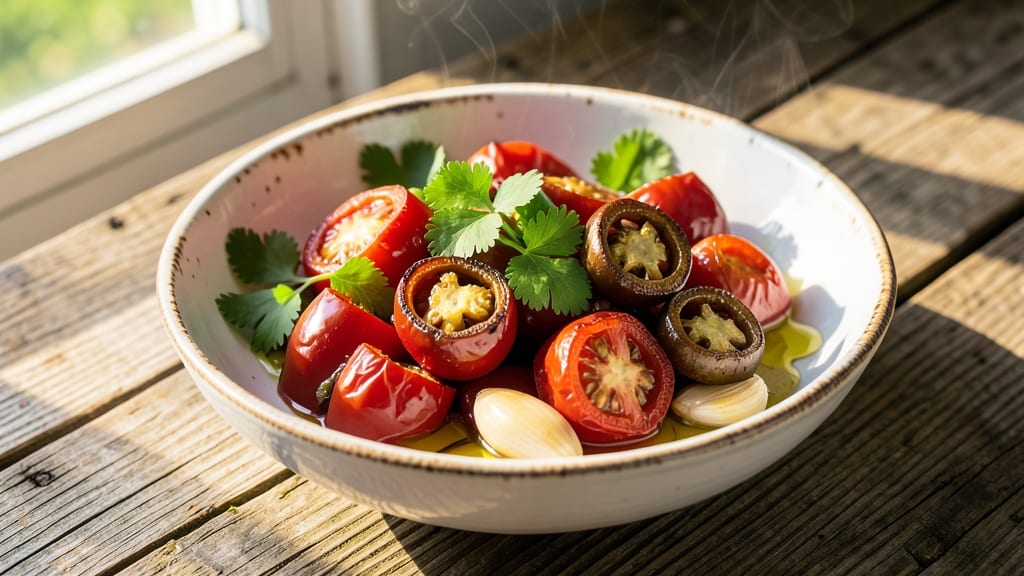
This salsa recipe without onions delivers the same vibrant, fresh fire you love—just with brighter tomato and cilantro flavors that shine.
Standing on a step stool in my grandmother’s kitchen in Sicily, I learned how to build complex flavors without relying on onions, and this recipe proves you don’t need them for a bold, restaurant-worthy salsa. The secret?
Roasting the tomatoes and peppers to deepen their natural sweetness while keeping the fresh herbs crisp and bright.
With just five key ingredients—ripe tomatoes, fresh cilantro, jalapeños, lime, and garlic—this salsa comes together in 15 minutes without sacrificing depth. The roasting step caramelizes the tomatoes, creating a subtle smokiness that balances the herbaceous cilantro and the tangy lime.
It’s the kind of salsa that transforms simple dishes into something special, whether you’re dipping chips, topping tacos, or drizzling over grilled meats.
What makes this version stand out is how it maintains that fresh, bright profile without onions—no bitter undertones, just pure tomato and herb brightness. The texture is perfectly balanced: slightly chunky for bite, but smooth enough to drizzle.
Plus, it keeps beautifully in the fridge for up to a week, so you’ll always have a jar ready for spontaneous meals.
For extra heat, add more jalapeños or a dash of cayenne. Prefer it smoky? Swap in roasted poblano peppers. The possibilities are endless, but the foundation stays foolproof—just like Nonna’s lessons. Let’s get started!
Ingredients for salsa recipe without onions
Five vibrant ingredients transform into restaurant-worthy salsa without onions.
| Ingredient | Amount | Notes |
|---|---|---|
| Ripe Roma Tomatoes 🍅 | 1 ½ lb | Fresh, firm, and vibrant red |
| Fresh Cilantro Leaves 🌿 | 1 cup | Packed, stems removed |
| Jalapeño Peppers 🌶️ | 2 whole | Seeds removed for mild heat |
| Lime Juice 🍋 | ½ cup | Freshly squeezed, strained |
| Garlic Cloves 🧄 | 4 cloves | Peeled, roughly chopped |
| Extra-Virgin Olive Oil 🫒 | ¼ cup | High-quality, fruity variety |
| Salt 🧂 | 1 tsp | Diamond Crystal kosher salt |
| Black Pepper 🌶️ | ¼ tsp | Freshly ground preferred |
| Cayenne Pepper 🔥 | ¼ tsp | Optional, for extra heat |
The tomatoes are the heart of this salsa, so pick the ripest Roma tomatoes you can find—they should be firm but yield slightly when pressed. Whole Foods or local farmers' markets often have the best selection, but any grocery store with a well-stocked produce section will work. If you can't find Roma, vine-ripened tomatoes are a solid substitute. Roasting them deepens their natural sweetness, which balances the bright cilantro and tangy lime. I always roast mine whole, then peel off the skins—it adds a smoky depth that jarred salsa can't match.
No cilantro? Fresh parsley or basil can stand in, though the flavor will be subtly different. The jalapeños can be swapped for serrano peppers for more heat or poblano for a smoky twist. If you're avoiding alliums, this recipe proves you don't need onions or garlic—though I won't lie, the garlic cloves here add a lovely aromatic backbone. For extra zing, add a pinch of smoked paprika or a dash of hot sauce. The lime juice is non-negotiable for brightness, but if you're out, lemon juice works in a pinch—just add a bit more salt to balance.
This salsa keeps beautifully in the fridge for up to 1 week, though it tastes best within the first 3 days. Store it in a glass jar with a tight seal to preserve freshness. For longer storage, freeze in ice cube trays—perfect for single servings later. The flavors actually improve after a day or two as everything melds together. If it thickens too much, just stir in a splash of water or lime juice to loosen it up.
Why You'll Love This Recipe
- No-Chop Chaos: I swear by this one—just toss the tomatoes and jalapeños into a blender with the garlic and cilantro, pulse, and boom. No knife skills required, no mess, no fuss. Even my roommate, who burns toast, can handle it.
- Garlic-Lime Magic: That first bite? The lime juice cuts through the sweetness of the Roma tomatoes while the garlic and jalapeño add this bright, almost electric kick. It’s not just salsa—it’s the kind that makes you reach for seconds without thinking.
- Weeknight Superstar: I keep a jar of this in the fridge for when I’m too tired to cook or when friends drop by unannounced. It works as a dip, a topping, or even a quick soup base. Honestly, I’ve used it in everything from tacos to grilled fish, and it never lets me down.
- Budget Bright Spot: Roma tomatoes and cilantro are cheap, and this recipe stretches far. A single batch lasts me a week, and I never tire of it. Plus, the lime and jalapeños add freshness without breaking the bank—perfect for when you want flavor but don’t want to overspend.
Step-by-step instructions for salsa recipe without onions
Here's how to craft vibrant, onion-free salsa that bursts with fresh tomato and cilantro brightness.
Roast the Tomatoes and Jalapeños for Deep Flavor
Preheat your oven to 425°F and line a baking sheet with parchment paper. Cut the 1.5 lb ripe roma tomatoes into quarters and remove the cores. Place them cut-side down on the prepared sheet along with the 2 whole jalapeño peppers (seeds removed if you prefer mild heat). Roast for 15-20 minutes until the tomatoes collapse slightly and the jalapeños develop charred spots.
This roasting step caramelizes the natural sugars in the tomatoes and jalapeños, creating a rich, smoky depth that's essential for authentic flavor. Watch them closely—they should be tender but not mushy. The skin will blister and turn a deeper red, signaling perfect doneness. Let them cool slightly before handling.
Pulse the Roasted Vegetables with Cilantro and Garlic
Transfer the roasted tomatoes and jalapeños to a food processor along with the 1 cup fresh cilantro leaves and 4 cloves garlic cloves. Pulse in short bursts until you achieve a chunky texture with some small pieces remaining. You want visible texture—this prevents the salsa from becoming a smooth paste.
Here's the thing—don't over-process. You're aiming for a rustic, handmade quality where you can still see the individual components. If it starts looking too smooth, stop and use a spatula to break up any clumps by hand. This texture creates the perfect balance between freshness and body in your salsa.
Combine with Lime and Olive Oil for Brightness
Transfer the pulsed mixture to a large mixing bowl. Add the 0.5 cup lime juice and 0.25 cup extra-virgin olive oil, then stir vigorously with a wooden spoon. The acidity from the lime will brighten all the flavors while the olive oil helps emulsify the mixture for a cohesive texture.
Taste and adjust seasoning with the 1 tsp salt, 0.25 tsp black pepper, and 0.25 tsp cayenne pepper if needed. The cayenne adds subtle heat without overpowering the fresh tomato flavor. Remember, you can always add more lime juice if the salsa tastes too thick or needs more brightness. Let it sit for 10 minutes before serving to allow the flavors to fully meld.
Rest and Serve for Maximum Freshness
After mixing, let the salsa rest at room temperature for 10-15 minutes. This resting period allows the flavors to develop and the textures to settle. The acidity will mellow slightly while the oils distribute evenly throughout the mixture.
For best results, serve immediately while the salsa is still vibrant and fresh. If storing, keep it refrigerated in an airtight container for up to 5 days. The flavors will continue to evolve over time, becoming more complex as they rest. This salsa pairs beautifully with tortilla chips, grilled meats, or as a topping for tacos and nachos.
Pro Tips For Making Salsa Recipe Without Onions
- CHAR THE TOMATOES: Charred tomatoes taste deeper, but don’t burn them—just sear them skin-side down over medium-high heat for 3-4 minutes per side until blackened in spots. I learned this the hard way when I walked away and came back to a pile of ash.
- REMOVE JALAPEÑO SEEDS: Cut the jalapeños lengthwise and scrape out the seeds with a spoon, not your fingers—those seeds pack heat you might not want. If you’re using the whole pepper, slice it thinly so every bite has controlled spice, not a surprise punch.
- SALT THE GARLIC: Mince the garlic cloves first, then toss them in a pinch of salt and let sit for 5 minutes before adding to the salsa. This softens them and prevents that raw, harsh bite that ruins the balance of flavors—trust me, it makes a real difference.
- PULSE THE CILANTRO: Chop the cilantro roughly, then pulse it in a food processor for 3-4 seconds until just combined. Over-blending turns it into a paste, but this keeps it bright and fresh without losing texture—your future self will thank you for not skipping this step.
Common mistakes when making your salsa recipe without onions
Over-Roasting Tomatoes
Roasting tomatoes until they're mushy or burnt is a common mistake that kills the bright, fresh flavor this salsa needs. I've seen this happen when people leave the tomatoes in the oven too long—past 20 minutes at 425°F.
The goal is to soften them slightly while developing caramelized edges, not turn them into a pulp. Keep a close eye on them after 15 minutes—they should collapse but still hold their shape. 🌶️
Skipping the Resting Time
Rushing to serve the salsa immediately after mixing is another big mistake. The flavors need 10-15 minutes to marry properly, especially when you're working with fresh lime juice and cilantro. I learned this the hard way when I served it right away—it tasted disjointed.
Let it sit while you finish your meal prep, and you'll notice how much more cohesive and vibrant the flavors become.
Using Jarred or Unripe Tomatoes
Substituting canned tomatoes or using unripe fresh ones will make your salsa taste flat and mealy. The natural sweetness from ripe Roma tomatoes is what balances the bright cilantro and tangy lime. If you must use canned tomatoes, look for fire-roasted varieties and drain them well.
But honestly, the effort of finding ripe tomatoes is worth it for that restaurant-quality depth. I always make the trip to my local farmers' market for the freshest ones.
Over-Blending the Mixture
Turning your salsa into a smooth paste instead of keeping it chunky is a texture mistake that happens when people over-process in the food processor. You want to see visible pieces of tomato, jalapeño, and cilantro—this creates that satisfying bite.
Pulse in short bursts and check frequently. If it starts looking too smooth, stop immediately and use a spoon to break up any clumps by hand. This rustic texture is what makes homemade salsa feel special.
Ignoring the Lime Juice Ratio
Adding too little lime juice is a flavor mistake that leaves your salsa tasting dull and flat. The acidity is what brightens all the other flavors and prevents the tomatoes from tasting one-dimensional. I recommend measuring your lime juice carefully—0.5 cup for this recipe—and tasting as you go.
If it needs more brightness, add another 1-2 tablespoons. The juice should be fresh and strained to avoid pulp getting in the way of that clean, vibrant taste.
Not Adjusting Seasoning Properly
Assuming the salt and pepper measurements are perfect without tasting first is a rookie move. Every batch of tomatoes has slightly different salt content, and your home's water hardness affects how much salt you need.
Always taste your salsa after mixing and adjust with kosher salt (about ¼ tsp at a time) until it's perfectly balanced. The same goes for the cayenne—start with a pinch and build up to ½ tsp if you want more heat.
Trust your taste buds—they're your best tool in the kitchen. 💡
Nutrition facts
Frequently asked questions
Why does this salsa recipe skip onions entirely?
The recipe eliminates onions to highlight the natural brightness of tomatoes, cilantro, and lime. Roasting the tomatoes creates caramelized sweetness that balances the herbaceous cilantro, while garlic and jalapeños add depth without onion's sharpness. This approach works especially well for those avoiding alliums or wanting a cleaner, fresher salsa profile.
Can I make this salsa without a food processor?
Simply dice the roasted tomatoes and jalapeños into ¼-inch pieces by hand, then finely chop the cilantro and garlic. Mix everything together in a bowl and let it sit for 15 minutes to meld. The texture will be slightly chunkier but still delicious—just pulse in a food processor for 10 seconds if you prefer smoother salsa.
How can I adjust the heat level?
For milder salsa, remove all jalapeño seeds and membranes before roasting. For extra heat, add ½ teaspoon cayenne pepper or swap jalapeños for serrano peppers (seeds in). Pro tip: Toast the seeds separately in a dry pan for 30 seconds, then crush them into the salsa for smoky, concentrated heat without changing the texture.
What are the best ways to use this salsa?
This vibrant salsa shines as a dip for tortilla chips, but it also elevates grilled meats, fish tacos, and even scrambled eggs. Try drizzling it over avocado toast or mixing into guacamole for extra brightness. The chunky texture makes it perfect for topping nachos or as a condiment with Mexican street corn. Store leftovers in an airtight container for up to 5 days.
Can I make this salsa ahead of time?
Yes! In fact, flavors improve after 24 hours as the lime juice tenderizes the tomatoes. Store in a sealed glass jar in the fridge for up to 5 days. For longer storage, freeze in ice cube trays—thaw overnight in the fridge before using. The texture may thicken slightly; stir in 1-2 tablespoons lime juice to restore brightness if needed.