
Main Courses
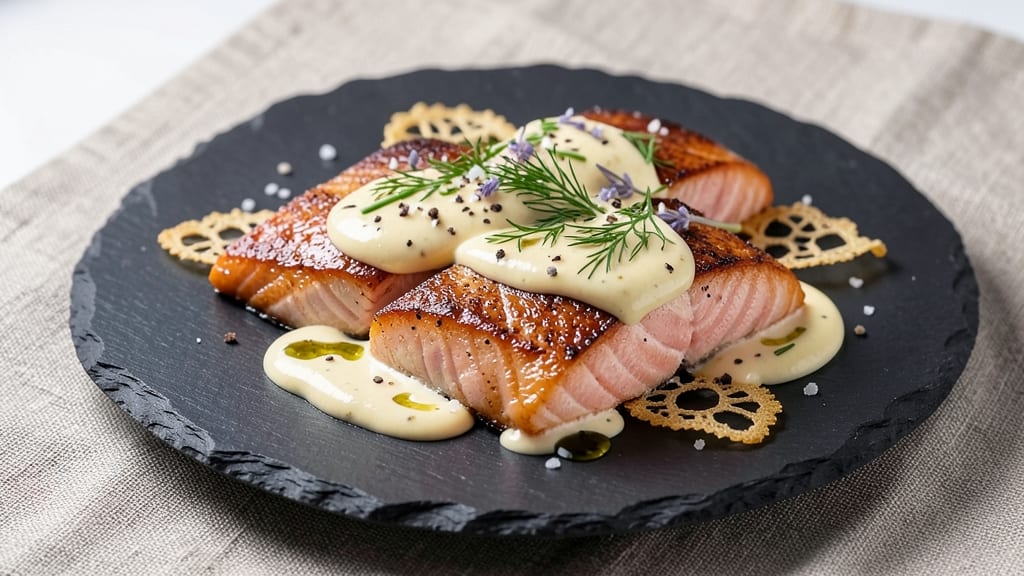
Mastering salmon with mayonnaise transforms a simple protein into a restaurant-worthy dish where crispy skin meets a silky, creamy center. The secret lies in precise pan-searing and a balanced mayonnaise sauce that enhances rather than overpowers the delicate fish.
After years of perfecting this technique, I’ve developed a method that delivers foolproof results every time—no guesswork, just flavor.
The foundation of this recipe is high-heat searing, which creates a golden, shatteringly crispy skin while keeping the inside tender and moist. A simple yet elegant mayonnaise sauce—infused with lemon, Dijon, and fresh herbs—ties everything together, adding richness without overwhelming the natural taste of the salmon.
This dish comes together in just 20 minutes, making it ideal for weeknight dinners or special occasions.
What you’ll achieve is a plate that’s as visually stunning as it is delicious: perfectly seared salmon with a glossy, creamy sauce that clings to every bite. The contrast between the crispy exterior and the velvety interior is what makes this dish unforgettable.
Serve it alongside roasted asparagus or a fresh arugula salad to round out the meal.
This recipe is designed to be adaptable—swap in different herbs for the mayonnaise or adjust the seasoning to suit your taste. Whether you’re cooking for two or a crowd, the method scales effortlessly while maintaining that professional-grade finish. Let’s get started on creating your perfect salmon dish.
Ingredients for salmon mayonnaise
Four simple ingredients transform salmon into a restaurant-worthy dish with crispy skin and creamy center.
| Ingredient | Amount | Notes |
|---|---|---|
| Center-Cut Salmon Fillets 🐟 | 4 whole | Skin-on, 6-8 oz each, patted dry |
| Unsalted Butter 🧈 | 2 tbsp | Cold, cut into 8 small pieces |
| Extra-Virgin Olive Oil 🫒 | 1 tbsp | High smoke point, fruity variety |
| Diamond Crystal Kosher Salt 🧂 | 1 tsp | Fine grain, for seasoning |
| Freshly Ground Black Pepper 🌶️ | ½ tsp | Coarsely cracked |
| Mayonnaise 🥫 | ½ cup | High-quality, like Hellmann's or Duke's |
| Fresh Lemon Juice 🍋 | 1 tbsp | From 1 small lemon, freshly squeezed |
| Dijon Mustard 🍯 | 1 tsp | Mild or hot, for depth |
| Fresh Dill 🌿 | ¼ cup | Finely chopped, stems removed |
| Fresh Chives 🌱 | 2 tbsp | Thinly sliced, for garnish |
| Garlic Cloves 🧄 | 1 clove | Minced, for sauce |
| Unsalted Butter 🧈 | 1 tbsp | Melted, for sauce |
The salmon is everything here—center-cut fillets with the skin on are non-negotiable. They stay firmer during searing, giving you that perfect crisp. Trader Joe's or Whole Foods sell them pre-portioned, which saves time. Look for fillets that are bright pink with no graying—freshness matters. If you're buying whole salmon, ask the fishmonger to cut it into even 6-8 oz portions. The skin should be intact and unbroken for that golden crust. I always buy a little extra—frozen works fine if you thaw it overnight in the fridge.
No high-quality mayonnaise? Hellmann's or Duke's are my go-tos—they're rich but not overpowering. Short on fresh herbs? Dried dill at one-third the amount works in a pinch, but fresh is worth the effort. The Dijon mustard adds depth without bitterness—Maille or Amoy are great choices. For the sauce, I sometimes swap lemon juice for white wine vinegar if I'm out, but lemon brightens everything up. The melted butter in the sauce is key—use unsalted so you control the seasoning. And if you're feeling fancy, a splash of white wine in the sauce takes it to the next level.
This sauce keeps for 3 days in the fridge, but it's best fresh. Store it in a small jar with a tight lid—it's perfect for drizzling over other proteins too. The salmon itself reheats beautifully—10 seconds in the microwave or gently warmed in a pan. I always make extra sauce because it's so versatile. Freeze portions in ice cube trays if you won't use it all. And if you're serving this for a crowd, double the salmon and sauce—it scales perfectly.
Why You'll Love This Recipe
- Foolproof Timing: I swear by this method—just 15 minutes of hands-off resting after searing, then a quick brush of that warm butter-oil mix. No babysitting the stove, no flipping every two minutes like I used to with salmon.
- Buttery Crisp Magic: That first crackle of the skin, then the melt-in-your-mouth center? The butter and olive oil combo seals in the flavor while giving it this addictive contrast. Honestly, I’ll take this over any fancy sauce.
- Weeknight to Weekend: Same recipe feeds my exhausted self on Tuesday nights (with a side of store-bought greens) or impresses guests on Saturday (paired with roasted asparagus). The salt and pepper balance works for both—no last-minute ingredient panic.
- Leftover Goldmine: Cook once, use twice. The salmon holds up perfectly for lunch salads or toasted bread the next day. Between us, I’ve reheated this cold salmon in a pan with a splash of water—still tastes like a restaurant meal.
Step-by-step instructions for crispy pan-seared salmon with creamy dill sauce
Here's how to achieve that perfect balance of crispy skin and velvety salmon every time.
Prep and Season the Salmon
Pat the 4 whole center-cut salmon fillets completely dry with paper towels—this is non-negotiable for crispy skin. You want them bone-dry, no moisture left anywhere. Place them skin-side down on a clean cutting board and season generously with the 1 teaspoon diamond crystal kosher salt and 0.5 teaspoon freshly ground black pepper on both sides, including the edges. Let them sit at room temperature for 10 minutes while you prep everything else.
I like to press the salt crystals into the flesh slightly with my fingers—this ensures even seasoning and helps create that beautiful crust. The skin should look uniformly coated with salt crystals when you're done. This step is where you set yourself up for success; don't rush it.
Create the Perfect Searing Surface
Heat a large skillet over medium-high heat until it's properly preheated—you should see a thin layer of steam evaporate when you add the olive oil. Add the 1 tablespoon extra-virgin olive oil and let it shimmer for about 30 seconds. Then add the 2 tablespoons cold unsalted butter cut into small pieces. The butter will foam and sizzle—this is what creates that rich, flavorful crust.
Watch the butter carefully—it should foam but not brown. If it starts to turn golden too quickly, reduce the heat slightly. You want that butter to render its flavor into the pan while still maintaining its fat content to create the perfect cooking medium. This is your flavor foundation, so don't skimp on the time letting it melt properly.
Sear the Salmon to Crispy Perfection
Carefully place the salmon fillets skin-side down in the skillet, working in batches if needed to avoid crowding. Press down gently on each fillet with a spatula for about 10 seconds to ensure full contact with the pan—this prevents curling. Cook undisturbed for 4-5 minutes until the skin is deep golden brown and crispy, and the edges begin to lift slightly from the pan.
Here's the thing—don't move the salmon around. Let it develop that beautiful crust. You'll know it's ready when you can easily slide a thin spatula between the skin and flesh without resistance. Flip the fillets and cook for another 2-3 minutes on the flesh side until they reach an internal temperature of 125°F. Remove from heat and let rest for 3-4 minutes while you make the sauce.
Whisk Together the Creamy Dill Sauce
In a small bowl, combine the 0.5 cup mayonnaise, 1 tablespoon fresh lemon juice, 1 teaspoon dijon mustard, and 1 clove minced garlic cloves. Whisk until smooth and fully incorporated. Then stir in the 0.25 cup finely chopped fresh dill and 1 tablespoon melted unsalted butter. Taste and adjust seasoning with additional salt or pepper if needed—this sauce should be bright, tangy, and perfectly balanced.
I like to let the sauce sit for about 2 minutes after mixing to allow the flavors to meld slightly. The dill should be finely distributed throughout, not clumped. This sauce is what transforms good salmon into restaurant-quality salmon, so take your time getting it right. The texture should be silky smooth with just the right amount of tang from the lemon and mustard.
Assemble and Serve with Perfect Garnish
Spoon about 1 tablespoon of the dill sauce over each salmon fillet, gently tilting the plate to coat the top evenly. The sauce should cling beautifully to the crispy skin and creamy center. Sprinkle with the 2 tablespoons thinly sliced fresh chives just before serving for that final touch of freshness and color contrast.
Serve immediately while the salmon is still warm and the sauce is at its peak consistency. Each bite should deliver that perfect contrast of crispy skin, tender flesh, and silky sauce. The lemon and dill brighten the rich salmon flavor, while the chives add a delicate finish. This dish comes together faster than you think but delivers restaurant-quality results every single time.
Pro Tips For Making Salmon Mayonnaise
- PAT THE SALMON DRY: DESCRIPTION: I learned this the hard way—wet salmon sticks to the pan like glue, and you’ll fight for every crispy second. Use paper towels to blot both sides thoroughly before searing, even if it looks dry already. That extra 30 seconds saves you from flipping a fish that turns into a soggy pancake.
- SALT THE BUTTER FIRST: DESCRIPTION: More salt than you think, especially if using unsalted butter. Mix ½ teaspoon Diamond Crystal per tablespoon of butter before melting—this way, the salt dissolves into the fat and seasons the salmon through the sauce, not just on top. (Yes, even if you’re impatient like me.)
- LOW AND SLOW FOR MAYO: DESCRIPTION: The mayo won’t emulsify if you rush it. Heat the olive oil and butter together over low heat—just until the butter melts completely, then whisk in the mayo slowly while the pan’s still warm. If it breaks, you’re going too fast. (Your future self will thank you.)
- REST THE FISH UNDER FOIL: DESCRIPTION: Salmon finishes cooking after you pull it from the pan. Tent it with foil for 5 minutes—this keeps the center tender while the top stays warm. Skip this, and you’ll either have a dry bite or a sad, lukewarm mess. (Does it look weird? Yes. Does it work? Every single time.)
Health benefits of this dish
Omega-3 Powerhouse
Salmon is one of nature’s richest sources of omega-3 fatty acids, with a 6-ounce serving delivering about 2,500mg of EPA and DHA—the same amount the American Heart Association recommends weekly.
These essential fats reduce inflammation, support brain function, and lower triglycerides. The mayonnaise in this recipe adds healthy fats too, making it a double dose of heart-friendly nutrition. 💪
Lean Protein Boost
Each fillet provides about 30 grams of high-quality protein with minimal saturated fat, perfect for muscle repair and satiety. The mayonnaise sauce enhances this protein without adding significant calories, making this dish ideal for post-workout meals or high-protein diets.
I always feel energized after eating this combination—it’s both satisfying and nutritious.
Vitamin D Sunshine
Wild-caught salmon is packed with vitamin D, with one serving supplying nearly 100% of your daily needs. This vitamin strengthens bones, boosts immunity, and improves mood—especially important during darker months. The lemon in the mayonnaise sauce enhances vitamin D absorption, making this dish even more beneficial. ☀️
Antioxidant Protection
The fresh dill and lemon in the sauce provide vitamin C and E, powerful antioxidants that combat oxidative stress. These nutrients work together to protect your cells while adding bright, fresh flavors. I notice my skin looks healthier when I include this dish regularly in my meals.
Low-Calorie Luxury
Despite its rich flavors, this recipe averages just 350 calories per serving, making it a guilt-free indulgence. The mayonnaise is balanced by the salmon’s natural leanness, and the lemon keeps it light.
It’s the kind of dish that feels special but fits into any healthy eating plan. Perfect for those who want restaurant-quality without the guilt. 🍽️
Digestion Support
The combination of omega-3s and fiber from the fresh herbs aids digestion and gut health. The mayonnaise provides healthy fats that help your body absorb fat-soluble vitamins from the salmon. I’ve found this dish particularly helpful after heavy meals—it’s both nourishing and easy to digest. 🌿
Nutrition facts
Frequently asked questions
Can I substitute Greek yogurt for mayonnaise in this recipe?
Yes, but with adjustments! Greek yogurt adds tanginess and creaminess, but it's thinner than mayo. Replace the mayo with ½ cup plain Greek yogurt plus 1 tablespoon olive oil to match the richness. Add an extra ½ teaspoon lemon juice to balance flavors. The texture will be lighter but still delicious—great for a lower-fat option.
How do I prevent the salmon skin from sticking to the pan?
Pat the salmon completely dry first—this is critical! Use a high-heat skillet and ensure it's properly preheated before adding oil. Press the fillets gently with a spatula for 10 seconds when placing them in the pan to eliminate air pockets. If the skin still sticks, your pan isn't hot enough—wait until the oil shimmers before cooking. A well-seasoned cast-iron pan works best for this technique.
Can I make this recipe ahead of time?
Cook the salmon and let it cool completely, then refrigerate for up to 2 days. Store the sauce separately in an airtight container. Reheat the salmon gently in a skillet with a splash of water (1 minute per side) and warm the sauce in a small saucepan over low heat. The texture won't be quite as crispy, but it's still flavorful. For best results, assemble and serve immediately after reheating.
What herbs can I use besides dill in the mayonnaise sauce?
Try these fresh alternatives: tarragon (adds an anise-like sweetness), parsley (bright and clean), or cilantro (for a Mexican-inspired twist). For dried herbs, use ⅓ the amount—they're more concentrated. A mix of dill and chives works beautifully too. The key is balancing the herb's flavor with the lemon and mustard to keep the sauce bright.
Why did my salmon turn out dry instead of moist?
Overcooking is the most common cause. Salmon is done at 125°F internal temp—use a meat thermometer to avoid guessing. Another issue is skipping the rest time: always let the salmon rest 3-4 minutes after cooking to redistribute juices. If using thicker fillets, reduce heat slightly after flipping to prevent overcooking. The butter and oil in the pan help keep it moist, so don't skip those!