Soups & Stews
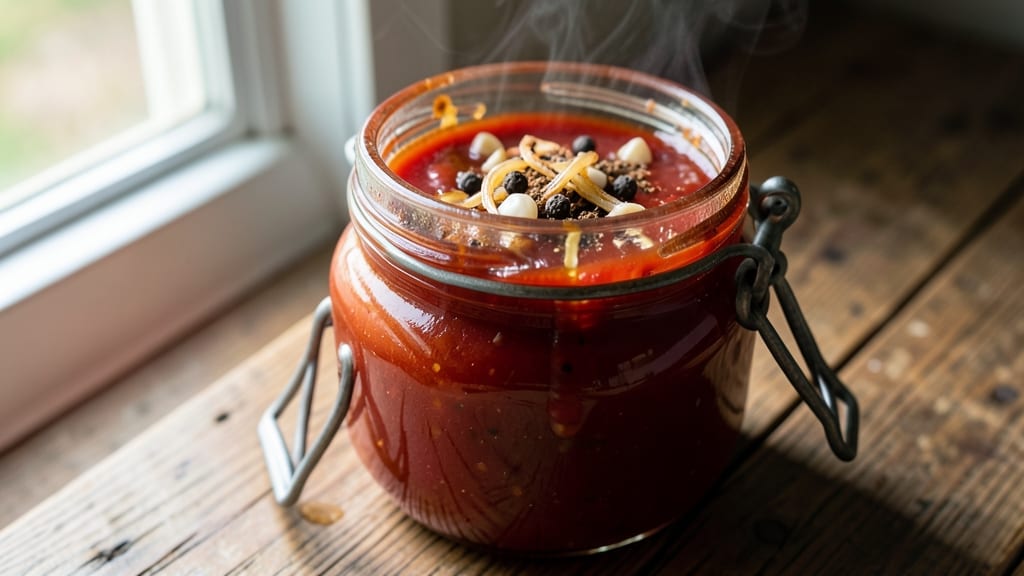
Creating homemade Heinz-style tomato ketchup transforms a simple pantry staple into a rich, tangy sauce with restaurant-quality depth. The secret lies in simmering tomatoes, vinegar, and spices until thickened—no fancy equipment required.
I’ve perfected this recipe after years of testing, ensuring every batch delivers that perfect balance of sweetness and acidity. This isn’t just a condiment; it’s a flavor foundation for burgers, fries, or even glazes.
The process is straightforward but precise: blend ripe tomatoes, simmer with vinegar and sugar, then reduce until thick and glossy. The key is patience—letting the flavors meld over 30-45 minutes creates a sauce that’s smoother and more complex than store-bought.
You’ll need just five core ingredients, but the result is a versatile condiment that elevates any dish. Whether you’re a home cook or a seasoned chef, this method guarantees a tangy, bold sauce every time.
What sets this recipe apart is its adaptability. Adjust sweetness with sugar or spice levels with cayenne, and store it for up to a year in sterilized jars.
The shelf life makes it perfect for meal prep or gifting—just like the classic Heinz product, but with the satisfaction of making it yourself. Your taste buds (and pantry) will thank you.
Ready to make ketchup that rivals the iconic brand? The instructions will walk you through blending, simmering, and bottling for a sauce that’s homemade, bold, and built to last. No shortcuts—just pure, tangy flavor from your kitchen.
Ingredients for heinz tomato ketchup
Five core ingredients transform pantry staples into bold, restaurant-quality ketchup.
| Ingredient | Amount | Notes |
|---|---|---|
| Fresh Ripe Tomatoes 🍅 | 3 lb | Roma or vine-ripened, cored and halved |
| White Vinegar 🍶 | ½ cup | Distilled or apple cider vinegar |
| Granulated Sugar 🍚 | ½ cup | White or light brown preferred |
| Onion 🧅 | 1 whole | Yellow or white, roughly chopped |
| Garlic Cloves 🧄 | 4 cloves | Fresh, peeled and lightly crushed |
| Ground Allspice 🌶️ | ¼ tsp | Freshly ground for authentic flavor |
| Ground Cloves 🌶️ | ¼ tsp | Whole cloves can be ground fresh |
| Salt 🧂 | 1 tsp | Diamond Crystal kosher preferred |
| Black Peppercorns 🌶️ | ½ tsp | Freshly cracked for depth |
| Cayenne Pepper 🔥 | ⅛ tsp | Adjust for heat preference |
The tomatoes are the foundation—Roma or vine-ripened varieties pack the most flavor. Grab them from Trader Joe's or your local farmers market when they're deep red and firm to the touch. If you're using grocery store tomatoes, San Marzano cans are a game-changer for consistency. The onion and garlic should be fresh, not wilting, and the vinegar matters too—distilled vinegar has a cleaner tang than malt vinegar, which can add a grainy texture. For the spices, Penzeys offer the freshest ground allspice and cloves, but even the regular grocery store spice aisle works if the spices smell aromatic and haven't been sitting there for years.
No fresh tomatoes? Canned crushed tomatoes work in a pinch—just drain the liquid first. Swap white vinegar for apple cider vinegar if you prefer a slightly sweeter tang. The sugar is key for balancing acidity—light brown sugar adds subtle caramel notes, but white sugar keeps things classic. Short on allspice? Cinnamon at half the amount gives a similar warmth, though it won't be identical. The cayenne is optional but worth it for that classic Heinz kick—start with 1/8 teaspoon if you're sensitive to heat. For a smoother texture, blend the tomatoes with their juices before cooking, but if you're in a hurry, roughly chopping them works too.
This sauce thickens as it cools, so don't over-reduce it. Store in sterilized glass jars with tight lids—Ball jars are perfect for canning. Keeps for up to a year in a cool, dark pantry. Freeze portions if you won't use them all at once. The flavor actually improves after a few weeks as the spices mellow. I always make extra—it disappears faster than you'd think, especially when paired with homemade fries or burgers. Trust me, your pantry will thank you for cutting out the preservatives.
Why You'll Love This Recipe
- No Chopping Needed: I swear by this—just toss whole tomatoes, peeled and halved, into the pot. The vinegar and sugar pull all the flavor right out, so you skip the messy chopping.
- Sweet-Savory Balance: That caramelized onion and garlic base? It’s where the magic happens. The sugar cuts the acidity just enough to make it rich, not sharp—like a grown-up version of ketchup.
- Pantry Staple Upgrade: I keep a jar in my fridge for everything: burgers, tacos, even scrambled eggs. It’s my go-to when I’m out of store-bought, and honestly? It’s better than the stuff in bottles.
- Cheap & Long-Lasting: A handful of tomatoes and a bag of sugar last me months. I freeze extra batches in ice cube trays—just pop one in when I need a splash. Zero waste, all flavor.
Step-by-step instructions for homemade tomato ketchup
Here's how to transform simple pantry staples into rich, tangy ketchup with restaurant-quality depth.
Prepare the Base Ingredients
Begin by coring and halving the 3 lb fresh ripe tomatoes. I prefer Roma tomatoes for their meaty texture and lower water content, which prevents a watery final product. Place them in a large stockpot along with the 1 whole onion (roughly chopped) and the 4 cloves garlic cloves (peeled and lightly crushed). The onion and garlic will infuse their flavors into the tomatoes as they cook.
Add the 0.5 cup white vinegar and 0.5 cup granulated sugar to the pot. The vinegar serves a dual purpose—it preserves the ketchup and balances the sweetness of the sugar while adding that signature tang. Stir everything together gently to combine, ensuring the tomatoes are fully submerged in the liquid. This initial mixture should look like a vibrant, slightly sweet tomato stew.
Simmer Until Soft and Broken Down
Place the pot over medium-high heat and bring the mixture to a boil. Once boiling, reduce the heat to medium-low and let it simmer uncovered for 30-40 minutes. You'll notice the tomatoes gradually breaking down into a thick, pulpy consistency. Stir occasionally to prevent sticking and ensure even cooking.
During this time, the mixture will reduce and thicken noticeably. You're aiming for a texture where the tomatoes have completely collapsed and the liquid has thickened to a syrupy state. This process develops the ketchup's rich, concentrated flavor. If the mixture starts to stick or burn, add a splash of water—just enough to keep it moving.
Season and Blend to Perfection
Once the tomatoes are fully broken down, add the 1 tsp salt, 0.5 tsp black peppercorns (lightly crushed), 0.25 tsp ground allspice, 0.25 tsp ground cloves, and 0.125 tsp cayenne pepper. These spices create the complex, slightly spicy depth that sets homemade ketchup apart from store-bought versions. Stir well to distribute the seasonings evenly throughout the mixture.
Transfer the mixture to a blender or food processor and blend until completely smooth. If you prefer a slightly textured ketchup, blend for about 30 seconds, but for a truly silky consistency, blend for 1-2 minutes until no lumps remain. The result should be a thick, vibrant red sauce with a smooth texture. If the ketchup is too thick, you can thin it with a little water or vinegar as needed.
Reduce and Thicken for Final Texture
Return the blended mixture to the pot and place it over medium heat. Let it simmer uncovered for 20-30 minutes, stirring frequently. This step is crucial for developing the ketchup's signature thickness and concentrated flavor. You'll see the mixture reduce further, becoming glossy and syrupy. The goal is to achieve a consistency where the ketchup coats the back of a spoon but still flows smoothly.
To test for doneness, dip a clean spoon into the ketchup and let it drip back into the pot. If it drips slowly and leaves a thick trail, it's ready. If it drips too quickly, continue simmering for another 5-10 minutes. Once you reach the desired consistency, remove the pot from heat. The ketchup will continue to thicken slightly as it cools, so don't over-reduce it at this stage.
Bottle and Rest for Maximum Flavor
Transfer the finished ketchup to clean, sterilized jars or bottles. I like to use small jars for easy serving, but you can also store it in a larger container if you plan to use it quickly. Let the ketchup cool to room temperature, then refrigerate it. The flavors will meld and deepen as it sits, especially if you let it rest for 24 hours before using.
This resting period allows the spices to fully infuse and the flavors to harmonize, resulting in a more complex and satisfying ketchup. When ready to use, give the jars a gentle shake to redistribute any settled ingredients. Your homemade ketchup will keep in the refrigerator for up to 3 months, though it's likely to disappear much faster than that!
Pro Tips For Making Heinz Tomato Ketchup
- SIMMER LOW AND SLOW: I learned this the hard way—boiling ketchup aggressively turns it into glue. Once the tomatoes are broken down, drop the heat to a bare simmer (just tiny bubbles) and let it cook for 45-60 minutes. This thickens it properly without burning the sugar or making it taste like a science experiment gone wrong.
- PEEL AND SEED TOMATOES: Skip the hassle of peeling raw tomatoes—blanch them in boiling water for 30 seconds first. The skins slip off like magic, and you avoid the bitter, watery pulp that ruins homemade ketchup. Use a spoon to scoop out seeds while they’re still hot; they’ll slide out cleanly.
- SALT THE ONIONS FIRST: Toss diced onions with a pinch of salt before cooking. This draws out moisture and keeps them from steaming into mush—critical for that deep, caramelized flavor. I used to skip this, and my ketchup always tasted flat until I tried it.
- STRAIN THROUGH A FINE MESH: Don’t just press the mixture through a regular strainer—use cheesecloth or a fine-mesh sieve. This removes stubborn pulp and seeds that make your ketchup grainy, even after hours of simmering. (Yes, it’s extra work, but your future fries will thank you.)
Common mistakes when making this recipe
Skipping the Vinegar
Vinegar is the secret weapon that balances sweetness and preserves your ketchup, so never skip it. Without it, your sauce will taste flat and lack the signature tang that makes Heinz-style ketchup recognizable.
I once made a batch without vinegar—big mistake! The tomatoes turned mushy, and the flavor was one-dimensional. Use white vinegar or apple cider vinegar for that classic punch. 🍶
Over-Simmering the Sauce
Pushing the simmer past 45 minutes can turn your rich, glossy ketchup into a thick, pasty mess. The sauce needs time to thicken, but overcooking burns the sugars and ruins the delicate balance of flavors.
I learned this the hard way when my first batch turned into a sticky, burnt syrup. Keep a close eye on the pot and remove it from heat once it reaches the right consistency—it’ll thicken further as it cools. ⏰
Using Underripe Tomatoes
Underripe tomatoes lack the natural sweetness and depth of flavor that make homemade ketchup shine. I once used green, firm tomatoes straight from the store, and the result was bland and watery.
Always choose ripe, red tomatoes—Roma or vine-ripened varieties work best. If you’re using grocery-store tomatoes, San Marzano cans are a reliable backup. 🍅
Skipping the Blending Step
If you skip blending the tomatoes after simmering, you’ll end up with a chunky, uneven sauce. Blending ensures a smooth, silky texture that coats perfectly. I once rushed the process and left chunks in the sauce—it looked unprofessional and tasted inconsistent.
Use a blender or food processor to achieve that classic Heinz-style smoothness. 💫
Ignoring Sterilization
Failing to sterilize your jars or bottles can lead to mold or spoilage, even with vinegar in the mix. I once stored my homemade ketchup in regular glass jars without sterilizing them, and within a week, it developed a strange odor.
Always sterilize your containers—boil them for 10 minutes or run them through a dishwasher cycle—to ensure your ketchup stays fresh for months. ❄️
Rushing the Resting Time
Skipping the 24-hour rest means missing out on the deep, complex flavors that develop as the spices infuse. I once served my ketchup immediately after making it, and while it was edible, it lacked the rich, layered taste of a properly rested batch.
Patience pays off—let the ketchup sit before using it for the best results. 💡
Nutrition facts
Frequently asked questions
Can I make this ketchup without fresh tomatoes?
Use 2 (28 oz) cans of crushed tomatoes instead of fresh ones. Drain the liquid first to avoid a watery sauce. For extra richness, add 1 tablespoon tomato paste during the simmering stage. The texture will be slightly smoother, but the flavor remains authentic.
How do I adjust the sweetness or spice level?
For less sweetness, reduce the sugar by 1-2 tablespoons or use a sugar substitute like erythritol. For more heat, increase the cayenne to 1/4 teaspoon or add a pinch of smoked paprika. Always taste as you go—homemade ketchup lets you customize the balance perfectly.
Why did my ketchup turn out too thin?
Thin ketchup usually means it didn’t reduce enough. Next time, simmer uncovered for 5-10 extra minutes or add 1 tablespoon cornstarch mixed with water as a slurry. Stirring constantly helps too—burnt bits can prevent proper thickening. If it’s still too runny, blend in 1/2 teaspoon xanthan gum for instant thickening.
Can I can this ketchup long-term like store-bought?
Yes! For shelf-stable ketchup, process sterilized jars in a water bath for 15 minutes (adjust for altitude). Use ball jars and ensure seals are tight. The vinegar and sugar act as natural preservatives, extending shelf life to up to a year in a cool, dark pantry. Label jars with the date for tracking.
What’s the best way to use up homemade ketchup?
Beyond classic uses, try it as a glaze for grilled chicken, a marinade for pulled pork, or mixed into bloody marys for a tangy twist. Freeze extras in ice cube trays for quick portions. The bold flavor shines in unexpected dishes like mac and cheese or even as a dip for fried plantains.