
Main Courses
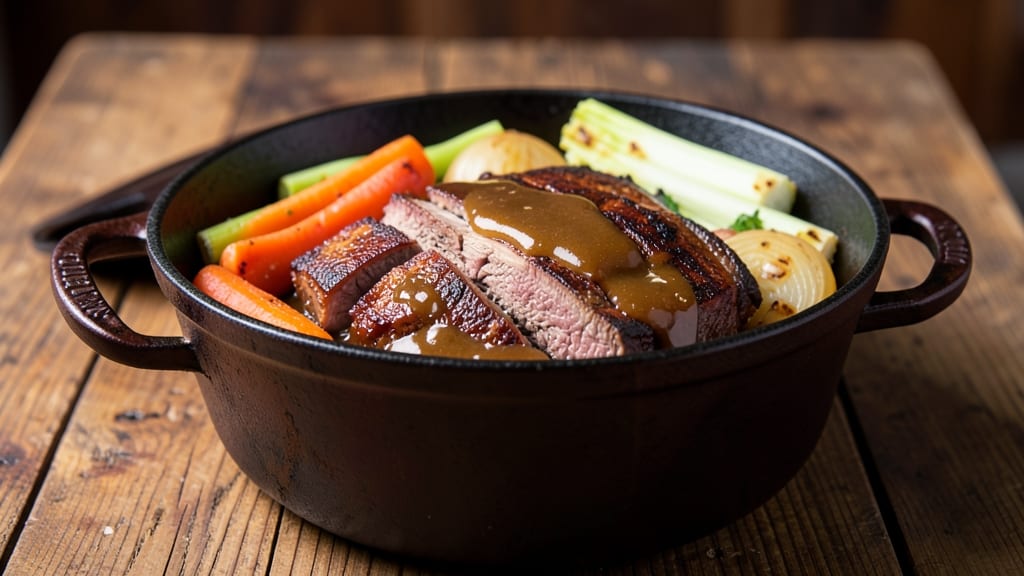
This grandma's pot roast recipe brings back the comforting aroma of Sunday dinners and the tender, fall-apart meat that makes every bite worth the wait. The secret lies in slow-simmered richness, where beef chuck roast transforms into melt-in-your-mouth perfection through a carefully balanced dry rub and aromatic vegetables.
I've perfected this technique over years of family gatherings, ensuring the gravy is thick, flavorful, and just rich enough to coat every bite.
The process starts with a deep sear to lock in juices, followed by a slow braise that develops deep umami flavors. Aromatics like onions, carrots, and celery form the flavor base, while herbs and spices infuse the meat with warmth and complexity.
This isn't just a recipe—it's a tradition that brings comfort to any table, especially when paired with creamy mashed potatoes and buttery dinner rolls.
By the time it's done, you'll have a pot roast so tender it practically dissolves on the tongue, surrounded by a velvety gravy that's rich with all the flavors of the slow cook.
The aroma alone will have everyone gathering around the table, and the first bite will transport you straight back to your grandmother's kitchen. This is the kind of meal that feels like a hug in food form.
Serve it with classic sides like roasted carrots and fluffy mashed potatoes for a meal that's as nostalgic as it is satisfying.
The beauty of this recipe is its versatility—it's perfect for a cozy family dinner or a special occasion when you want to impress without spending hours in the kitchen. Let's get started on creating this timeless dish.
Ingredients for grandma's pot roast
Six aromatic ingredients and one perfect cut of beef. That's all it takes for Sunday dinner magic.
| Ingredient | Amount | Notes |
|---|---|---|
| Beef Chuck Roast 🥩 | 3 lb | Well-marbled, 2-3 inches thick |
| Yellow Onions 🧅 | 2 whole | Medium size, peeled and quartered |
| Carrots 🥕 | 4 whole | Medium size, peeled and halved |
| Celery Stalks 🌿 | 4 whole | Trimmed, cut into 1-inch pieces |
| Garlic Cloves 🧄 | 6 cloves | Peeled, lightly crushed |
| All-Purpose Flour 🌾 | 2 tbsp | For dredging meat |
| Kosher Salt 🧂 | 2 tbsp | Plus extra for seasoning |
| Ground Black Pepper 🌶️ | 1 tbsp | Freshly ground preferred |
| Dried Thyme 🌿 | 1 tsp | Or 1 tbsp fresh thyme |
| Dried Rosemary 🌿 | 1 tsp | Crushed between fingers |
| Beef Broth 💧 | 4 cups | Low-sodium preferred |
| Red Wine 🍷 | 1 cup | Dry red, like Cabernet |
| Tomato Paste 🍅 | 2 tbsp | Smooth, not chunky |
| Olive Oil 🫒 | 2 tbsp | For searing meat |
The beef is the star—chuck roast with good marbling is non-negotiable. I always grab mine from Costco or the butcher counter at Whole Foods when it's on sale. Look for pieces that are at least 2-3 inches thick; thinner cuts won't braise properly. The onions, carrots, and celery should be fresh but don't stress if they're not perfect—just make sure they're firm and free of soft spots. I usually buy the organic carrots from the store's pre-cut section for convenience, but regular works too. The garlic? Smell it first—it should have that bold, pungent aroma. If it's musty, grab a new bulb.
No red wine? Extra beef broth with a splash of balsamic vinegar works in a pinch. Fresh thyme and rosemary are ideal, but dried works at half the amount if that's what you've got. For the tomato paste, I swear by the Trader Joe's squeeze tubes—no waste, keeps forever, and way more convenient than opening a can. The beef broth? Low-sodium is key here—you'll be adding salt later. If you're using a pre-made dry rub, skip the flour dredge, but if you're doing it the old-school way, all-purpose flour gives that perfect crust. And trust me, freshly ground pepper makes all the difference—pre-ground tastes like sawdust.
This roast tastes even better the next day, so make extra. The leftovers keep for 4-5 days in the fridge, and the gravy freezes beautifully for up to 3 months. I always portion the meat and gravy into separate containers—meat reheats best in the oven at 300°F for about 20 minutes, while the gravy just needs a quick stir on the stove. The veggies? They're perfect for adding to soups or salads later. The aroma alone will have your whole house smelling like grandma's kitchen, so don't skip the last 10 minutes of simmering—that's when all the magic happens.
Why You'll Love This Recipe
- One-Pot Magic: I swear by this recipe because it’s all in one pot—no fancy gadgets, no extra pans. Just dump in the beef, toss on the onions, carrots, and celery (that classic trio makes everything better), add a splash of broth, and let the slow cooker do the work. Honestly, my lazy Sundays just got a whole lot easier.
- Deep, Savory Love: There’s nothing like that fall-apart beef with the rich, caramelized edges—it’s the kind of flavor that makes you slow down and savor every bite. The garlic and onions mingle with the beef until the whole pot smells like a hug from your grandma’s kitchen. (Yes, even on a Tuesday night.)
- Leftovers for Days: This recipe practically begs to be made in bulk—it reheats like a dream and tastes just as good the next day. I freeze portions for those nights when I’m too tired to cook, and no one ever guesses it’s not fresh. My kids ask for it more than pizza, and that says something.
- Budget-Friendly Feast: You’re getting a whole roast for not much money, and the veggies stretch the meal into a full dinner. Between us, this is how I feed my family without breaking the bank—plus, the chuck roast is forgiving, so you’re not stressing over perfection. Solid, reliable, and always satisfying.
Step-by-step instructions for grandma's pot roast
Here's how to create that classic, comforting pot roast with tender beef and rich, flavorful gravy.
Sear the Beef Chuck Roast for Maximum Flavor
Pat the 3 lb beef chuck roast dry with paper towels—this helps create that beautiful brown crust. Heat the 2 tablespoons olive oil in a large Dutch oven over medium-high heat until shimmering. Place the roast in the pot, searing it on all sides until you see deep golden brown color forming, about 5 minutes per side. This step develops the Maillard reaction, which creates that deep, savory flavor.
While the roast is searing, sprinkle the 2 tablespoons kosher salt and 1 tablespoon ground black pepper evenly over the surface. I like to press the salt and pepper into the meat slightly so it sticks and infuses as the roast cooks. Once browned on all sides, remove the roast from the pot and set it aside on a plate.
Build the Flavor Base with Vegetables and Aromatics
In the same Dutch oven, add the 2 whole yellow onions, 4 whole carrots, and 4 whole celery stalks. Cook them over medium heat for 5 minutes, stirring occasionally, until they begin to soften slightly. This step helps release their natural sugars and flavors into the pot.
Add the 6 peeled garlic cloves and stir for 30 seconds until fragrant. Then sprinkle in the 2 tablespoons all-purpose flour, stirring constantly for 1 minute to cook off the raw flour taste. This creates a light roux that will help thicken our sauce later. Pour in the 1 cup red wine and scrape up any browned bits from the bottom of the pot—this captures all that delicious flavor.
Simmer the Pot Roast to Perfection
Return the seared beef chuck roast to the Dutch oven. Add the 4 cups beef broth, 2 tablespoons tomato paste, 1 teaspoon dried thyme, and 1 teaspoon dried rosemary. Bring everything to a gentle boil, then reduce heat to low, cover the pot, and let it simmer for 3 hours. I know it seems like a long time, but this slow cooking is what makes the meat fork-tender and lets all the flavors meld together beautifully.
After 3 hours, check the roast for doneness. It should be fork-tender with an internal temperature of 203°F. If it's not quite there, continue simmering for another 30 minutes to an hour. The vegetables should be tender but still holding their shape. If the sauce seems too thin, uncover the pot and let it reduce for 10-15 minutes to thicken it up.
Rest and Serve with Homemade Gravy
Once the roast is perfectly tender, remove it from the pot and transfer it to a cutting board. Tent it loosely with aluminum foil and let it rest for 15 minutes. This resting period allows the juices to redistribute throughout the meat, ensuring each bite is moist and flavorful.
While the roast rests, strain the cooking liquid through a fine-mesh sieve into a saucepan. Skim off any excess fat that has risen to the surface. Return the liquid to medium heat and simmer for 5-7 minutes until it thickens slightly. Taste and adjust seasoning with additional kosher salt and black pepper if needed. Slice the roast against the grain and serve it with the homemade gravy ladled over the top, along with the tender vegetables.
Pro Tips For Making Grandma'S Pot Roast
- SEAR THE ROAST FIRST: Skip the slow start—get that beef chuck roast screaming hot in a dry skillet with oil before adding anything. I used to toss it straight into the pot with veggies, but a 3-4 minute sear on high heat builds flavor that lasts through hours of cooking. (Yes, even if you’re impatient like me.)
- CHOP VEGETABLES UNIFORM: Carrots and celery in random sizes? They’ll cook at different rates, leaving some mushy while others stay tough. Cut everything into 1-inch chunks—onions, carrots, celery—so they all soften together. No one wants a forkful of al dente celery in a pot roast.
- DON’T PEEL THE GARLIC: I know, it’s a pain to smash whole cloves, but leaving the skins on keeps them from burning and adds texture. Just crush them lightly with the flat side of your knife before tossing into the pot. Trust me, the flavor is richer than minced garlic that turns bitter.
- USE A DUTCH OVEN FOR MOISTURE: This isn’t the prettiest method, but it’s the tastiest. After browning the meat, add the veggies and a splash of liquid (broth, water, or even beer), then cover the pot with foil sealed tightly around the edges. The steam locks in moisture, and you’ll end up with fork-tender beef instead of dry, stringy meat.
Wine and beer pairings for these flavors
Classic Red Wine
A bold Cabernet Sauvignon or Merlot complements this dish beautifully, mirroring the deep umami flavors of the pot roast.
I like to reach for a California Cabernet with its rich dark fruit notes and subtle oak—it stands up to the red wine in the recipe while enhancing the beef's natural richness. The tannins also help cleanse your palate between bites of tender meat. 🍷
Malbec Magic
For something a little more international, a Argentinian Malbec brings vibrant dark berry flavors and a touch of smokiness that pairs wonderfully with the thyme and rosemary in the roast.
The medium body won't overpower the dish but adds an exciting contrast. I've found that a 2018 Catena Zapata Malbec from Mendoza works perfectly—it's approachable yet sophisticated enough for company.
Beer Pairings
A dark amber ale or porter creates a perfect balance with the hearty flavors of pot roast. I love Guinness for its roasted malt notes that echo the caramelized onions in the dish, while a Belgian-style dubbel adds a touch of spice from the yeast.
For something lighter, a crisp lager like Peroni cuts through the richness without competing.
Cider Option
Don't overlook dry hard cider as a fantastic alternative—especially if you're serving this for a casual family meal. I recommend a dry English cider like Thatchers or a French cidre brut with its crisp acidity.
The slight tannins in cider actually enhance the beef's flavor profile while providing a refreshing contrast to the rich gravy. 🍺
Dessert Wine
For a truly special occasion, finish the meal with a Port wine or Madeira—these fortified wines have enough body to stand up to the hearty flavors while providing a sweet contrast.
A Ruby Port works beautifully with the dish's savory notes, while a Malmsey Madeira adds a touch of tropical fruit that complements the thyme and rosemary. Serve at room temperature for best results.
Nutrition facts
Frequently asked questions
Can I use a different cut of beef instead of chuck roast?
Chuck roast is ideal because of its marbling and connective tissue, which break down beautifully during slow cooking. However, you can substitute with bottom round or short ribs—just note that round cuts may be slightly tougher and require extra time. Never use lean cuts like sirloin; they won't develop the same tender texture.
How do I know when the pot roast is fully cooked?
The meat should reach an internal temperature of 203°F and be fork-tender with no pink center. If it's not quite there after 3 hours, add 1/2 cup extra broth and simmer another 30-60 minutes. The vegetables should be tender but not mushy. Always use a meat thermometer for accuracy!
What if I don't have red wine? Can I substitute?
Use 1 cup beef broth + 2 tablespoons balsamic vinegar for similar depth. For extra richness, add 1 teaspoon soy sauce or 1 tablespoon Worcestershire sauce. The key is balancing acidity and umami—never use water or vinegar alone.
Why does my gravy turn out too thin?
This usually happens when the sauce isn't reduced enough. After removing the meat, simmer the strained liquid uncovered for 10-15 minutes to thicken. For instant thickening, mix 1 tablespoon cornstarch with 2 tablespoons cold water, stir into the gravy, and cook until bubbly.
Can I make this in a slow cooker instead of a Dutch oven?
Yes! Brown the meat first in a skillet, then transfer everything to the slow cooker. Cook on low for 8 hours or high for 4-5 hours. The texture will be slightly more tender, but the flavor will still be rich. Just add 1/2 cup extra broth since slow cookers evaporate less liquid.