Breakfast & Brunch
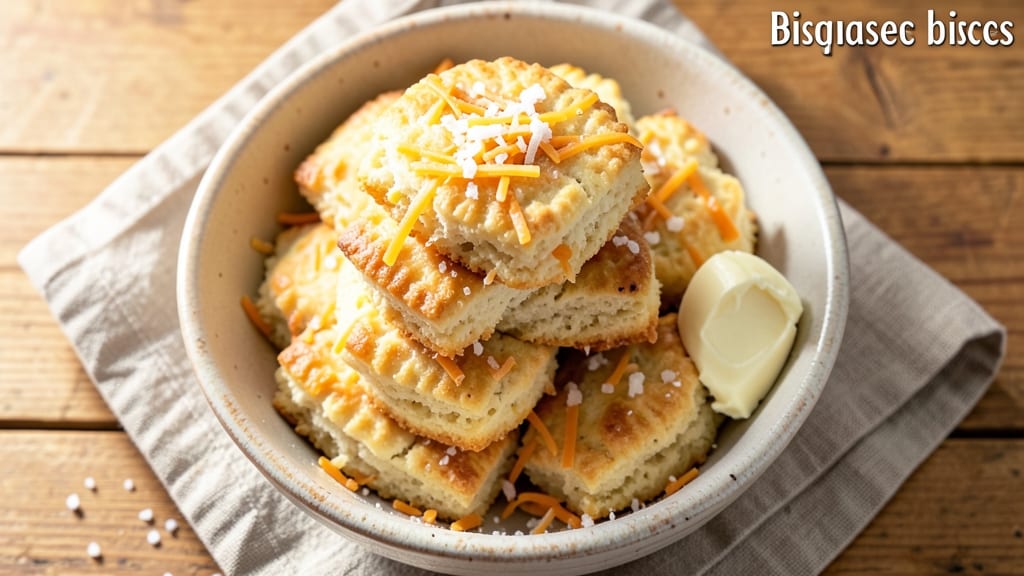
This Bisquick cheese biscuit recipe delivers the perfect balance of flaky layers and sharp cheddar flavor—ready in just 20 minutes without any fuss. The secret lies in cutting cold butter into the dough until it resembles coarse crumbs, creating those signature flaky textures that make every bite irresistible.
I developed this version after years of testing, ensuring it stays true to Southern tradition while being foolproof for home cooks.
What sets these biscuits apart is the sharp cheddar folded into the dough, which adds a tangy depth that pairs beautifully with the buttery richness. The recipe uses simple pantry staples—flour, baking powder, and Bisquick mix—along with a few key techniques that guarantee golden-brown, tender biscuits every time.
No rolling pins or special tools required, just a few minutes of mixing and baking.
By the time they emerge from the oven, you’ll have hot, flaky biscuits with a crisp exterior and a soft, cheesy center—ideal for soaking up gravy, pairing with breakfast meats, or serving alongside chili.
The aroma alone will have your kitchen smelling like a Southern diner, and the texture is impossible to resist. This is comfort food at its finest, made easier than you’d expect.
For extra crispiness, brush the tops with melted butter before baking, or add a pinch of garlic powder for a savory twist. The recipe scales perfectly for feeding a crowd, and leftovers reheat beautifully. Let’s get started—your taste buds will thank you.
Ingredients for bisquick cheese biscuit
Pantry staples plus a few key tricks for biscuits that rival Southern diners.
| Ingredient | Amount | Notes |
|---|---|---|
| All-Purpose Flour 🌾 | 3 cups | Sifted for light texture |
| Bisquick Original Mix 🍞 | 1 cup | For flaky layers |
| Sharp Cheddar Cheese 🧀 | 1 ½ cups | Shredded, not pre-shredded |
| Unsalted Butter 🧈 | ¾ cup | Cold, cubed |
| Baking Powder 🧂 | 1 tbsp | Aluminum-free preferred |
| Diamond Crystal Kosher Salt 🧂 | 1 tsp | Fine grain preferred |
| Whole Milk 🥛 | ½ cup | Room temperature |
| Garlic Powder 🧄 | ½ tsp | Optional for savory twist |
| Black Pepper 🌶️ | ¼ tsp | Freshly ground preferred |
The sharp cheddar makes all the difference—Kraft 2% Milk Sharp or Cabot for that authentic tang. Skip the pre-shredded stuff (it's coated with anti-caking agents that ruin texture). For the flour, King Arthur or Gold Medal are my go-tos, but any all-purpose works. The Bisquick? Grab the original—no substitutions here. Cold butter is non-negotiable (pop those cubes in the freezer for 10 minutes if your kitchen's warm), and Plugrah or Land O'Lakes unsalted butter works perfectly. Pro tip: Use a microplane for the cheese—it stays fresher longer than pre-shredded.
No sharp cheddar? Pepper Jack adds heat, or Colby Jack for a milder kick. Out of Bisquick? Self-rising flour plus 1 tbsp baking powder gets you close, but texture won't be identical. The milk can be buttermilk (reduce garlic powder to 0.25 tsp), or even Greek yogurt in a pinch. Want extra flakiness? Add 1 tbsp cold vegetable shortening to the butter. The baking powder is critical—Bob's Red Mill aluminum-free is my pick, but Clabber Girl works too. For a garlic-free version, swap the garlic powder for an extra pinch of onion powder (0.25 tsp).
Store leftover biscuits in an airtight container for 3 days—they reheat beautifully in a 350°F oven for 10 minutes with a sprinkle of water. Freeze dough balls (before baking) for up to 3 months. For crowd feeding, double the recipe—just preheat your oven to 450°F and bake in batches. The sharp cheddar keeps best in the fridge, so portion it out if you're not using it all at once. These biscuits are best served hot, straight from the oven—trust me, the wait isn't worth it.
Why You'll Love This Recipe
- No-Measurement Guesswork: Honestly, I just eyeball the flour and cheese—no scale, no stress. The Bisquick handles the rest, so you’re not stuck fussing over ratios while the biscuits wait.
- Melty Magic Inside: That sharp cheddar? It turns gooey and salty in the middle while the outside stays tender. One bite and you’ll understand why I keep a block in my freezer.
- Breakfast to Brunch: Slather with jam for a quick breakfast, serve with gravy for a Southern-style brunch, or toss in a skillet with eggs—these biscuits adapt faster than my mood on Monday mornings.
Step-by-step instructions for Bisquick cheese biscuits
Here's how to make these golden, flaky biscuits with perfect cheddar pockets in under 25 minutes.
Mix the Dry Ingredients for Maximum Flakiness
In a large bowl, whisk together the 3 cups all-purpose flour, 1 cup Bisquick Original Mix, 1 tablespoon baking powder, 1 teaspoon Diamond Crystal Kosher Salt, 0.5 teaspoon garlic powder, and 0.25 teaspoon black pepper. Sift the mixture through a fine-mesh sieve directly into the bowl to aerate the flour and eliminate any lumps. This step is crucial—it ensures light, tender biscuits rather than dense ones.
Use a whisk to combine the dry ingredients thoroughly, breaking up any remaining clumps. The Bisquick mix contains baking powder and fat, which will create those signature flaky layers when combined with cold butter. I like to press my fingers into the flour mixture to check for even distribution—if it feels gritty, whisk a few more times.
Cut in the Cold Butter and Shredded Cheddar
Add the 1.5 cups shredded sharp cheddar cheese (freshly grated works best) and the 0.75 cup cold, cubed unsalted butter to the dry ingredients. Using a pastry cutter or two forks, work the butter into the flour mixture until you achieve pea-sized crumbles with some larger butter pieces remaining. This texture is essential for creating those beautiful flaky layers.
Don't overwork the mixture—just until the butter is mostly incorporated. The cold butter should still be visible in some places. If the dough starts to look shaggy, that's okay; we'll fix it in the next step. The cheddar cheese will melt during baking, creating pockets of gooey goodness in every bite.
Add Milk and Form the Dough
Pour in the 0.5 cup room-temperature whole milk all at once and gently stir with a wooden spoon until the mixture just comes together. You'll notice the dough will be slightly sticky but should hold its shape when pressed. If it's too dry, add 1 teaspoon more milk; if too wet, sprinkle in 1 tablespoon more flour. The dough should be soft but not sticky enough to leave marks on your hands.
Turn the dough out onto a lightly floured surface and knead it 4-5 times just until it comes together. Avoid over-kneading, which develops gluten and makes the biscuits tough. The dough should be smooth but still slightly crumbly. Divide it into 12 equal portions (about 2 tablespoons each) and roll each into a 1-inch thick round.
Bake to Golden Perfection
Preheat your oven to 425°F with a baking sheet inside to ensure even heat distribution. Place the rolled biscuit dough onto the hot baking sheet, spacing them about 1 inch apart. Bake for 12-15 minutes until the biscuits are deep golden brown on top and the edges are set.
Here's the thing about biscuits—they'll continue cooking as they sit on the hot baking sheet after they come out of the oven. That's why you want them to look slightly underdone when you remove them. The internal temperature should reach 190-195°F when you check with an instant-read thermometer. Serve warm with honey butter or gravy for the ultimate experience.
Pro Tips For Making Bisquick Cheese Biscuit
- Chill the Dough: If you mix the Bisquick, cheese, and cold butter into a dough that’s still warm, you’ll end up with dense biscuits. Pop the dough in the fridge for 10-15 minutes before cutting—this firms it up so the cheese stays put and the layers don’t blur together when baking.
- Grate Cheese Fine: Sharp cheddar loses its edge when it’s chunky. Use a box grater or pulse it in a food processor until it’s like coarse sand—this ensures even distribution and prevents bitter pockets. (Yes, even if you’re tempted to just shred it by hand.)
- Don’t Overwork the Dough: The second you start kneading or pressing the dough more than necessary, you’ll activate the gluten and end up with tough, flat biscuits. Mix just until the cheese is evenly distributed, then stop—your hands should come away with a few dry spots, not a smooth ball.
- Use a Bench Scraper: Cutting biscuits with a knife leaves ragged edges and squishes the dough. A bench scraper (or even a butter knife) gives clean, sharp cuts and keeps the shape intact. Pro move: Dip the scraper in flour between cuts to prevent sticking.
Pro cooking tips for this recipe
Cold Butter Magic
The key to flaky layers starts with cold butter—never room temperature. Cut 0.75 cup unsalted butter into ½-inch cubes and freeze for 10 minutes if your kitchen is warm.
Use a pastry cutter or two forks to work the butter into the flour until you get pea-sized crumbles with some larger pieces remaining. Overworking the dough releases too much butter fat, which can make biscuits greasy. 🧈
Dough Consistency
Your dough should be soft but not sticky—just enough to hold together when pressed. If it crumbles too much, add 1 teaspoon milk at a time. If it's too wet, sprinkle in 1 tablespoon flour and knead lightly.
The ideal texture is slightly crumbly but cohesive enough to shape into balls. I like to test by pressing a portion—if it doesn't spring back slightly, it needs more flour.
Perfect Rolling Thickness
Roll each biscuit to 1-inch thickness—any thinner, and they'll bake too quickly, losing moisture. Use a rolling pin or even a glass measuring cup (press down firmly) to ensure even thickness.
For extra flakiness, press down gently but firmly—this compresses the layers without overworking the dough. If the dough sticks, lightly flour your surface between each biscuit.
Oven Preheating Trick
Preheat your oven to 425°F for 5 minutes with the baking sheet inside. This ensures even heat distribution and helps biscuits rise quickly. Place biscuits on the hot sheet about 1 inch apart—crowding causes uneven baking.
For extra crispiness, brush tops with melted butter right after removing from the oven. 🔥
Baking Time Secrets
Bake for 12-15 minutes until edges are set and tops are deep golden brown. Remove them when they look slightly underdone—they’ll firm up as they cool. For even browning, rotate the baking sheet halfway through.
If your oven runs hot, check at 10 minutes to avoid overbaking. The internal temperature should reach 190-195°F.
Resting for Flakiness
Let biscuits rest on the baking sheet for 2-3 minutes after baking before transferring to a wire rack. This allows steam to escape, preventing soggy bottoms. For extra crispiness, brush the tops with melted butter while still warm.
Serve immediately—they’re best fresh out of the oven, with that perfect balance of flaky layers and gooey cheddar. ✨
Nutrition facts
Frequently asked questions
Why does my Bisquick cheese biscuit dough turn out too crumbly?
Too much flour or overworking the dough causes crumbly texture. Use 1 teaspoon milk at a time to bind it, and knead only 4-5 times—just until it holds together. The dough should be soft but not sticky, with slight crumbly bits remaining for that signature flakiness.
Can I substitute buttermilk for whole milk in this recipe?
Yes, but reduce the garlic powder to 0.25 teaspoon since buttermilk adds tanginess. The acidity in buttermilk helps tenderize the biscuits, but it may slightly alter the flavor profile. For best results, stick with whole milk and add 1 teaspoon lemon juice per ½ cup milk to mimic buttermilk.
How do I fix biscuits that spread too much when baking?
Over-rolling the dough or using too much flour weakens the gluten structure. Roll each biscuit to 1-inch thickness and chill the dough for 10 minutes before baking. Also, ensure your baking sheet is hot when placing the biscuits—preheat it with the oven for 5 minutes first.
What's the best way to reheat leftover cheese biscuits?
Wrap biscuits in foil and warm in a 350°F oven for 10 minutes, or use the microwave for 20-30 seconds** (covered with a damp paper towel) to restore moisture. For extra crispiness, brush with melted butter after reheating. Avoid toaster ovens—they dry out the biscuits too quickly.
Can I make these biscuits ahead of time?
Shape the dough into balls, wrap tightly in plastic, and refrigerate for up to 2 days or freeze for 3 months. Bake straight from frozen (add 2-3 minutes to baking time). For best texture, bake fresh—these biscuits are at their peak when warm from the oven.