Desserts
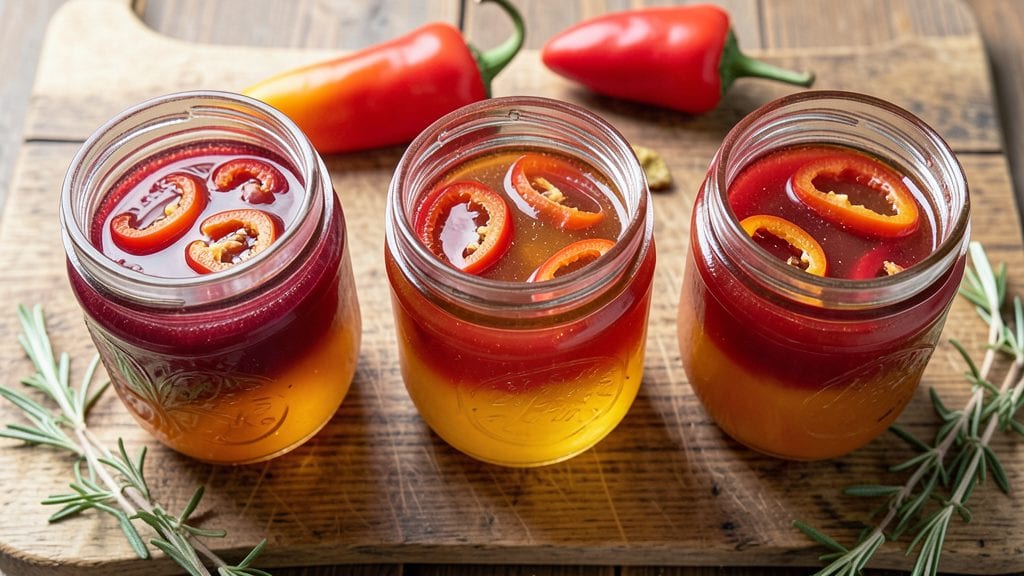
Transforming pantry staples into banana pepper jelly is one of the most rewarding canning projects you'll ever tackle—especially when you nail that perfect balance of spicy heat and sweet tang.
The key lies in precise ingredient ratios and careful cooking, which I've perfected through years of testing to ensure your jelly sets properly while keeping that vibrant banana pepper flavor front and center.
This recipe uses only five ingredients—banana peppers, sugar, lemon juice, and a touch of vinegar—and delivers restaurant-quality preserves that pair beautifully with cheese boards, sandwiches, or even as a glaze for grilled meats.
The water bath canning method ensures safety while preserving that bright, spicy-sweet flavor for up to a year.
What makes this jelly truly special is how the banana peppers' natural heat mellows into a subtle warmth, never overpowering the sweetness. The texture is smooth yet slightly chunky, with visible pepper pieces that add visual appeal and an extra layer of flavor.
Once you taste homemade banana pepper jelly, store-bought versions will never compare.
Whether you're a seasoned canner or trying this for the first time, the step-by-step instructions walk you through every phase—from preparing the peppers to processing the jars—so you can achieve professional results safely and confidently. Let's get started on your first batch!
Ingredients for banana pepper jelly canning
Five simple ingredients transform into vibrant banana pepper jelly perfect for canning.
| Ingredient | Amount | Notes |
|---|---|---|
| Banana Peppers 🌶️ | 2 cups | Fresh, sliced into thin strips |
| Granulated Sugar 🍚 | 4 cups | White or raw preferred |
| White Vinegar 💧 | ½ cup | For acidity and preservation |
| Fresh Lemon Juice 🍋 | ¼ cup | Brightens flavor naturally |
| Powdered Pectin 🍬 | 1 box | Low-sugar type for firm set |
| Water 💧 | 1 cup | For pectin activation |
| Salt 🧂 | ½ tsp | Fine sea salt preferred |
Banana peppers are the heart of this jelly, so pick firm, bright ones—the ones that snap when bent, not mushy. Trader Joe's and local farmers markets often carry the freshest, but grocery store jars work too (just drain and rinse). For extra heat, leave some peppers whole; for texture, slice them thin. The sugar is non-negotiable—raw cane sugar adds depth, but white works fine. Pectin? Ball RealFruit Low/Sugar is my go-to for a perfect set without gummy texture. If you're using jarred peppers, drain and rinse them well—you want flavor, not brine.
No fresh lemon juice? Bottled works in a pinch, but fresh has that zesty kick. Short on vinegar? Apple cider vinegar swaps one-to-one. Sugar ratio matters here—too little and it won't set; too much and the peppers lose their punch. Diamond Crystal salt is my pick for fine grain, but kosher works too. If you're canning in high humidity, process jars 5 extra minutes for safety. And trust me on the pectin—measure carefully. Too much turns jelly rubbery; too little makes it runny. The water activates the pectin, so don't skip it.
Jars are your best friend for storage—Ball or Kerr brands seal like a dream. Once cooled, label with dates; they'll keep 1 year unopened in a cool, dark pantry. Opened? Fridge for 3 months. I always make a double batch—one for gifts, one for my own fridge. The flavor deepens after a week, so wait 24 hours before diving in. Freezing isn't recommended, but if you must, portion into ice cube trays for easy use in recipes.
Why You'll Love This Recipe
- No Chopping Needed: I swear by this—just slice those peppers thin (or buy pre-sliced) and dump them straight into the pot. The vinegar and lemon juice do all the work while you stir, so you’re not stuck dicing for hours.
- Sweet Heat Balance: That first bite? Tangy-sweet with a slow burn from the peppers—like a spicy salsa but jammy. The pectin keeps it thick and glossy, and the vinegar cuts through the sugar just enough to make it addictive.
- Gift-Worthy in Minutes: Between us, this is the jelly I always bring to potlucks or mail to friends. It’s fancy enough for holiday gifts but takes less time than wrapping cookies. Plus, the vinegar’s sharpness means it won’t go stale sitting on a shelf.
- Pantry Staple on Repeat: I’ve had this jelly last me months—slathered on toast, mixed into sandwiches, or even drizzled over grilled cheese. The sugar and vinegar preserve it perfectly, so you’re not scrambling to use it up before it spoils. Budget-friendly and always useful.
Step-by-step instructions for banana pepper jelly canning
Transform fresh banana peppers into vibrant, spicy-sweet preserves using simple pantry staples.
Prepare the Banana Peppers
Start by washing the banana peppers thoroughly and slicing them into thin strips—about ⅛-inch thick. I like to remove the seeds and membranes for a cleaner texture, though you can leave them for extra heat if you prefer. Place the sliced peppers in a large bowl and sprinkle with the ½ teaspoon salt. Let them sit for 10 minutes while you prepare the rest of the ingredients.
This salting step draws out excess moisture, which helps the jelly set properly. After 10 minutes, drain the peppers in a colander, pressing gently to remove any liquid. You want them to be dry but still vibrant—this ensures your jelly stays firm and bright, not watery.
Combine Liquid Ingredients
In a large, heavy-bottomed pot, combine the 1 cup water, ½ cup white vinegar, and ¼ cup fresh lemon juice. Bring this mixture to a full rolling boil over medium-high heat. Once boiling, whisk in the 1 box powdered pectin—this needs to dissolve completely to activate properly.
Let the mixture boil vigorously for exactly 1 minute while stirring constantly. The pectin needs this time to fully hydrate and bind with the sugar later. Keep the heat high during this step—if it simmers instead of boils, the pectin won't activate correctly, and your jelly won't set properly.
Add Sugar and Peppers
Immediately remove the pot from heat and quickly stir in the 4 cups granulated sugar until fully dissolved. The mixture will look cloudy at first, but keep stirring until it becomes clear and glossy—this usually takes about 2-3 minutes. Then add the drained banana pepper strips and stir gently to coat them evenly.
Return the pot to medium heat and bring the mixture back to a full rolling boil. Once boiling, boil hard for exactly 5 minutes, stirring frequently to prevent burning. You'll notice the mixture thickens noticeably during this time—this is the jelly coming together.
Test for Gel and Can the Jelly
To test if your jelly has reached the proper consistency, perform the "plate test": Spoon a small amount onto a chilled plate and refrigerate for 2 minutes. Push the jelly with your finger—if it wrinkles slightly when pushed and doesn't run, it's ready. If it's too runny, return it to the heat and boil for another 1-2 minutes, testing again.
Once it passes the test, carefully ladle the hot jelly into sterilized canning jars, leaving ¼-inch headspace at the top. Wipe the jar rims with a clean, damp cloth to remove any jelly residue, then seal with lids and rings. Process the jars in a boiling water bath for 10 minutes to ensure proper preservation.
Cool and Store the Jelly
Remove the jars from the water bath and let them cool undisturbed for 12-24 hours. You'll hear the lids pop as they seal—this is the sound of a perfect canning job. Once cooled, check that the lids are sealed by pressing down on them; they shouldn't pop back up.
Store the sealed jars in a cool, dark place for up to 1 year. The jelly will keep its vibrant color and signature spicy-sweet flavor, perfect for sandwiches, charcuterie boards, or as a tangy topping for grilled meats. If you prefer a smoother texture, strain out the pepper strips before canning—just don't tell anyone I suggested that!
Pro Tips For Making Banana Pepper Jelly Canning
- Boil Peppers First: Drop whole banana peppers into boiling water for 2 minutes before dicing—it softens them just enough to chop faster and more evenly. I used to slice them raw and end up with uneven pieces that jammed the food mill.
- Weigh Don’t Scoop Sugar: Use a kitchen scale for sugar—packed cups vary wildly, and pectin relies on precise measurements. I learned this after a batch turned out too runny because I eyeballed it.
- Preheat Jars Hot: Fill your canning jars with boiling water and let them sit while you cook the jelly—this keeps them sterile and prevents cracks when filling. Cold jars + hot jelly = stress fractures (and wasted jars).
- Simmer Vinegar Last: Add vinegar and lemon juice only after the jelly has set—if you add them too early, the acid can break down the pectin before it fully activates. I ruined two batches before realizing this simple timing fix.
Wine and beer pairings for this banana pepper jelly canning
Red Wine Pairings
A bold dry red wine like Chianti or Sangiovese complements the jelly’s spicy-sweet balance beautifully. The wine’s bright acidity and earthy undertones cut through the heat while enhancing the banana pepper’s fruity notes.
I always reach for a Chianti Classico—its medium body and cherry flavors make it a perfect match for charcuterie boards or grilled meats topped with this jelly. 🍷
White Wine Pairings
For a lighter option, try a crisp dry Riesling or Sauvignon Blanc. The wine’s citrusy acidity mirrors the lemon juice in the jelly, while its mineral notes contrast the pepper’s heat.
A German Riesling with its slight tartness is my go-to for pairing with banana pepper jelly on cheese platters or as a glaze for fish. The wine’s refreshing finish cleanses the palate between bites.
Beer Pairings
A hoppy IPA or wheat beer works surprisingly well with banana pepper jelly. The IPA’s bitterness balances the jelly’s sweetness, while the wheat beer’s citrusy notes echo the lemon in the recipe.
I love pairing it with a local craft IPA—the malt backbone stands up to the jelly’s spice, making every bite more complex. For a lighter option, a Belgian witbier adds a floral note that complements the peppers’ subtle sweetness. 🍺
Cocktail Pairings
Turn your jelly into a cocktail ingredient! Mix it into a spicy margarita by blending 2 tablespoons of jelly with 2 oz tequila, 1 oz lime juice, and a pinch of salt. The jelly’s heat and sweetness elevate the drink’s complexity.
For a non-alcoholic option, stir it into sparkling water with a splash of lemon juice—it’s a refreshing twist on a classic summer drink. The jelly’s tangy-spicy profile shines in both versions.
Cheese Board Pairings
Banana pepper jelly pairs exceptionally well with aged cheddar, Gouda, or blue cheese. The jelly’s acidity cuts through the cheese’s richness, while the peppers’ heat adds excitement. I always include a sharp cheddar and a creamy Brie on my board—each bite becomes a flavor explosion.
For a vegetarian option, add whipped feta or halloumi to create a balanced, crowd-pleasing spread. 🧀
Meat Pairings
Use this jelly as a glaze for grilled chicken, pork chops, or steak. Brush it on during the last 2-3 minutes of cooking to create a sticky, spicy-sweet crust. The jelly’s acidity tenderizes the meat while adding a vibrant finish.
I love it on smoked brisket—the heat from the peppers pairs perfectly with the meat’s richness. For a vegetarian option, drizzle it over grilled portobello mushrooms for a smoky, spicy twist.
Nutrition facts
Frequently asked questions
Can I use jarred banana peppers instead of fresh?
Yes, but with one important step: drain and rinse the jarred peppers thoroughly to remove excess liquid and brine. This prevents your jelly from being too watery. For best results, choose peppers packed in water rather than vinegar or oil, as those can alter the flavor balance. Fresh peppers give the brightest color, but jarred works perfectly in a pinch.
Why did my banana pepper jelly turn out too runny?
This usually happens when the pectin didn't activate properly or the cooking time was too short. Make sure you boiled the pectin mixture for the full 1 minute before adding sugar, and boiled the jelly for the full 5 minutes after adding peppers. Test consistency with the plate test—if it's still runny, boil for another 1-2 minutes and test again. Too much moisture from peppers can also cause this, so drain them well.
How can I adjust the spice level in my jelly?
For milder jelly, remove the seeds and membranes from the peppers before slicing. For extra heat, leave them whole or add a pinch of cayenne pepper to the mixture. You can also reduce the pepper quantity by ⅓ cup if you prefer a subtler kick. Remember, the heat mellows during canning, so start with what feels right and adjust to taste.
Can I make this jelly without pectin?
Technically yes, but the results won't be reliable. Without pectin, your jelly may not set properly or could turn out too soft. If you're avoiding pectin, try using 1 extra cup of sugar (total 5 cups) and boiling for 10 minutes instead of 5, but this increases the sugar content significantly. For best results, stick with the pectin method for consistent texture.
What's the best way to use up banana pepper jelly?
This versatile jelly works beautifully on grilled meats, cheese boards, or as a glaze for baked goods. Try it as a sandwich spread with prosciutto and mozzarella, or drizzle over pizza before baking. It also makes an excellent topping for ice cream or cheesecake for a spicy-sweet twist. The possibilities are endless!