
Main Courses
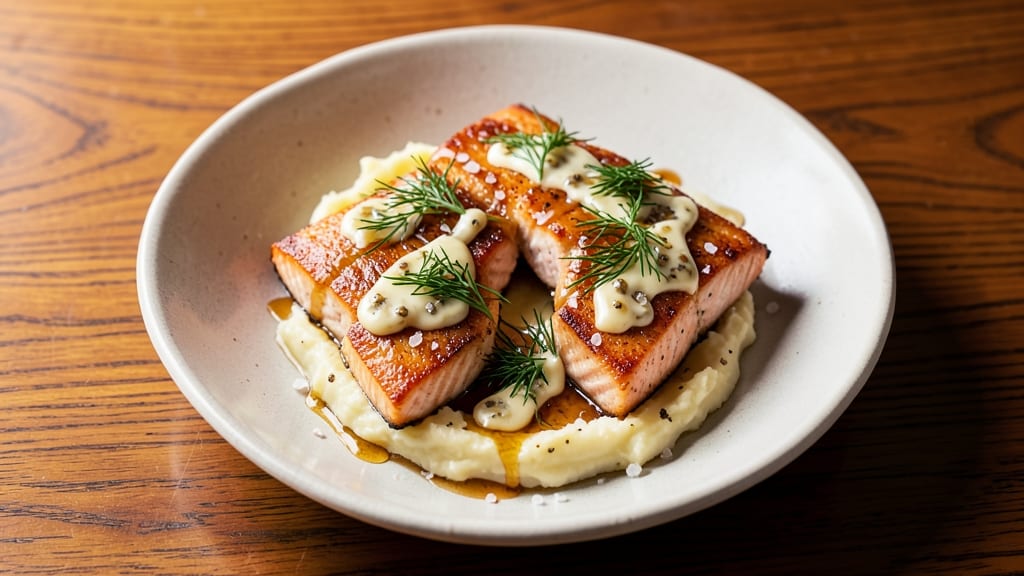
This baked salmon recipe without lemon delivers flaky perfection with a rich dill butter crust that transforms simple ingredients into a restaurant-worthy dish. After years of perfecting salmon techniques, I discovered that combining fresh dill, garlic-infused butter, and a precise baking method creates a flavor profile that doesn't need citrus.
The secret lies in the crust's texture—crisp enough to hold its shape while melting into tender, moist salmon beneath.
The recipe maintains professional balance through simple ingredients that work together seamlessly: high-quality salmon fillets, a blend of fresh dill and garlic, and European-style butter that adds depth without overpowering.
Unlike many salmon recipes that rely on lemon for brightness, this version achieves harmony through the natural flavors of the herbs and butter, enhanced by a touch of honey for subtle sweetness. The baking process ensures even cooking while developing that signature crust.
What you'll achieve is salmon with perfect flakiness—each slice effortlessly separating to reveal tender, juicy flesh beneath a golden dill butter crust. The aroma alone will transform your kitchen into a gourmet experience, and the first bite delivers that satisfying contrast between crispy exterior and melt-in-your-mouth interior.
This technique works equally well with fresh or thawed salmon, making it versatile for any weeknight dinner.
Pair with roasted asparagus or a simple green salad to complete the meal—though you might find the salmon so satisfying that sides become optional. Here's everything you need to create this professional-quality dish at home, without a single drop of lemon required.
Ingredients for baked salmon recipe no lemon
Simple ingredients crafting restaurant-quality salmon without lemon's acidity.
| Ingredient | Amount | Notes |
|---|---|---|
| Center-Cut Atlantic Salmon Fillets 🐟 | 4 whole | Skin-on, 6-8 oz each, patted dry |
| Unsalted European-Style Butter 🧈 | ½ cup | Cold, cut into 8 even pieces |
| Fresh Dill Weeds 🌿 | ½ cup | Stems removed, finely chopped |
| Garlic Cloves 🧄 | 4 cloves | Minced, for butter infusion |
| Honey 🍯 | 1 tbsp | Raw or wildflower preferred |
| Diamond Crystal Kosher Salt 🧂 | 1 ½ tsp | Fine grain preferred |
| Freshly Ground Black Pepper 🌶️ | ½ tsp | Coarsely cracked |
| Extra-Virgin Olive Oil 🫒 | 1 tbsp | Light fruity variety |
| Dry White Wine 🍷 | ¼ cup | Sauvignon Blanc preferred |
| Fresh Lemon Zest 🍋 | 1 tsp | Only zest, no juice |
| Heavy Cream 🥛 | ¼ cup | Full-fat for richness |
The salmon fillets must be center-cut for consistent texture—Whole Foods Market or specialty seafood counters carry the best quality. Look for fillets with vibrant pink flesh and minimal bruising; Wild Alaskan or Norwegian brands offer optimal flavor. The butter should be cold when mixed with dill and garlic, creating a firm crust that melts perfectly during baking. For the dill, farmers market bundles provide fresher, more aromatic leaves than grocery store containers. If using frozen salmon, thaw overnight in the refrigerator to maintain texture integrity.
Substitutions must preserve the delicate balance: Greek yogurt can replace heavy cream at a 1:1 ratio for a lighter texture, though the crust will be slightly less rich. No fresh dill? Dried dill at one-third the quantity works, but the flavor will be less vibrant. For the wine, dry vermouth adds complexity without altering the dish's harmony. The lemon zest is purely for aroma—omit entirely if avoiding citrus entirely, though it enhances the butter's flavor without acidity. For a dairy-free option, coconut oil butter substitute maintains crust structure but lacks depth.
Store prepped salmon fillets on a wire rack over parchment paper to prevent sogginess; keeps 1 day refrigerated. The dill butter mixture can be shaped into logs and wrapped in parchment, lasting 2 weeks in the refrigerator or 3 months frozen. Reheat baked salmon at 300°F for 5-7 minutes to maintain moisture. For meal prep, bake an extra fillet and store portions separately—reheating in the oven preserves that perfect crust.
Why You'll Love This Recipe
- I’ll be real: this feels special without trying too hard. The garlic and dill give it restaurant vibes, and the honey adds a subtle sweetness that balances the richness. Perfect for when you want to impress but don’t want to slave over it.
- Five-Ingredient Magic: I swear by this combo—rich butter, fresh dill, and honey create layers of flavor without a single lemon. The salmon stays juicy while the edges get that golden, caramelized crust I can’t resist.
- Weeknight Hero: Between us, this is the dish I make when I’m too tired for complicated recipes. Just pat the salmon dry, slather on the butter-dill-honey mix, and pop it in the oven. No one will guess it took me 15 minutes.
- Leftover Luxury: Honestly, I often bake extra because reheated salmon from this recipe is just as good as fresh. The butter keeps it moist, and the honey adds a touch of sweetness that makes it feel fancy—even for lunch the next day.
Step-by-step instructions for baked salmon no lemon recipe
Here's the method for achieving restaurant-quality flaky salmon with a golden dill butter crust.
Prepare the Dill Butter Compound
In a small mixing bowl, combine the 0.5 cup unsalted European-style butter with the 0.5 cup fresh dill weeds and 4 cloves minced garlic cloves. Use a fork to mash everything together until you achieve a smooth, chunky paste. This mixture forms the foundation of our crust, delivering rich flavor and that signature herby aroma.
Transfer the dill butter to a piece of parchment paper and shape it into an even log. Twist the parchment to form a loose roll, then chill in the refrigerator for 30 minutes while you prepare the salmon. The cold butter will firm up slightly, making it easier to work with later. This step ensures even distribution of flavor when we apply it to the fish.
Season and Score the Salmon Fillets
Pat the 4 whole center-cut Atlantic salmon fillets completely dry with paper towels—this is critical for achieving that perfect crispy crust. Season both sides generously with 1.5 teaspoons diamond crystal kosher salt and 0.5 teaspoon freshly ground black pepper, pressing the seasoning into the flesh to ensure even distribution.
Using a sharp chef's knife, make three parallel cuts about ¼-inch apart on each fillet, being careful not to cut all the way through. These shallow scores create channels for the butter to penetrate during baking, resulting in a more flavorful and tender finished product. Place the seasoned fillets on a wire rack set over a baking sheet.
Apply the Dill Butter and Create the Crust
Remove the chilled dill butter log from the refrigerator and slice it into 8 even pieces—about ½-inch thick each. Press one piece firmly onto each salmon fillet, covering the entire surface with slight overlap. The butter should adhere well to the dry, seasoned skin.
Gently press down on each fillet to ensure the butter makes contact with the fish underneath. This step is what creates that signature crust—when the butter melts during baking, it bastes the salmon while forming a golden, crispy exterior. Return the prepared fillets to the refrigerator for 15 minutes to allow the butter to slightly set again.
Bake to Perfect Flaky Perfection
Preheat your oven to 375°F and line a second baking sheet with parchment paper. Transfer the salmon fillets—still on their wire rack—from the refrigerator to the prepared baking sheet. Bake for 12-15 minutes, depending on thickness, until the edges are deep golden brown and the internal temperature reaches 135°F when measured with an instant-read thermometer.
During the last 2 minutes of baking, drizzle the fillets with 1 tablespoon extra-virgin olive oil and 1 tablespoon honey to enhance browning and add a subtle sweetness. Watch closely—the salmon is done when it flakes easily with a fork and the crust has developed a beautiful golden hue. Remove from the oven and let rest for 5 minutes before serving.
Finish with White Wine Reduction
While the salmon rests, place the same baking sheet over medium heat on your stovetop. Add 0.25 cup dry white wine and scrape up any browned bits from the bottom of the pan using a wooden spoon. Let the wine reduce by half—about 2-3 minutes—until it reaches a syrupy consistency.
Stir in the 0.25 cup heavy cream and 1 teaspoon fresh lemon zest, then simmer for another 1 minute until the sauce thickens slightly. Pour this fragrant reduction over the salmon fillets just before serving. The combination of wine, cream, and lemon zest elevates the dish with a sophisticated finish that complements the rich dill butter crust.
Pro Tips For Making Baked Salmon Recipe No Lemon
- Preheat Like It’s 1989: Your oven needs to hit 400°F (200°C) and sit for 10 minutes before the salmon goes in. I learned this the hard way—cold pans steal heat, and your butter-dill crust will turn sad and greasy instead of golden. Trust me, the extra two minutes now saves you from a mushy top later.
- Salt the Salmon First: Season the fillets with salt and pepper right after patting them dry—at least 20 minutes before baking. The salt draws out moisture, and the dry surface is what lets that butter stick and crisp. I used to skip this, and my salmon always ended up tasting like a damp paper towel.
- Don’t Overcrowd the Butter: Melt just enough butter to coat the salmon—about 2 tablespoons per fillet—then spread it in a thin, even layer. Dumping a glob in the middle? That’s how you end up with a soggy center and a buttery mess on the sides. Use a pastry brush for precision, even if it feels fussy.
- Bake Until the Honey Glosses: Pull the salmon out when the internal temp hits 125°F (52°C) and the edges lift easily. If you’re using honey in the butter mix, wait until the last 2–3 minutes to add it—just drizzle it on top and broil for 30 seconds. This gives you that sticky, caramelized finish without burning the dill. (Yes, I’ve done that too.)
Perfect pairings for this baked salmon recipe no lemon
Herbaceous Side Dishes
Fresh dill-infused couscous makes an ideal companion—toss 1 cup Israeli couscous with 2 tbsp chopped fresh dill, 1 tbsp olive oil, and ¼ cup crumbled feta. The herb echoes the salmon's crust while adding Mediterranean flair.
For a lighter option, serve with arugula salad topped with toasted walnuts and lemon vinaigrette (using just zest, no juice). 🌿
Roasted Vegetable Pairings
Roasted asparagus with garlic and olive oil delivers crisp-tender texture that contrasts beautifully. Toss 1 bunch asparagus in 1 tbsp olive oil, ½ tsp salt, and ¼ tsp black pepper, then roast at 400°F for 12-15 minutes.
For a heartier meal, add sliced baby potatoes and caramelized onions to the same pan. The sweetness of the potatoes balances the salmon's richness.
Creamy Sauce Options
A white wine beurre blanc elevates this dish to restaurant quality. Sauté 2 shallots in 2 tbsp butter, deglaze with ½ cup white wine, then whisk in ½ cup heavy cream and reduce until silky.
Finish with 1 tbsp chopped tarragon for an elegant pairing. For a quicker option, serve with brown butter sauce—melt 2 tbsp butter until nutty, then stir in 1 tsp honey and a pinch of salt.
Bread and Grain Sides
Crusty baguette slices toasted with garlic butter provide the perfect vehicle for soaking up the wine reduction. For a gluten-free alternative, serve with warm quinoa tossed with toasted pine nuts and cherry tomatoes. The nutty grains complement the salmon's buttery crust without overpowering its delicate flavor. 🥖
Beverage Pairings
A crisp Sauvignon Blanc from New Zealand—like Oyster Bay Sauvignon Blanc—matches perfectly with its citrusy notes and herbal undertones. For beer lovers, a Belgian witbier such as Hoegaarden** offers a refreshing contrast. Avoid heavy reds or sweet wines that would clash with the dish's clean, herbaceous profile. 🍷
Nutrition facts
Frequently asked questions
Can I use frozen salmon for this recipe?
Yes, but thaw it properly first. Place frozen salmon in the refrigerator overnight (about 12-24 hours) for even thawing. Never use cold water—it creates uneven cooking and can make the texture mushy. Pat the fillets completely dry before seasoning to ensure that crispy dill butter crust forms properly.
What's the best way to store leftovers?
Store baked salmon in an airtight container in the refrigerator for up to 2 days. For longer storage, wrap individual portions in plastic wrap and place them in a freezer bag for 3 months. Reheat gently in the oven at 300°F for 5-7 minutes to maintain moisture and crust integrity.
How do I adjust this recipe for thicker salmon fillets?
Increase baking time by 2-3 minutes per ½-inch thickness beyond the original 12-15 minutes. Use an instant-read thermometer to check doneness—salmon is perfect at 135°F internal temperature. For fillets over 1.5 inches thick, consider baking at 350°F instead to prevent overcooking the exterior before the center is done.
Can I make this recipe without fresh dill?
Yes, but use 1-2 teaspoons dried dill instead of ½ cup fresh. The flavor will be less vibrant, but still effective. For extra depth, add ½ teaspoon dried tarragon or ¼ teaspoon fennel seeds to complement the butter's flavor. Toast the dried herbs lightly in a dry pan before mixing with the butter for enhanced aroma.
Why did my salmon crust turn out greasy?
Greasy crusts usually happen when the butter melts too quickly before baking. Ensure your butter is cold when making the dill butter log, and chill it for the full 30 minutes before applying. Also, don't skip the 15-minute rest before baking—this helps the butter set properly. If your kitchen is very warm, try baking at 350°F instead of 375°F for better control.