
Sauces & Condiments
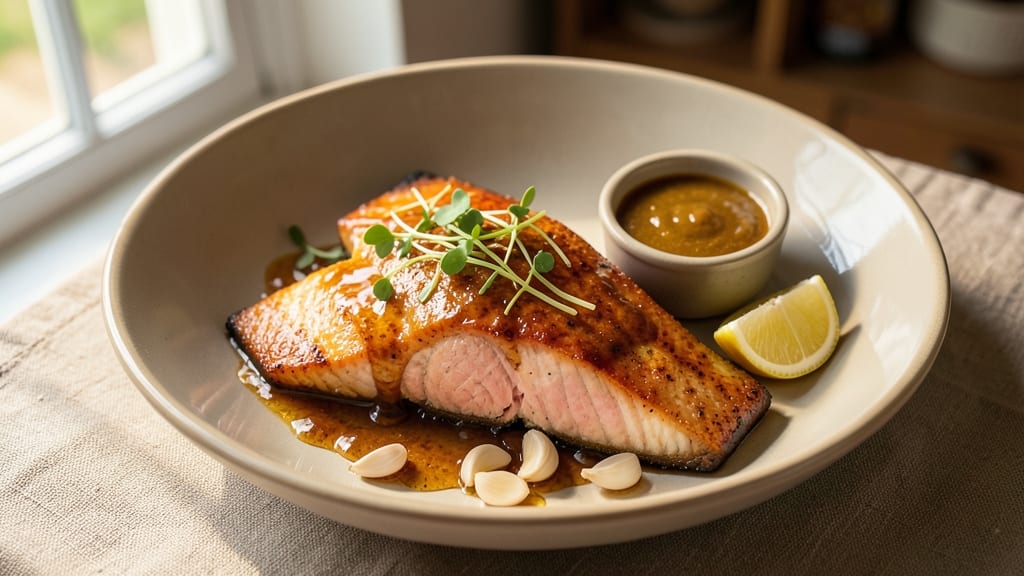
Creating the perfect baked salmon glaze requires balancing sweet, tangy, and umami flavors to achieve that sticky, caramelized perfection. This honey-mustard glaze transforms simple baked salmon into a restaurant-worthy centerpiece with minimal effort.
The secret lies in simmering honey, Dijon mustard, and soy sauce until thickened, creating a glossy finish that clings beautifully to the fish.
What makes this glaze special is its versatility—it works equally well with fresh or frozen salmon fillets and pairs seamlessly with herbs like dill or parsley. The recipe calls for just five ingredients, yet delivers complex flavor that elevates any salmon dish.
Professional results come from precise timing during the reduction phase, ensuring the glaze thickens without burning.
By the time you drizzle this glaze over your salmon, you'll have a dish that's golden, glossy, and packed with flavor. The honey-mustard balance creates a perfect harmony of sweetness and tang, while the soy sauce adds depth that makes every bite unforgettable.
This glaze isn't just a topping—it's the star of the show.
Use this glaze as a finishing touch for baked, grilled, or even pan-seared salmon. The recipe makes enough for two fillets, but you can easily double it for larger batches. Let's create this sticky perfection that will impress even the most discerning palates.
Ingredients for baked salmon glaze
Five ingredients, one perfect glaze—this honey-mustard blend turns simple salmon into showstopper.
| Ingredient | Amount | Notes |
|---|---|---|
| Honey 🍯 | ½ cup | Light or wildflower preferred |
| Dijon Mustard 🌿 | 2 tbsp | High-quality, smooth texture |
| Soy Sauce 🥢 | 1 tbsp | Low-sodium preferred for balance |
| Extra-Virgin Olive Oil 🫒 | 1 tbsp | For glossy finish and richness |
| Fresh Lemon Juice 🍋 | 1 tbsp | Freshly squeezed, no pulp |
| Garlic Cloves 🧄 | 1 clove | Minced for subtle depth |
| Fresh Dill 🌿 | 1 tbsp | Chopped, for fresh brightness |
| Salt 🧂 | ½ tsp | Fine sea salt for seasoning |
The honey is your secret weapon here. Local, raw honey has the best flavor, but any light variety works—just avoid the super thick, dark kinds. Dijon mustard is non-negotiable for that tangy depth (no yellow mustard). Trader Joe's and Whole Foods carry great options, but the regular grocery store stuff is fine if it's fresh. Look for soy sauce labeled 'low-sodium'—it gives you more control over the saltiness. The olive oil should be fruity and peppery; California brands like Bertolli or Pompeian are reliable picks. Fresh lemon juice is a must—bottled won't cut it here.
No Dijon? Whole-grain mustard thinned with water works in a pinch. Short on honey? Maple syrup at half the amount gives similar sweetness. The garlic can be skipped if you're sensitive to its flavor, but it adds that subtle umami kick. No fresh dill? Dried dill at one-quarter the amount is fine, but fresh is worth hunting down at the market. The salt is easy—just taste as you go. This glaze thickens fast, so keep an eye on it. If it gets too thick, a splash of water or lemon juice thins it right back out.
This glaze keeps for 1 week in the fridge, sealed tight. I like to store it in a small jar with a tight lid—it's perfect for drizzling over salmon or even brushing on veggies. Freezes beautifully for 3 months too, though it might separate. Just stir it back together before using. Double the batch if you're making more than two fillets—it disappears fast. The glaze reheats well, so warm it gently in the microwave before drizzling for that glossy finish.
Why You'll Love This Recipe
- Here’s what sold me: the honey caramelizes into a sticky, golden crust, while the Dijon and soy add that deep, tangy punch. Lemon brightens it all up—no bitterness, just that perfect contrast where every bite feels like a little flavor explosion. (Yes, even on a Tuesday night.)
- Five-Ingredient Magic: I swear by this combo—honey, Dijon, soy, olive oil, and lemon. That’s it. No fancy prep, no hidden pantry raids, just stuff you already own (or can grab at the store for under $10). The glaze comes together while the salmon bakes, so you’re basically doing nothing but pressing a timer button.
- Sweet-Savory Balance: Here’s what sold me: the honey caramelizes into a sticky, golden crust, while the Dijon and soy add that deep, tangy punch. Lemon brightens it all up—no bitterness, just that perfect contrast where every bite feels like a little flavor explosion. (Yes, even on a Tuesday night.)
- Weeknight Superstar: Between us, this is my go-to when I’m too tired to think but still want something impressive. Double the glaze, halve the salmon, and suddenly you’ve got leftovers for lunch. Or serve it over rice for a crowd—no one will guess it took me 15 minutes to assemble.
Step-by-step instructions for baked salmon glaze recipe
This honey-mustard glaze delivers sticky, restaurant-worthy perfection every time—simple steps, bold flavors.
Whisk the Glaze Base Together
In a medium bowl, combine the 0.5 cup honey and 2 tablespoons Dijon mustard. Use a whisk and stir vigorously for about 30 seconds until the mixture starts to thicken slightly and becomes smooth. The honey will help balance the tangy mustard, creating the perfect foundation for your glaze.
Next, add the 1 tablespoon soy sauce and 1 tablespoon extra-virgin olive oil. Stir again until fully incorporated. You’ll notice the mixture becomes glossier as the oil blends in—this is key for that sticky, glossy finish. The soy sauce adds depth, so don’t skip it, even if you prefer low-sodium.
Incorporate Aromatics and Brightness
Add the 1 tablespoon fresh lemon juice and minced 1 garlic clove to the bowl. Give it another quick whisk to combine. The lemon juice brightens the glaze, cutting through the richness of the honey and mustard, while the garlic adds subtle complexity. Taste the mixture now—it should be tangy, slightly sweet, and balanced.
Finally, stir in the 1 tablespoon chopped fresh dill and 0.5 teaspoon salt. The dill adds a fresh herbal note that pairs perfectly with salmon, and the salt ties all the flavors together. If you’re using a high-quality Dijon mustard, you might not need extra salt, but taste and adjust if needed.
Simmer the Glaze for Depth
Transfer the glaze mixture to a small saucepan and place it over medium-low heat. Let it simmer gently for 5-7 minutes, stirring occasionally with a wooden spoon. You’ll see the glaze thicken slightly and develop a deeper, caramelized aroma—this is where the magic happens.
Keep an eye on it to avoid burning. The glaze is ready when it coats the back of a spoon smoothly and has a syrupy consistency. If it thickens too much, add 1 teaspoon water to loosen it. Remove from heat immediately after simmering—you don’t want it to reduce further and become too concentrated.
Glaze the Salmon Before Baking
Preheat your oven to 375°F. Place your salmon fillets on a parchment-lined baking sheet, skin-side down if it has skin. Spoon about 1 tablespoon of the warm glaze over each fillet, spreading it evenly to coat the top. The heat from the glaze will help it cling to the salmon instead of pooling.
Bake the salmon for 12-15 minutes, depending on thickness, until the internal temperature reaches 145°F. The glaze should bubble slightly and turn a beautiful golden amber. If it starts to darken too quickly, tent the salmon loosely with foil to prevent over-browning.
Finish with Extra Glaze and Serve
Once the salmon is cooked, remove it from the oven and immediately drizzle the remaining glaze over the top. The residual heat will help it caramelize further, creating that perfect sticky-sweet crust. Let it rest for 2-3 minutes before serving—this ensures the juices redistribute and the glaze sets slightly.
Serve the salmon immediately with the glaze still glistening. The contrast of the warm, sticky glaze with the tender, flaky salmon is what makes this dish truly perfect. Pair it with roasted vegetables or a fresh salad to balance the richness. Enjoy the sticky, tangy, herbaceous perfection you’ve just created!
Pro Tips For Making Baked Salmon Glaze
- Whisk the Glaze Hot: Heat your honey and olive oil together for 30 seconds before adding other ingredients—this thins the honey just enough to make the glaze silky, not cloying. I used to skip this and ended up with a sticky mess that dripped everywhere.
- Use Real Dijon: Cheap mustard substitutes won’t cut it here. The tang in Dijon mustard balances the sweetness and cuts through the richness of the olive oil—skip the "prepared" stuff, even if it’s on sale. Trust me, your glaze will taste flat otherwise.
- Don’t Overmix the Glaze: Stir just until the honey and mustard combine, then stop. Overworking it emulsifies the olive oil too much, turning your glossy glaze into something greasy. A few swirls with a fork is all it takes.
- Brush Salmon Twice: Apply the glaze once before baking, then again halfway through—this guarantees even caramelization and prevents dry spots. I learned this after one batch where the edges were perfect and the center tasted raw.
Dietary considerations for this baked salmon glaze
Gluten-Free Adaptation
This glaze is naturally gluten-free since it relies on honey, mustard, and soy sauce. However, always verify your Dijon mustard label—some brands use wheat-based additives. I recommend Annie's Organic Dijon or Maille for certified gluten-free options.
The soy sauce can also be a concern, so opt for tamari or gluten-free certified soy sauce like San-J Tamari. The rest of the ingredients are inherently safe for gluten-free diets. 🌾
Low-Sugar Options
If you're watching sugar intake, reduce the honey to 3 tablespoons and replace the remaining 2 tablespoons with maple syrup or agave nectar. For an even lower-sugar approach, use monk fruit sweetener (about 1 tablespoon) mixed with 1 tablespoon water to mimic honey's viscosity.
The glaze will still caramelize beautifully while cutting sugar by nearly half. Taste as you go—sweeteners vary in intensity. 🍯
Dairy-Free Friendly
The original recipe is already dairy-free, but if you're using it as a marinade for other proteins, ensure your salmon is fresh and not previously exposed to dairy. The glaze's richness comes from olive oil and honey, making it perfect for vegan or lactose-intolerant diets.
For extra richness, add 1 tablespoon tahini to the glaze base—it adds a nutty depth that complements salmon beautifully. 🥛
Allergen Considerations
For nut allergies, avoid substituting honey with nut-based sweeteners like almond syrup. If mustard is a concern, replace it with 1 tablespoon apple cider vinegar plus 1 teaspoon maple syrup for tangy brightness.
Soy sauce can be swapped for coconut aminos (1:1 ratio) for a soy-free version. Always check labels on store-bought ingredients—cross-contamination is a risk in many facilities. 🚨
Keto-Friendly Version
Transform this glaze into a keto powerhouse by replacing honey with 2 tablespoons erythritol or monk fruit sweetener mixed with 1 tablespoon water. Use 1 tablespoon apple cider vinegar instead of lemon juice to keep carbs under 3g per serving.
The Dijon mustard and soy sauce remain unchanged, but verify their carb counts—some contain hidden sugars. This version keeps the sticky perfection while fitting into low-carb diets. 💪
Pescatarian-Focused Tips
This glaze is already pescatarian-friendly, but if you're serving it with other seafood, adjust the lemon juice to 1.5 tablespoons for shellfish like shrimp or scallops—the extra acidity cuts through their natural sweetness.
For baked cod or halibut, reduce the garlic to ½ clove to avoid overpowering delicate fish. The glaze works beautifully with all finfish, but taste-test before committing to larger batches. 🐟
Nutrition facts
Frequently asked questions
Can I use this glaze on other fish besides salmon?
This honey-mustard glaze works beautifully with cod, halibut, or even mahi-mahi. For shellfish like shrimp or scallops, increase the lemon juice to 1.5 tablespoons to balance their natural sweetness. The glaze's versatility makes it perfect for any finfish or seafood protein.
How do I prevent the glaze from burning while simmering?
Always use medium-low heat and stir frequently with a wooden spoon. The glaze is ready when it coats the back of a spoon smoothly—this usually takes 5-7 minutes. If it starts to darken too quickly, remove it from heat immediately and let it cool slightly before continuing.
Can I make this glaze ahead of time?
Yes! Store the finished glaze in an airtight container in the fridge for up to 1 week. It freezes well for 3 months too—just thaw and stir before using. Reheat gently in the microwave to restore its glossy texture.
What if my glaze turns out too thick?
Simply add 1 teaspoon water or lemon juice at a time while stirring until it reaches a smooth, pourable consistency. The glaze should coat the back of a spoon but still flow easily. Over-simmering causes thickness, so remove it from heat as soon as it thickens.
Is this glaze suitable for a low-carb or keto diet?
With modifications, yes! Replace the honey with 2 tablespoons monk fruit sweetener mixed with 1 tablespoon water and use apple cider vinegar instead of lemon juice. This keeps carbs under 3g per serving while maintaining the sticky perfection.