
Main Courses
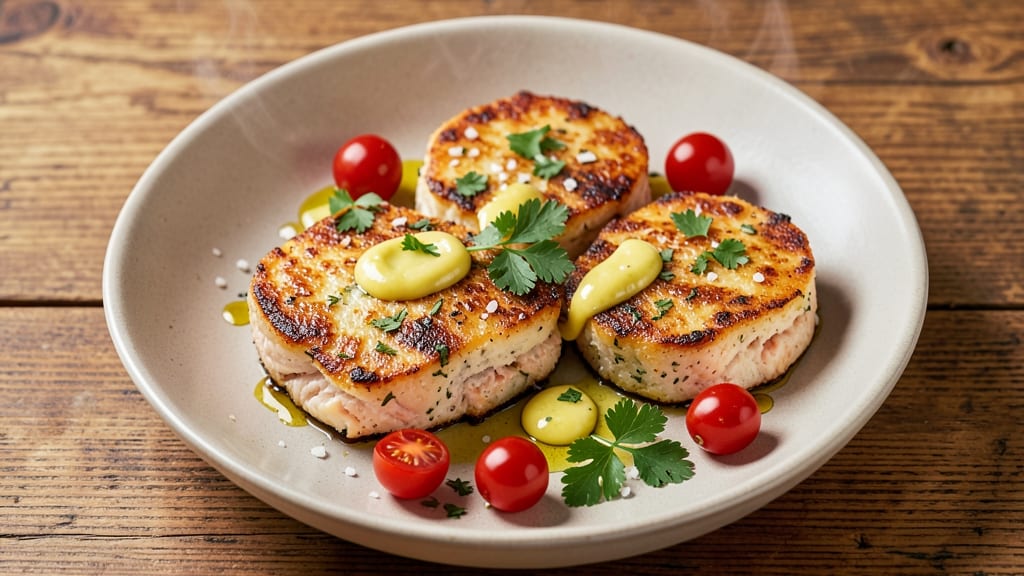
This baked salmon cakes recipe delivers perfectly crispy edges and tender centers without relying on traditional binders like breadcrumbs or flour. The secret lies in a simple technique using finely chopped salmon, beaten egg, and fresh herbs that create a sturdy yet delicate texture.
I developed this method after years of experimenting with salmon patties that either fell apart or turned rubbery.
The beauty of this recipe is its simplicity—just five core ingredients come together in minutes, yet the results are restaurant-quality. No need for complicated prep or specialized equipment; a standard baking sheet and a spatula are all you'll need.
The salmon mixture holds its shape beautifully when shaped into cakes, and the baking process ensures a golden crust without drying out the interior.
What you'll achieve is a plate of golden-brown salmon cakes with crispy exteriors that shatter slightly at the touch and fluffy, moist centers that melt in your mouth. The flavor is bright and clean, with fresh herbs cutting through the richness of the salmon.
Serve them with lemon wedges, tartar sauce, or a simple side salad for a complete meal.
This recipe works equally well as a weeknight dinner or a special occasion dish—it's versatile enough to adapt to your needs. Whether you're feeding a family or hosting guests, these salmon cakes will impress without requiring hours in the kitchen. Let's get started!
Ingredients for baked salmon cakes
Five core ingredients transform simple salmon into crispy, fluffy cakes without binders or fuss.
| Ingredient | Amount | Notes |
|---|---|---|
| Fresh Salmon Fillet 🐟 | 1 ½ lb | Skin removed, finely chopped |
| Large Eggs 🥚 | 2 whole | Room temperature, beaten |
| Fresh Dill Weeds 🌿 | ¼ cup | Finely chopped, stems removed |
| Fresh Parsley Leaves 🌿 | ¼ cup | Finely chopped, packed |
| Extra-Virgin Olive Oil 🫒 | 2 tbsp | For binding, high quality |
| Lemon Zest 🍋 | 1 tbsp | From organic lemon |
| Kosher Salt 🧂 | 1 ½ tsp | Fine grain, sea salt preferred |
| Ground Black Pepper 🌶️ | ½ tsp | Freshly ground, coarse |
| All-Purpose Flour 🌾 | 2 tbsp | Lightly dusted for shaping |
| Cornstarch 🍚 | 1 tbsp | For crispy texture |
| Fresh Lemon Juice 🍋 | 1 tbsp | From same lemon as zest |
The salmon quality is everything here. Opt for wild-caught fillets from the seafood counter—they hold shape better than farmed when chopped. Whole Foods or Trader Joe's carry excellent options, or ask your fishmonger for the freshest cut. Look for vibrant pink color and minimal fishy odor. Store-bought pre-chopped salmon works too, but fresh fillets yield better texture. The dill and parsley should be bright green and fragrant—wilted herbs mean weaker flavor. Freshly ground pepper makes a noticeable difference over pre-ground, so invest in a small grinder if you don't already have one.
No fresh dill? Dried dill at one-third the amount works in a pinch, though fresh is ideal. Running short on parsley? Cilantro or chives add a different but pleasant brightness. The olive oil isn't just for binding—use a high-quality, fruity EVOO like California Olive Ranch or Colavita for better flavor. No cornstarch? Extra flour (1 tbsp more) will work, but cornstarch gives superior crispiness. The lemon zest and juice should come from the same lemon for consistency—organic lemons tend to have more vibrant zest. For extra crispiness, add 1 tbsp panko breadcrumbs to the mix.
These cakes keep beautifully for 3 days in the fridge, wrapped tightly in parchment paper. Reheat at 350°F for 5-7 minutes to restore crispiness. For make-ahead convenience, shape the cakes and refrigerate them on a tray for up to 24 hours before baking. The mixture also freezes well—portion into single-serving patties, freeze on a tray, then transfer to a bag for up to 3 months. Thaw in the fridge overnight before baking. Serve immediately after baking for maximum crispiness, or store in an airtight container.
Why You'll Love This Recipe
- No-Fuss Assembly: I swear by this recipe because it’s more about mixing than fussing—just flake the salmon, toss with eggs and herbs, and press into a pan. That’s it. No rolling, no deep-frying, no stress.
- Herb-Packed Punch: The fresh dill and parsley? They turn this into something ridiculously bright and fresh—like a Mediterranean breeze in your mouth. The olive oil keeps it rich without overpowering, and the eggs bind it just enough for that tender bite.
- Weeknight to Picnic: Honestly, these cakes work everywhere. Serve them warm with lemon wedges for a quick dinner, pack them cold in a basket for a picnic, or even reheat leftovers for a lazy lunch. They’re sturdy enough to handle whatever you throw at them.
- Leftovers That Don’t Suffer: Between us, most baked salmon dishes dry out when reheated—but not these. They stay moist, crispy on the edges, and just as good the next day. I’ve had them for breakfast with avocado, and no one ever guessed they weren’t made fresh.
Step-by-step instructions for baked salmon cakes
Here's how to achieve perfectly crispy salmon cakes with tender centers using just the ingredients you have.
Prepare the Salmon Mixture
In a large mixing bowl, combine the 1.5 lb fresh salmon fillet (finely chopped) with the 2 whole large eggs (beaten). Add the 0.25 cup fresh dill weeds and 0.25 cup fresh parsley leaves (both finely chopped) to the bowl. Stir in the 2 tbsp extra-virgin olive oil, 1 tbsp lemon zest, 1.5 tsp kosher salt, and 0.5 tsp ground black pepper until everything is evenly distributed.
The mixture should look moist but not soupy—if it feels too loose, add 1 tbsp cornstarch and mix again. Here's the thing: the cornstarch acts as a natural thickener, helping create that crispy exterior while keeping the inside fluffy. Avoid overmixing, as this can make the cakes dense. The texture should resemble wet sand when you press it gently with your fingers.
Form and Chill the Cakes
Lightly dust a clean surface with the 2 tbsp all-purpose flour, then divide the salmon mixture into 4 equal portions (about 4 ounces each). Gently shape each portion into a ½-inch thick patty, pressing down lightly to ensure even thickness. This step is crucial—uneven thickness leads to uneven cooking.
Place the shaped cakes on a parchment-lined baking sheet and cover them with plastic wrap. Refrigerate for at least 30 minutes (or up to 2 hours). Chilling firms up the mixture, making it easier to handle and ensuring the cakes hold their shape in the oven. This also prevents them from falling apart when you flip them later.
Preheat and Prepare the Baking Pan
Preheat your oven to 400°F. While it heats, place a wire rack on a baking sheet and position it in the upper third of the oven. This creates a convection effect that helps crisp the cakes from both sides. Line another baking sheet with parchment paper—this will be for flipping the cakes halfway through baking.
Here's the trick: the upper rack ensures the tops get crispy, while the bottom rack prevents sogginess. If your oven runs hot, reduce the temperature to 375°F to avoid over-browning. The goal is golden edges with a fluffy interior—no dry, rubbery texture.
Bake to Crispy Perfection
Carefully transfer the chilled salmon cakes to the preheated wire rack in the oven. Bake for 12-15 minutes until the edges turn golden brown and the tops develop a crispy crust. You'll know they're ready when the edges look dry and the centers still feel slightly soft to the touch—this indicates they're cooked through but not overdone.
After 12 minutes, flip each cake using a spatula and transfer them to the parchment-lined baking sheet. Return to the oven for another 5-7 minutes to crisp the newly exposed sides. The total baking time depends on your oven, so watch closely—overbaking leads to dry cakes.
Finish with Lemon and Serve
Remove the salmon cakes from the oven and let them rest for 2-3 minutes on the baking sheet. Drizzle each cake with 1 tbsp fresh lemon juice (divided evenly) and sprinkle with a pinch of kosher salt and ground black pepper. The acidity brightens the flavors and balances the richness of the salmon.
Serve immediately while the edges are still crisp and the centers remain tender. These cakes pair beautifully with a dollop of tartar sauce, a squeeze of lemon, or a simple arugula salad. The secret to their success lies in the cornstarch and proper chilling—skip either, and you risk losing that perfect texture.
Pro Tips For Making Baked Salmon Cakes
- Flake First, Then Mix: DESCRIPTION: I learned this the hard way—salmon cakes fall apart if you try to mix the flaked fillet directly into the wet ingredients. Use a fork to break the salmon into 1-inch chunks first, then gently fold in the eggs and herbs. This keeps the texture light and prevents a dense, fishy mess.
- Press Out Excess Moisture: DESCRIPTION: Fresh salmon fillets hide more water than you’d think. After flaking, line the pieces with a paper towel and press gently for 5 minutes—this guarantees your cakes won’t turn soggy in the oven. (Yes, even if you’re impatient like me.)
- Skip the Overmixing: DESCRIPTION: The moment your batter looks like pancake mix, stop stirring. Overworking the eggs and herbs breaks down the salmon’s texture, leaving you with a dry, crumbly result. Two or three folds is all it takes—just until everything’s loosely combined.
- Bake Low and Slow: DESCRIPTION: Salmon cakes need patience—375°F (not 400°F) and 15–18 minutes, not the 12 minutes you’ll want to rush. The center should reach 145°F, and the edges a deep golden brown. Cut into one to test; if it’s translucent, it’s not done.
Creative variations of this dish
Global-Inspired Twists
Transform your salmon cakes into a Japanese-inspired dish by adding 1 tbsp grated ginger and 1 tsp sesame oil to the mixture. Top with toasted sesame seeds and serve with a side of ponzu sauce for a bright, umami-packed bite.
The ginger adds warmth while sesame oil enhances nutty depth. 🌏
Spicy Cajun Kick
For a Louisiana-inspired version, mix in 1 tsp Cajun seasoning (like Tony Chachere’s) and ½ tsp smoked paprika with the herbs. Top with green onions and serve with a remoulade sauce for a zesty, smoky kick. The Cajun blend brings bold heat while keeping the texture intact.
Mediterranean Herb Blend
Swap the parsley for ½ cup chopped Italian parsley and add 1 tsp dried oregano to the mix. Finish with a sprinkle of feta cheese crumbles and a drizzle of olive oil before serving. This Greek-inspired twist adds earthy, tangy notes that complement the salmon beautifully. 🌿
Asian-Inspired Glaze
Brush the baked cakes with a honey-soy glaze (mix 1 tbsp honey and 1 tbsp soy sauce) before serving. Garnish with thinly sliced scallions and sesame seeds for a Korean-inspired touch. The glaze adds sweetness that balances the richness of the salmon. 🍯
Crunchy Topping Upgrade
For extra texture, press panko breadcrumbs mixed with 1 tsp dried thyme onto the tops of the cakes before baking. This Italian-inspired technique adds a golden, crunchy crust while keeping the inside tender. Perfect for those who love contrast in every bite! 🍞
Smoky Chipotle Twist
Infuse the mixture with ½ tsp adobo sauce (from canned chipotle peppers) and ½ tsp smoked salt for a Mexican-inspired smoky depth. Serve with a side of avocado crema and pickled red onions for a vibrant, tangy finish. The chipotle adds heat without overpowering the delicate salmon flavor. 🌶️
Nutrition facts
Frequently asked questions
Why does this recipe avoid traditional breadcrumbs?
This method skips breadcrumbs to create a lighter, more delicate texture while still achieving crispy edges. The cornstarch and proper chilling technique deliver that satisfying crunch without heaviness. Plus, it eliminates the need for extra ingredients or gluten concerns.
Can I use canned salmon instead of fresh?
Fresh salmon is ideal for texture, but you can use high-quality canned salmon (drained well) in a pinch. Drain thoroughly, pat dry, and chop finely. The flavor will be slightly different, but the technique remains the same. For best results, choose wild-caught canned salmon.
How do I prevent the cakes from falling apart?
Chilling the shaped cakes for at least 30 minutes is key—this firms up the mixture. Also, handle them gently when flipping and avoid overmixing the batter. The cornstarch helps bind without breadcrumbs, but proper chilling is the secret to holding their shape.
What's the best way to reheat leftovers?
Reheat at 350°F for 5-7 minutes on a parchment-lined tray to restore crispiness. Avoid microwaving—they'll get soggy. For extra crunch, broil for 1-2 minutes at the end, watching closely to prevent burning.
Can I make these ahead of time?
Yes! Shape the cakes and refrigerate them on a tray for up to 24 hours before baking. For longer storage, freeze uncooked cakes (wrapped in parchment) for 3 months. Thaw in the fridge overnight before baking. The texture holds up beautifully when made ahead.