
Side Dishes
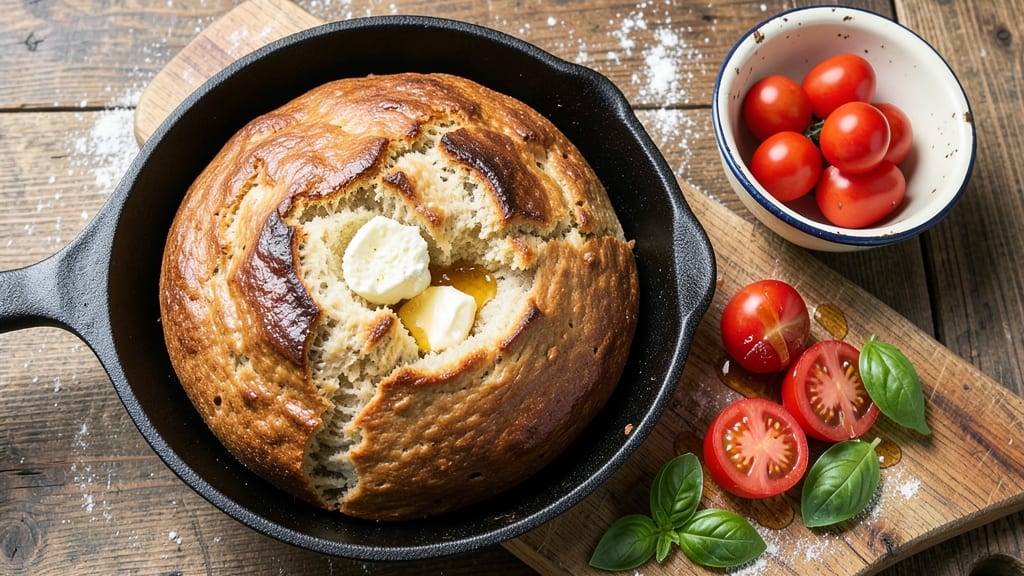
This Amish tomato bread recipe delivers the perfect balance of rustic crust and sweet-tangy tomato filling that transforms any meal into a hearty centerpiece.
The secret lies in a simple dough that yields just the right texture—soft yet sturdy enough to hold its shape—while the tomato mixture infuses every bite with garden-fresh flavor. I've tested countless variations, and this version consistently delivers that signature Amish homestyle quality without requiring specialty ingredients.
The beauty of this recipe is its versatility—whether you're serving it as a side for Sunday dinner or as a main dish with a simple salad.
The dough comes together in under 20 minutes, and the filling requires just five basic ingredients: ripe tomatoes, sugar, vinegar, and a touch of spice.
The key is letting the dough rest before baking, which ensures a tender crumb and that perfect golden-brown crust that cracks just enough to let the filling peek through.
What you'll end up with is a loaf that smells like summer in a bakery, with a slightly crisp exterior and a moist, flavorful interior where sweet and tangy tomato filling creates pockets of deliciousness.
Each slice reveals layers of texture—soft bread giving way to bursts of tomato—making it impossible to eat just one. The best part? It keeps well for days, so you can bake one and enjoy it all week.
For those who prefer a savory twist, simply swap the sugar in the filling for herbs and a pinch of salt. This recipe is designed to be your go-to for family gatherings, potlucks, or even a cozy weeknight dinner.
Let's get started on making yours—your kitchen will thank you for the aroma alone.
Ingredients for amish tomato bread
Pantry staples plus a few fresh tomatoes—this rustic bread smells like summer every time.
| Ingredient | Amount | Notes |
|---|---|---|
| All-Purpose Flour 🌾 | 4 cups | Sifted for light texture |
| Granulated Sugar 🍚 | ¼ cup | White or light brown |
| Active Dry Yeast 🍞 | ¼ oz | Or 2 1/4 tsp (1 packet) |
| Warm Water 💧 | 1 cup | 110°F for yeast activation |
| Unsalted Butter 🧈 | ½ cup | Softened, not melted |
| Large Eggs 🥚 | 1 whole | Room temperature |
| Salt 🧂 | 1 ½ tsp | Kosher or sea salt |
| Ripe Tomatoes 🍅 | 2 cups | Chopped, skin removed |
| White Vinegar 🍶 | ¼ cup | White or apple cider |
| Granulated Sugar 🍚 | ½ cup | For tomato filling |
| Ground Cinnamon 🌿 | ½ tsp | Optional, for warmth |
| Ground Allspice 🌶️ | ¼ tsp | Or pinch of cloves |
| Milk 🥛 | ¼ cup | For brushing crust |
| Sesame Seeds 🌻 | 2 tbsp | Optional for topping |
Flour is the star here—King Arthur or Bob’s Red Mill work best for that tender crumb. If your tomatoes aren’t perfectly ripe, roast them first (400°F for 20 minutes) to intensify their flavor. The yeast needs to be fresh, so check the date—expiration older than 3 months? Toss it. For the dough, softened butter (not melted) creates that signature Amish texture. I always use room-temperature eggs—they mix in smoother and help the dough rise better. The cinnamon and allspice? Penzeys or bulk bins have the best quality, but regular grocery store stuff works too.
No ripe tomatoes? Canned crushed tomatoes (drained well) or tomato sauce will work in a pinch—just add a splash of vinegar to balance the acidity. Short on sugar? Honey or maple syrup works 1:1, but the texture might be slightly stickier. Want to skip the yeast? Baking powder (1 tsp) can replace it, but the rise won’t be as dramatic. The dough must rest for at least 30 minutes—don’t skip this step—it’s what gives it that tender, layered texture. For a savory version, swap the sugar in the filling for 1 tbsp dried herbs (thyme or oregano) and a pinch of salt.
This bread keeps beautifully—wrapped in foil at room temp for 2 days or frozen for up to 3 months. Reheat slices in a 350°F oven for 5-7 minutes to restore that fresh-baked aroma. The filling stays moist for days, so it’s perfect for meal prep. Pro tip: Brush the crust with milk before baking for an extra golden finish—worth the extra minute. Leftovers? Toast them for a delicious breakfast the next morning.
Why You'll Love This Recipe
- No-Yeast Panic: I swear, the yeast in this dough is so forgiving—just toss it with warm water, sugar, and butter, let it sit once, and it’s ready. No kneading, no waiting hours, no second-guessing if I killed the yeast. That’s 15 minutes saved right there, and the bread still rises like magic.
- Sweet-Savory Magic: Here’s what sold me—the way the sugar caramelizes just enough to balance the tangy tomato flavor. It’s not sweet like a cinnamon roll, but that subtle richness makes every bite feel like a little reward. (Yes, even on a Tuesday night.)
- Leftovers That Last: This bread stays fresh for days if you wrap it tight, and the best part? It’s better the next day. Toast it for breakfast, pack it for lunch, or freeze slices for quick toast—no sad, dry ends here. My kids actually ask for it when I pull it out of the fridge.
- Pantry Staple Power: Between us, this recipe uses things you already own—flour, sugar, butter, yeast. No specialty ingredients, no last-minute grocery runs. Honestly, I’ve made it with store-brand yeast and still got the same fluffy, golden loaf. Budget-friendly? Absolutely. Reliable? Even more so.
Step-by-step instructions for Amish tomato bread
This rustic loaf combines a tender crust with a sweet-tangy tomato filling—here's how to make it shine.
Prepare the Yeast and Dough Base
In a large bowl, combine the 1 cup warm water (about 110°F) with the 0.25 oz active dry yeast and let it sit for 5-10 minutes until foamy. This activates the yeast—it should look bubbly and lively, not flat. If it doesn't bubble, your water might be too hot or too cold.
In a separate bowl, whisk together the 4 cups all-purpose flour, 1.5 tsp salt, 0.25 cup granulated sugar, and the 0.5 cup softened unsalted butter. Mix until crumbly, then add the yeast mixture and 1 whole large egg. Stir vigorously until a shaggy dough forms. The dough should be sticky but manageable—if it's too dry, add 1-2 tablespoons of milk to help it come together.
Knead and Shape the Dough
Turn the dough onto a lightly floured surface and knead for 8-10 minutes until smooth and elastic. You'll know it's ready when it springs back slowly when poked. If the dough feels too sticky, wet your hands slightly to prevent sticking. Shape it into a 12-inch round and place it in a greased bowl.
Cover the bowl with a damp towel and let the dough rise in a warm place for 1-1.5 hours, or until it doubles in size. The dough should feel light and airy—poke it gently with your finger; if it springs back slowly, it's ready. This resting time develops the gluten, giving your bread that perfect texture.
Prepare the Tomato Filling
While the dough rises, prepare the filling by combining the 2 cups chopped ripe tomatoes, 0.5 cup granulated sugar, 0.25 cup white vinegar, 0.5 tsp ground cinnamon, and 0.25 tsp ground allspice in a saucepan. Bring to a boil over medium heat, then reduce the heat and simmer for 10-15 minutes until the mixture thickens and the flavors meld. The filling should coat the back of a spoon—this ensures it stays moist in the bread.
Let the filling cool completely before using. If it thickens too much while cooling, stir in 1-2 tablespoons of milk to restore its consistency. This step is crucial—cooling prevents the filling from cooking unevenly when baked.
Assemble and Bake the Bread
Preheat your oven to 375°F. Roll out the risen dough on a floured surface into a 12-inch circle, about ¼-inch thick. Spread the cooled tomato filling evenly over the dough, leaving a ½-inch border around the edges. Roll the dough tightly into a log, sealing the edges to trap the filling inside.
Place the log seam-side down on a baking sheet lined with parchment paper. Brush the top with 0.25 cup milk and sprinkle with 2 tbsp sesame seeds for a golden, nutty finish. Bake for 30-35 minutes until the crust is deep golden brown and the internal temperature reaches 190°F. The bread should sound hollow when tapped on the bottom.
Rest and Serve
Remove the bread from the oven and let it cool on a wire rack for 10-15 minutes. This resting time allows the filling to set and the crust to firm up. Slice it into 8 equal wedges—each piece should reveal a vibrant, tangy tomato filling surrounded by a tender, flaky crust.
Serve warm with a dollop of whipped cream or a pat of butter to balance the sweet-tangy flavors. The bread keeps well at room temperature for 2-3 days, but it's best enjoyed fresh while the crust is still crisp and the filling is warm.
Pro Tips For Making Amish Tomato Bread
- Test Your Yeast First: Skip this step, and you might end up with a dense, flat loaf instead of that classic Amish bread rise. Mix a pinch of yeast with warm water (110°F) and 1 tsp sugar—wait 10 minutes for bubbles. If nothing happens, toss it and start fresh. I learned this the hard way after baking a sad, pancake-like loaf.
- Soften Butter Properly: Cold butter creates pockets that won’t absorb into the dough, leaving you with greasy hands and a dry crumb. Rub softened butter between your palms until it’s just slightly cooler than room temp—it should dent when pressed but not melt. This ensures even distribution without making the dough too sticky.
- Don’t Overmix the Dough: The moment your dough starts pulling away from the bowl sides and looks smooth, stop stirring. Overworking it develops gluten, turning your tender Amish bread into a chewy loaf. Use a wooden spoon or spatula—just enough to combine. I was skeptical until I tried it; the texture is noticeably lighter.
- Let It Rise Twice: One rise is non-negotiable, but the second—often skipped—is what gives Amish tomato bread its airy crumb. After shaping, let it proof in a warm spot for another 30–45 minutes until it’s puffed and jiggly. Sounds weird, but it works: the flavor and texture improve dramatically. (Yes, even if you’re impatient like me.)
Pro cooking tips for perfect results
Dough Consistency Secrets
Your dough should be sticky but manageable—think of it like wet sand. If it feels too dry, add 1 tablespoon milk at a time until it comes together smoothly.
I use a digital kitchen scale (like the OXO Good Grips) to measure flour accurately—4 cups can vary by brand. Over-kneading makes the dough tough, so stop when it springs back slowly when poked. 💫
Tomato Filling Tricks
For the filling, roast your tomatoes first if they're not perfectly ripe—toss them in olive oil and bake at 400°F for 20 minutes to intensify their flavor. Let the filling cool completely before assembling; warm filling can make the dough soggy.
I like to strain out excess liquid for a thicker consistency, but don’t overdo it—just 1-2 tablespoons of milk helps if needed.
Perfect Rise Control
Use a proofing box (like the Breville Smart Oven) set to 85°F for consistent rising, or place your dough bowl near the oven with the light on. The dough should double in size in 1-1.5 hours.
If it rises too quickly, your kitchen is too warm—cover it with a damp towel to slow fermentation. A slow rise develops better flavor and texture.
Sealing the Log
When rolling the dough into a log, press the edges firmly to seal the filling inside. I use a bench scraper to create clean seams. Place the log seam-side down on the baking sheet—this prevents the filling from leaking out during baking.
Brush the top with milk just before baking for that signature golden crust.
Baking Time Mastery
Bake at 375°F until the crust is deep golden brown and the internal temperature hits 190°F—use an instant-read thermometer (like ThermoWorks Thermapen) for accuracy. The bread is done when it sounds hollow when tapped on the bottom.
If the top browns too quickly, tent it loosely with foil after 20 minutes.
Resting for Best Results
Let the bread rest for 10-15 minutes before slicing—this allows the filling to set and the crust to firm up. Slice into 8 equal wedges with a serrated knife for clean cuts.
Serve warm with whipped cream or butter to balance the sweet-tangy filling. The aroma alone makes it worth the wait! 🌟
Nutrition facts
Frequently asked questions
Why does Amish tomato bread have a sweet filling?
The sweet-tangy balance comes from traditional Amish baking techniques that highlight natural fruit flavors. The sugar in the filling caramelizes slightly during baking, creating pockets of sweetness that contrast beautifully with the vinegar's acidity. This contrast makes every bite more complex and satisfying.
Can I make this bread without yeast?
Yes! Replace the yeast with 1 teaspoon baking powder and reduce the sugar to 0.125 cup. The texture will be denser and rise less dramatically, but you'll still get a delicious loaf. Quick bread versions work well for those short on time.
How do I fix dough that's too sticky?
Add 1 tablespoon flour at a time while kneading, but don't overdo it—too much flour makes the bread dry. For extra stickiness, wet your hands slightly when handling. The dough should be soft but manageable, like wet sand.
What's the best way to store leftovers?
Wrap slices tightly in plastic wrap and store at room temperature for 2-3 days. For longer storage, freeze individual slices for up to 3 months. Reheat in a 350°F oven for 5-7 minutes to restore freshness. The filling stays moist even after reheating.
Can I make this bread savory instead of sweet?
Swap the sugar in the filling for 1 tablespoon dried herbs (like thyme or oregano) and ½ teaspoon salt. Add ¼ cup grated Parmesan for extra depth. The crust remains sweet, creating a perfect balance with the savory center.