
Appetizers
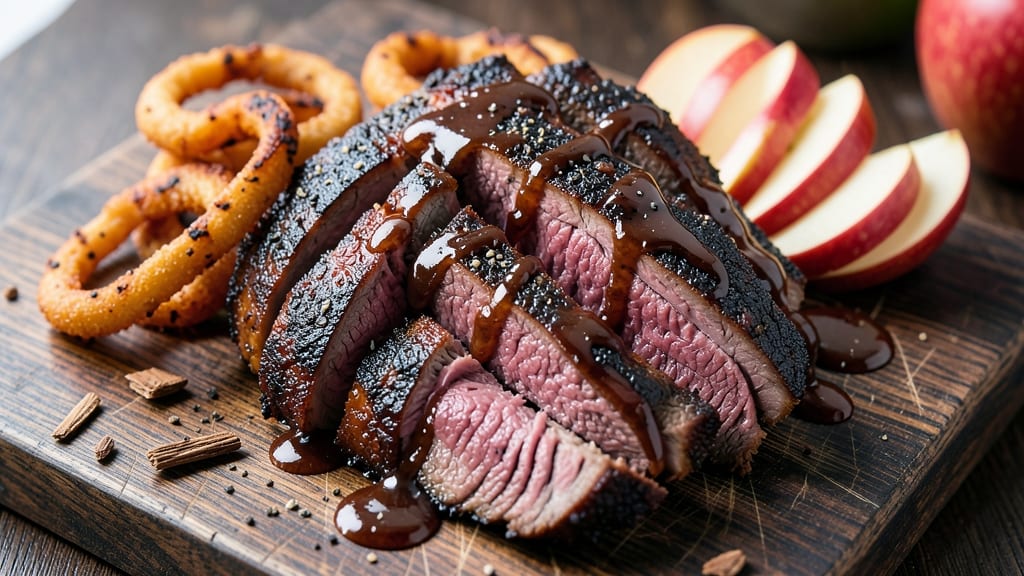
Mastering Texas smoked beef brisket transforms a simple cut into melt-in-your-mouth perfection that rivals Central Texas pitmasters. This 12-hour process builds deep smoke flavor and tender meat through precise temperature control and post-oak wood—no shortcuts, just tradition.
The key lies in the "Texas crutch" method: wrapping the brisket in butcher paper to retain moisture while developing that coveted bark.
What sets this recipe apart is balancing low-and-slow cooking (225°F) with strategic bark development—never letting the exterior overpower the tender interior. A 3-2-1 rub (coarse salt, black pepper, garlic powder) creates the foundation, while spritzing every 2 hours keeps the bark crisp without drying the meat.
The result? Juicy, fork-tender slices with a crust so dark it looks like it came from a legendary Franklin smoker.
By the final hour, your brisket will have transformed into a restaurant-quality centerpiece—smoky, rich, and perfectly balanced between bark and meat. The post-oak wood infuses subtle sweetness, while the butcher paper wrap locks in every ounce of natural juices.
Serve with classic sides like baked beans and creamy coleslaw to complete the Texas BBQ experience.
This method delivers foolproof results even for beginners, as long as you commit to the timing. The patience pays off with brisket so tender it falls apart at the touch—exactly how it should be. Let’s get smoking.
Ingredients for texas smoked beef brisket
Precision-crafted Texas brisket requires only these 14 ingredients for restaurant-quality results at home.
| Ingredient | Amount | Notes |
|---|---|---|
| Packer Brisket 🥩 | 10 lb | Whole packer cut with fat cap intact |
| Coarse Kosher Salt 🧂 | ¼ cup | Diamond Crystal preferred for texture |
| Freshly Ground Black Pepper 🌶️ | 2 tbsp | Cracked peppercorns for optimal grind |
| Garlic Powder 🧄 | 1 tbsp | High-quality, no anti-caking agents |
| Post Oak Wood Chips 🌳 | 2 lb | Food-grade, lightly toasted |
| Apple Juice Concentrate 🍎 | ½ cup | For spritzing, not diluted |
| Butcher Paper 📄 | 1 sheet | Unbleached, 18"x24" size |
| Yellow Mustard 🥬 | ¼ cup | For final bind, not Dijon |
| Beef Tallow 🧈 | ½ cup | Rendered, for fat cap application |
| Yellow Onion 🧅 | 1 whole | For spritz mix, peeled and sliced |
| Beef Broth 💧 | ½ cup | Low-sodium, for spritz mix |
| Smoked Paprika 🌶️ | 1 tbsp | For final dusting, not sweet |
| Cayenne Pepper 🔥 | ½ tsp | Optional, for heat control |
| Black Cherry Wood Chips 🍒 | 1 lb | Secondary wood for complexity |
The packer brisket is non-negotiable—its thick fat cap creates the iconic bark while protecting the meat. Source from a reputable butcher like Snake River Farms or US Wellness Meats for consistent quality; avoid pre-trimmed cuts that lack fat coverage. The post oak wood chips must be food-grade and lightly toasted—never store-bought chips from the grocery store. For the rub, Diamond Crystal kosher salt dissolves more slowly than Morton, creating better bark texture. The beef tallow should be rendered in-house for optimal flavor, though high-quality store-bought works in a pinch (look for US Wellness or Snake River brands).
No post oak available? White oak or hickory in a 2:1 ratio maintains tradition. Substitute apple juice concentrate with white grape juice for spritzing, though apple delivers that signature tang. The yellow mustard acts as a binder—French's Original is the gold standard, but any American-style brand works. For the rub, smoked paprika can be swapped with equal parts sweet paprika plus a pinch of liquid smoke, though purists will notice the difference. The black cherry wood chips add subtle fruitiness; omit if unavailable but never replace with fruitwoods like pecan or mesquite.
Store uncooked brisket in the coldest part of your fridge, wrapped in butcher paper, for up to 5 days. Rendered tallow keeps for 6 months in the freezer, while wood chips last 1 year in an airtight container. Cooked brisket reheats beautifully—wrap tightly in butcher paper and reheat at 275°F for 1 hour, basting with beef broth. Leftovers transform into brisket sandwiches or tacos within 4 days when stored properly. For long-term storage, portion and freeze in vacuum-sealed bags for up to 3 months.
Why You'll Love This Recipe
- I swear by this: just salt, pepper, and garlic powder—no fancy rubs. Toss the brisket in those three things, slap it on the smoker with Post Oak wood, and walk away. That’s it.
- No-Fuss Prep: I swear by this: just salt, pepper, and garlic powder—no fancy rubs. Toss the brisket in those three things, slap it on the smoker with Post Oak wood, and walk away. That’s it.
- Smoke Bomb Flavor: Between the deep, smoky char from the Post Oak and that tender, juicy center, every bite feels like a hug. Honestly, my husband still asks for seconds even when we just had it last week.
- Tailgate to Tuesday: This isn’t just for big gatherings—it’s my go-to for game days, lazy Sundays, or even a weeknight when I want to feel fancy. The leftovers? Even better cold in sandwiches.
Step-by-step instructions for Texas smoked beef brisket
Mastering brisket requires precision—follow this method for a perfect bark-to-meat balance.
Prepare the Brisket with Dry Rub
Begin by trimming the fat cap of the 10 lb Packer Brisket to about ¼-inch thickness using a sharp boning knife. Leave the fat intact on the sides to protect the meat during smoking. Pat the entire surface dry with paper towels—this ensures maximum bark adhesion.
In a small bowl, combine 0.25 cup Coarse Kosher Salt, 2 tbsp Freshly Ground Black Pepper, 1 tbsp Garlic Powder, 1 tbsp Smoked Paprika, and 0.5 tsp Cayenne Pepper. Mix thoroughly to create a uniform dry rub. Generously coat the brisket with this blend, pressing firmly so the spices adhere. Place the brisket on a wire rack set over a tray and refrigerate uncovered for 12-24 hours—this step is critical for developing deep flavor and crispy bark.
Set Up the Smoker and Preheat
Fill your smoker with 2 lb Post Oak Wood Chips and 1 lb Black Cherry Wood Chips—these woods provide the classic Texas brisket profile. Preheat the smoker to 225°F and maintain a consistent temperature using a digital thermometer. Allow the wood chips to burn until you see thin, blue smoke (not thick white smoke) before adding the brisket.
Position the brisket fat-side up on the smoker grates. This orientation ensures the rendered fat bastes the meat as it cooks. Close the lid and avoid opening it for at least 2 hours—frequent peeking causes temperature fluctuations that prolong cook time. The goal is to maintain a steady 225°F environment throughout the smoke.
Monitor and Spritz for Moisture
Smoke the brisket undisturbed for 6-8 hours, or until the internal temperature reaches 165°F. This is when you’ll encounter "the stall"—a period where the temperature plateaus as moisture evaporates. To combat this, prepare a spritz mix by combining 0.5 cup Apple Juice Concentrate and 0.5 cup Beef Broth in a spray bottle.
Every 90 minutes after the stall begins, remove the brisket and spritz it generously with the mixture. Return it to the smoker immediately. This technique maintains moisture while promoting bark development. The brisket is ready to wrap when the internal temperature hits 195°F—this typically occurs after 10-12 hours of total smoke time.
Wrap and Finish for Tenderness
Once the brisket reaches 195°F, remove it from the smoker and wrap it tightly in 1 sheet Butcher Paper. This "Texas crutch" technique preserves the bark while accelerating tenderness. Return the wrapped brisket to the smoker and continue cooking until the internal temperature reaches 203°F—this ensures probe-tender meat.
During the final hour, prepare a finishing glaze by mixing 0.25 cup Yellow Mustard and 0.5 cup Beef Tallow. Brush this mixture over the brisket’s surface to enhance moisture retention and add a glossy finish. The total cook time should be approximately 12 hours, including the wrap stage.
Rest and Slice for Serving
Remove the brisket from the smoker and place it on a cutting board. Tent loosely with foil and rest for 1-2 hours before slicing. This resting period allows juices to redistribute, ensuring each slice is moist and flavorful. The brisket should have a dark mahogany bark and a pink smoke ring just beneath the surface.
Slice the brisket against the grain into ¼-inch thick pieces. Serve immediately with the rendered juices from the butcher paper. Each bite should deliver a perfect balance of crispy bark, tender meat, and deep smoke flavor. For optimal results, serve with classic Texas sides like cornbread and collard greens.
Pro Tips For Making Texas Smoked Beef Brisket
- Trim the Fat Cap: Cut the thick fat layer down to about ¼-inch—it’ll render slower and keep the meat moist. I learned this the hard way after a brisket turned greasy instead of tender.
- Salt the Night Before: Apply the coarse kosher salt and pepper at least 12 hours ahead. The salt breaks down the proteins, and the crust forms better—no last-minute rushing. (Yes, even if you’re impatient like me.)
- Split Before Smoking: Separate the point and flat against the grain before it hits the smoker. Uneven thickness means uneven cooking, and you’ll end up with a dry flat while the point stays tough.
- Soak Wood Chips First: Toss Post Oak chips in hot water for 30 minutes before using—it prevents flare-ups and keeps the smoke steady. I was skeptical until I tried it; now I never skip this step.
Perfect pairings for this dish
Classic Texas Sides
No Texas brisket spread is complete without baked beans—I swear by Canned Heat Original for their smoky, slightly sweet profile. Simmer 2 cans with ½ cup beef broth and 1 tbsp brown sugar for 30 minutes on low heat.
The natural molasses in the beans pairs perfectly with the brisket’s richness. Serve warm in a cast-iron skillet for that rustic touch. 🥣
Creamy Coleslaw
My go-to coleslaw uses Shredded Green Cabbage (not purple) for a sharper bite and Kraft Classic Mayo for that signature tang. Toss 8 cups cabbage with ½ cup mayo, 2 tbsp apple cider vinegar, 1 tbsp sugar, and 1 tsp celery seeds—no carrots needed!
Chill for 2 hours before serving to let flavors meld. The acidity cuts through the brisket’s fat beautifully.
Smoky Cornbread
For a Southern-inspired side, I make Jiffy Corn Muffin Mix with a twist—add 1 tbsp smoked paprika and 2 tbsp chopped green onions to the batter. Bake in a 9-inch cast-iron skillet at 375°F for 20 minutes.
The smokiness echoes the brisket, while the crumbly texture soaks up every drop of rendered juices. Brush with butter after baking for extra richness. 🌽
Pickled Red Onions
Quick-pickle 1 cup thinly sliced red onions in a mix of ½ cup apple cider vinegar, ½ cup water, 1 tbsp sugar, and ½ tsp salt. Let sit for at least 30 minutes before serving.
The bright acidity and crunch provide a refreshing contrast to the brisket’s smokiness. I like to scatter them on top of slices for color and texture.
Beverage Pairings
For drinks, Shiner Bock is the ultimate Texas beer choice—its malty sweetness complements the brisket’s smokiness without overpowering it. For non-alcoholic options, Sweet Tea (brewed with ½ cup sugar and 1 tbsp lemon juice) is a Southern staple. The slight tartness cleanses your palate between bites. 🍺
Final Garnish Touches
Before serving, dust the brisket with smoked paprika for extra depth and garnish with fresh cilantro if you’re feeling fancy. A drizzle of beef tallow (the same used in the finishing glaze) adds a luxurious sheen.
For heat lovers, sprinkle crushed red pepper flakes on the side—just ½ tsp per plate to avoid overwhelming the dish.
Nutrition facts
Frequently asked questions
Why does Texas brisket need to cook for 12+ hours?
The 12-hour process is essential for breaking down the tough connective tissue in brisket through low-and-slow smoking at 225°F. This method transforms the meat into tender, melt-in-your-mouth slices while developing that iconic dark mahogany bark. Skipping this time risks dry, chewy results—patience is key to Texas-style perfection!
Can I use a different wood than post oak?
Post oak is traditional, but white oak or hickory work well as substitutes. For complexity, mix 2 parts oak to 1 part black cherry—the cherry adds subtle fruitiness. Avoid mesquite or pecan, as they can overpower the brisket’s natural flavor. Toast your wood chips lightly before using for a cleaner smoke.
What’s the ‘Texas crutch’ and why wrap in butcher paper?
The Texas crutch refers to wrapping the brisket in butcher paper at 195°F to speed up tenderness without losing bark. The paper allows moisture retention while keeping the crust intact—unlike foil, which can make the bark soggy. This technique cuts cook time by 1-2 hours while preserving texture.
How do I know when the brisket is done?
Use a meat thermometer to check the internal temperature: 203°F in the thickest part (near the bone) ensures probe-tender meat. The bark should be dark and crispy, and the fat cap should render but not burn. If the probe slides in easily, it’s ready—no guessing required!
What if my brisket stalls at 165°F?
This is normal! The stall occurs when moisture evaporates, causing the temperature to plateau. Combat it by spritzing every 90 minutes with apple juice concentrate and beef broth. Never rush it—let the brisket recover naturally. If stalled for >2 hours, consider wrapping early (at 180°F) to salvage moisture.