
Main Courses
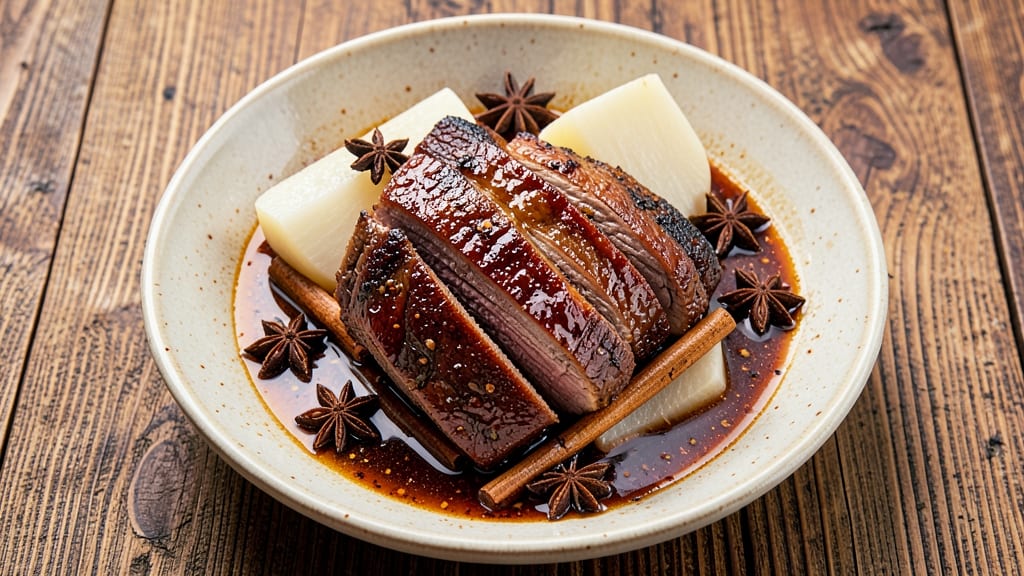
This Chinese braised beef brisket with daikon delivers restaurant-quality depth of flavor in a single pot, combining tender beef with the subtle sweetness of daikon radish. The slow braising process transforms tough brisket into melt-in-your-mouth perfection while developing layers of umami through traditional Chinese aromatics.
My version simplifies the classic technique without sacrificing authenticity—just 30 minutes of prep followed by hands-off braising.
The secret lies in the balance of ingredients: star anise, cinnamon, and soy sauce create that signature aromatic complexity, while daikon adds natural sweetness that complements the beef's richness.
Unlike quick-cook methods, this recipe relies on low-and-slow cooking to break down the meat fibers, resulting in beef that practically falls apart at the touch of a fork. The daikon doesn't just add flavor—it becomes part of the sauce, creating a velvety texture that coats every bite.
What you'll end up with is a dish that's equally impressive served family-style or as a centerpiece for dinner parties. The aroma alone will have everyone gathering around the table, and each bite delivers that perfect harmony of tender beef, aromatic spices, and daikon's subtle sweetness.
This is comfort food at its finest—warm, inviting, and packed with flavor that lingers long after the last bite.
Pair it with steamed jasmine rice to soak up every drop of that rich braising liquid, or serve with quick-pickled vegetables for brightness. The leftovers actually taste better the next day as the flavors continue to meld.
Let's create this deeply satisfying one-pot masterpiece that brings authentic Chinese restaurant quality to your kitchen.
Ingredients for chinese braised beef brisket daikon
Umami-packed ingredients that transform tough brisket into melt-in-your-mouth perfection.
| Ingredient | Amount | Notes |
|---|---|---|
| Beef Brisket 🥩 | 3 lb | Flat cut, 1-inch thick slices |
| Daikon Radish 🥬 | 1 ½ lb | Whole, peeled and sliced |
| Soy Sauce 🍶 | ½ cup | Dark soy preferred for color |
| Shaoxing Wine 🍷 | ¼ cup | Or dry sherry substitute |
| Star Anise 🌟 | 4 whole | Whole pods for infusion |
| Cinnamon Sticks 🌿 | 2 whole | 2-inch pieces for aroma |
| Fresh Ginger 🧡 | 3 tbsp | Grated, aromatic quality |
| Garlic Cloves 🧄 | 8 cloves | Peeled, smashed for flavor |
| Brown Sugar 🍚 | ¼ cup | Light or dark preferred |
| Green Onions 🧅 | ½ cup | Sliced, for garnish |
| Sesame Oil 🫒 | 1 tbsp | Toasted, for finishing |
| Cornstarch 🌾 | 1 tbsp | For thickening sauce |
| Water 💧 | 2 cups | Filtered preferred |
| Salt 🧂 | 1 ½ tsp | Diamond Crystal kosher |
| Black Peppercorns 🌶️ | 10 whole | Crushed for texture |
The beef brisket is the star—look for well-marbled flat cuts at your butcher or Costco for the best quality. Daikon radish should be firm and white with no soft spots; Asian markets often carry the largest roots. Star anise and cinnamon sticks are non-negotiable for that authentic aroma—spice bins at Whole Foods have the freshest whole pods. Shaoxing wine adds depth, but dry sherry or mirin work in a pinch. Fresh ginger? Buy organic and grate it yourself—pre-grated loses its punch fast.
No Shaoxing wine? Dry sherry or mirin works perfectly—just use the same amount. Star anise too strong? Reduce to 2 pods. Daikon radish too fibrous? Substitute 1 lb of parsnips, but expect slightly less sweetness. The brown sugar can be swapped for honey or maple syrup, though sugar gives a more traditional texture. For extra richness, add 1 tbsp of hoisin sauce with the soy sauce. And if you're short on time, pre-sliced daikon from the produce section saves chopping.
This braise gets better with time—3-4 days in the fridge lets the flavors meld perfectly. Store in the original pot or glass containers with the sauce. Freezes beautifully for up to 3 months—portion into individual servings for easy reheating. The sauce thickens as it cools, so add a splash of water when reheating. Garnish with fresh green onions and a drizzle of sesame oil right before serving—that's where the magic happens.
Why You'll Love This Recipe
- One-Pot Magic: I swear by this recipe because it’s all in one pot—no chopping boards to clean, no extra pans to wash. Just beef, daikon, and a handful of spices simmering together until the kitchen smells like a Chinese restaurant.
- Deep Umami Bomb: That Shaoxing wine and star anise? They turn tough brisket into melt-in-your-mouth perfection. The daikon soaks up all the rich, salty-sweet sauce like a sponge—every bite is packed with flavor.
- Leftovers That Don’t Suck: Between us, this dish begs to be made in bulk. The flavors actually get better the next day (yes, really), and it reheats like a dream—great for packed lunches or lazy weeknight dinners.
- Budget Beef Boost: Brisket on sale? This is the dish to make. A big cut becomes a whole meal, and the daikon stretches it even further. I’ve fed four people for under $15, and no one ever complains.
Step-by-step instructions for Chinese braised beef brisket daikon
Here's how to transform tough brisket into melt-in-your-mouth perfection with tender daikon and deep umami flavors.
Prepare the Brisket and Aromatics
Begin by slicing the 3 lb beef brisket into 1-inch thick slices against the grain for maximum tenderness. Pat each slice dry with paper towels—this ensures a better sear and prevents the sauce from turning watery. In a small bowl, combine the 10 whole black peppercorns and crush them lightly with a mortar and pestle or rolling pin. This releases their oils and adds subtle texture to the dish.
Next, peel and slice the 1.5 lb daikon radish into ½-inch thick rounds. Set aside. Peel and smash the 8 cloves garlic with the flat side of your knife to release their aroma without mincing. Grate the 3 tbsp fresh ginger using a fine grater or microplane—you want it finely textured so it dissolves into the sauce. This prep work is crucial; the aromatics will infuse the meat with layers of flavor as it braises.
Sear the Brisket for Depth of Flavor
Heat a large Dutch oven over medium-high heat until it's smoking hot. Add the brisket slices in a single layer, leaving space between each piece. Don't crowd the pan—this ensures they develop a deep golden-brown crust on all sides. Sear for 2-3 minutes per side until deeply caramelized. Transfer the seared brisket to a plate and set aside.
In the same Dutch oven, add the 3 tbsp grated ginger and 8 smashed garlic cloves. Sauté for 30 seconds until fragrant—you'll smell that pungent, fresh aroma wafting through your kitchen. This quick step builds the aromatic foundation for the braise. Immediately pour in the 0.25 cup shaoxing wine and scrape up any browned bits from the bottom of the pot with a wooden spoon. These bits, called fond, are packed with flavor and will dissolve into the sauce.
Build the Braising Liquid
Add the 2 whole cinnamon sticks, 4 whole star anise, 0.5 cup soy sauce, 0.25 cup brown sugar, 1.5 tsp salt, and 2 cups water to the Dutch oven. Stir well to combine, then return the seared brisket to the pot. The liquid should come about halfway up the sides of the brisket slices. Bring the mixture to a gentle simmer over medium heat, then reduce to low heat to maintain a barely bubbling state.
Here's where patience pays off: cover the Dutch oven with a tight-fitting lid and let the brisket braise for 1 hour and 30 minutes. The liquid will reduce slightly, and the brisket will become fork-tender. Check occasionally to ensure there's still liquid in the pot—if it looks dry, add 1-2 tablespoons of water. The goal is a rich, glossy sauce that coats the brisket and daikon beautifully. The spices will infuse the liquid with warm, aromatic notes that complement the meat's deep umami.
Add Daikon and Finish the Braise
After 1 hour and 30 minutes, add the ½-inch thick daikon slices to the pot. Stir gently to submerge them in the braising liquid. Return the lid and continue cooking for another 30-45 minutes, until the daikon is tender but still holds its shape. The daikon should be easy to pierce with a fork but not mushy—overcooking turns it into a watery mess. The brisket should now be fork-tender, with the meat pulling apart easily.
Once the daikon is tender, remove the cinnamon sticks and star anise with a slotted spoon. In a small bowl, whisk together the 1 tbsp cornstarch and 1 tbsp sesame oil. Slowly pour this mixture into the braising liquid while stirring constantly. The sauce will thicken almost immediately into a glossy, velvety consistency. Taste and adjust seasoning with additional soy sauce or salt if needed. The sauce should be sweet, salty, and deeply umami—a perfect balance of flavors.
Rest and Serve
Let the braised brisket and daikon rest in the Dutch oven for 10 minutes before serving. This allows the juices to redistribute, ensuring every bite is moist and flavorful. To serve, spoon the brisket and daikon onto a platter, surrounded by the rich, glossy sauce. Garnish with the 0.5 cup sliced green onions for a pop of freshness and color. The contrast of the crisp green onions against the deep red sauce and tender meat makes this dish visually stunning.
Serve immediately with steamed jasmine rice to soak up every last drop of that luscious sauce. The brisket should be tender enough to cut with a fork, with a caramelized exterior that gives way to juicy, flavorful meat. The daikon adds a slightly sweet, crisp bite that cuts through the richness of the brisket. This one-pot wonder is a showstopper for any meal—comforting, hearty, and packed with umami-rich flavors that will have everyone asking for seconds.
Pro Tips For Making Chinese Braised Beef Brisket Daikon
- Parboil the Daikon: Toss the whole daikon in boiling water for 2-3 minutes first—just until the skin softens. Skipping this step means peeling and chopping a stubborn, rock-hard root later. (Yes, I’ve done it both ways.)
- Sear the Brisket Hard: Get that beef brisket deep brown on all sides—no rushing, even if it takes 8-10 minutes. The Maillard reaction here isn’t optional; it’s what turns bland braised beef into rich, caramelized perfection.
- Deglaze with Wine First: After searing, dump in the Shaoxing wine immediately while the pan’s still screaming hot. Let it bubble for 30 seconds before adding anything else—this extracts way more flavor than if you wait.
- Skip the Star Anise Early: Toss the whole star anise in last thing, right when you add the soy sauce and water. If you add it too soon, it’ll overpower the dish with bitterness—like oversteeping tea. (I learned this after one very bitter batch.)
Wine and beer pairings for this chinese braised beef brisket daikon
Rich Red Wine Pairings
This dish's deep umami and aromatic spices call for a Chinese red wine like Cabernet Sauvignon or Merlot. I recommend a Chinese Cabernet from Ningxia region—its bold fruit flavors and subtle spice notes mirror the dish's complexity.
The wine's tannins cut through the richness while its dark fruit undertones complement the braised beef's depth. 🍷
Light Beer Complements
A light Chinese lager like Tsingtao or Snow Beer provides the perfect balance—crisp and refreshing without overpowering the dish. The malt sweetness enhances the daikon's natural sugars, while the light effervescence cleanses your palate between bites.
For craft beer lovers, a Belgian witbier with its citrus and coriander notes adds an unexpected but delightful contrast.
Fortified Wine Harmony
Shaoxing wine isn't just an ingredient—it's the perfect pairing! Its nutty, caramelized profile echoes the braising process, creating a seamless flavor bridge. If you prefer something stronger, a dry tawny port (around 10-year-old) brings honeyed richness that enhances the beef's tenderness. Sip it slowly to appreciate how its spiced notes complement the star anise and cinnamon in the dish.
Rice Wine Cocktail Twist
For a non-alcoholic option, try a sparkling rice wine like Huadiao mixed with ginger beer and a splash of lime. The effervescence mimics beer's cleansing quality, while the ginger's heat echoes the dish's aromatic spices. Serve chilled in small cups alongside the braised beef for a refreshing contrast. 🍹
Sweet Dessert Wine
End the meal with a Chinese dessert wine like Jasmine Pearl or Moscato d'Asti to complement the dish's lingering sweetness. The wine's floral notes and light body provide a gentle finish that doesn't overpower the meal's rich flavors.
These wines are traditionally served slightly chilled, enhancing their aromatic complexity without competing with the braised beef's depth.
Nutrition facts
Frequently asked questions
Can I use regular radish instead of daikon?
Daikon's mild sweetness and crisp texture are key to balancing the rich beef flavors. While regular radish works in a pinch, it lacks the sweetness and will make the dish taste sharper. For best results, stick with daikon—it's worth seeking out at Asian markets or the produce section.
How do I know when the brisket is fully tender?
The brisket should be fork-tender after 1 hour and 30 minutes of braising. Test by piercing the thickest slice—it should separate easily with minimal resistance. If it's still slightly tough, add 15-20 more minutes of cooking time. Never rush this step!
Can I make this recipe in a slow cooker?
Yes! Brown the brisket first in a skillet, then transfer everything (including spices) to your slow cooker. Use the low setting for 6-7 hours instead of braising. The daikon will cook faster—add it during the last 1-2 hours to prevent mushiness.
What's the best way to store leftovers?
Store in the original Dutch oven or airtight containers with the sauce. Leftovers actually improve overnight as flavors meld! Reheat gently on low heat, adding a splash of water if the sauce thickens too much. Keeps well for 3-4 days in the fridge or 3 months frozen.
Why did my daikon turn mushy?
Overcooking is the most common cause. Daikon should be tender but still hold its shape—30-45 minutes is ideal. If using pre-sliced daikon, reduce cooking time by 10 minutes. For extra texture, add it only 20 minutes before serving.